




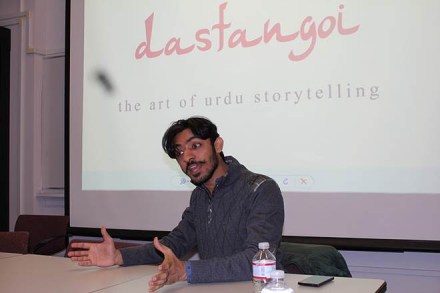
Ankit Chadha, the well-known Dastangoi artist from Delhi, died after allegedly drowning at Uksan lake near Kamshet in Maharashtra, around 60 kilometres from Pune. The incident took place on Wednesday when Chadha and his friend had visited the picturesque Uksan lakeshore for a walk. His friend told police that Chadha slipped and fell into the water at a point near the shore of the lake and drowned, police was quoted as saying by The Indian Express. Police was informed by local villagers, Kamshet police official said adding that his body was taken out around 8.30 pm on Wednesday. A case has been registered and police is looking into sequence of events that led to Chadha’s death, the official said.
Chadha had visited Pune where he was to perform Dastan-e-Kabir at the Gyaan Adab Centre on Saturday. His body was brought to Pune late Thursday night. The funeral will take place this morning at the Lodhi Cremation Grounds. Chadha is survived by his parents and elder brother.
Chadha persued graduation in History from the University of Delhi’s Hindu College. He was the president of its street theatre society, Ibtida. Later he had joined Mahmood Farooqui’s Dastangoi workshop. He learnt the art form and gained fame in theatre and cultural structures. “He was incredibly talented and a beautiful person and was taking Dastangoi to new heights. It is a devastating loss, after all, I trained him for six years,” Farooqui was quoted as saying. The 30-year-old had the mastery over Dastangoi form of Urdu storytelling and was prominet face in the national capital. His twitter profile says, “Dastangoi, Storyteller, Sufi History ChildLit Urdu Folk Oral Narrative, Khusrau Kabir Gandhi.” He also used to run a YouTube channel.
He used to perform dastans on historical personalities like Kabir, Rahim, Dara Shikoh and Majaaz, and Amir Khusrau. He has spoken on and performed Dastangoi all over the country and globally, including at Harvard, Yale and Toronto Universities. Chadha also worked with non-profit organisations and told tales on sustainability, technology and hunger.


