




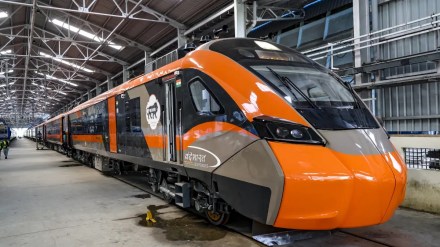
With the successful trials of the Vande Bharat sleeper trains at the peak speed of 180 km per hour, the Indian Railways has moved a step forward in adding a premium long-distance passenger service. Even though the trials would be over by January-end, sources told FE that these trains would come into service from May this year.
“Once these trials are over, the train will be evaluated by the Railway Safety Commissioner at the maximum speed. Only after passing the final stage, Vande Bharat trains will be officially certified & handed over to Indian Railways for induction and regular service,” the railways ministry said in a statement.
Experts said that the Vande Bharat sleeper trains could reduce the travel time by 2-4 hours (depending on the journey) as compared to the Rajdhani Express and Shatabdi Express services. “These trains would have a better speed consistency, more comfort, and efficient braking systems for jerk-free travel,” said Harshit Kapadia, VP (consumer durables, electrical & capital goods) at Elara Securities.
At present, the average speed of Mumbai-to-Delhi long distance travel is 90 km per hour with maximum permissible speed of 140 km per hour for Tejas Rajdhani Express which is the fastest among all Rajdhani train services in India.
However, the launch of Vande Bharat sleeper trains would likely not have much impact on the passenger revenues of the railways because of its “expensive fares” and expected lower occupancies. For instance, the fares of short- and medium-distance Vande Bharat chair car is at 25-30% premium to other chair car services which has affected its overall occupancy rates. “We are expecting Vande Bharat sleeper services to have a similar premium. At best, these trains would have a niche set of users, especially from the middle class and upper middle class categories who would pay a slight premium for better comfort and ambience,” said Kapadia.
Experts said that the real game changer is likely to be Amrit Bharat trains which are aimed to improve connectivity between major cities. Last year, the railways minister Ashwini Vaishnaw said that there are plans to manufacture 1,000 new-generation Amrit Bharat trains in the coming years. “The Amrit Bharat trains, which are not fully-AC, have the capability to replace the popular Rajdhani Express and Shatabdi Express services over the long term,” said a former official in the railways ministry.
As per the railways ministry, the Vande Bharat sleeper trains are designed with features such as automatic doors, ultra comfortable berths, on board WiFi and an aircraft-like design.


