




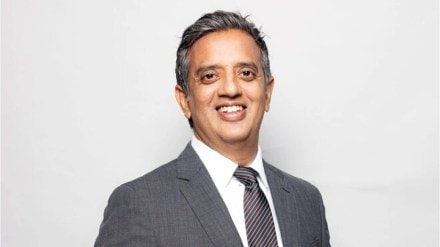
Chirag Setalvad, Head – Equities of HDFC AMC, expects some foreign interest coming back to Indian shores after the huge outflows in 2025. He tells Ananya Grover that with the markets having been range- bound for some time now, and smallcaps and midcaps underperforming, it would be interesting to see whether domestic liquidity remains elevated. Excerpts:
How you do read the markets?
Overall, given the underperformance in 2025, valuations relative to other markets have now normalised. The correction in smallcaps and midcaps was warranted given the sharp run-up and it is getting easier to identify opportunities. The measures rolled out by government and the RBI and an Indo-US trade deal, should help support the economy. This could translate into a better earnings environment. Much will also depend on the global economic outlook. AI has been a key driver for the US economy and markets and any correction on that front would certainly make markets jittery.
How are you seeing valuations?
There has been some moderation in small and mid-cap valuations with stocks having experienced a combination of price and time correction. After 18 months, earnings growth has brought down valuations by another 15-20%. As a result, while the overall market is better placed today, SMID valuations continue to remain above average.
Are you seeing any contra opportunity?
No part of the market is hugely neglected. IT valuations, especially those of large cap companies, are now below their long-term averages and there is arguably some value there. Banks continue to be sensibly priced considering that credit growth prospects are okay and that the asset quality outlook remains benign. Small caps have seen some correction and there are pockets of value emerging, but it is certainly not contra as the overall segment’s valuations remain on the higher side.
DIIs have supported the equity markets when FIIs are constant sellers. Is there a risk here?
While domestic flows can fluctuate, they do tend to be steadier and to that extent the shift to local money does provide greater stability. Additionally, FPI ownership tends to be concentrated in fewer names skewed towards large caps. Hence, a shift to local flows would imply a more broad-based institutional ownership of stocks. However, with the Indian markets having been range- bound for some time and smallcaps and midcaps underperforming, it will be interesting to see whether domestic liquidity remains elevated. On the other hand, with India significantly lagging emerging market peers, some foreign interest may come back to Indian shores.
Do you see more IPOs as a constraint to returns in secondary market this year?
The IPO boom has diverted money away from the secondary market. This is not necessarily a bad thing, as at one point, valuations had become quite challenging, and a continued surfeit of liquidity would have exacerbated the situation. If the market becomes more challenging, the IPO pipeline could dry up and money may flow back to the secondary market.
Do you think there are enough opportunities for investors to pick active funds?
Over the next 20 years, the market will become more efficient with more institutional participation, more information and improved liquidity. This is especially true of large caps, where investors will probably shift to passive products as has been the experience in most other developed markets. However, this will likely be a gradual process and I still feel that the next decade could have enough of alpha generating opportunities in the large cap arena.


