




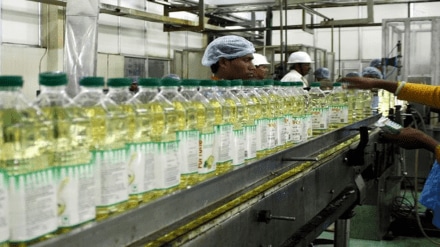
The government has initiated several measures such as expanding usage of new varieties of seeds, setting up clusters of local processing units, assured buy back of oilseed and promoting cultivation as summer crops under the National Mission on Edible Oils commenced earlier this year.
The aim of the mission is to reduce import dependence on edible oils from the current level of 57% to 28% by 2032, as cooking oil production in the country has not kept pace with the rising demand.
Agricultural ministry on the move
An agriculture ministry official said that newly released seed varieties of soybean, mustard, sunflower, and groundnut have been introduced in over 1.1 million hectare (Mha) 2025-26 crop season. The aim is to increase the seed replacement ratio by farmers which would boost productivity.
“So far 263 oil extraction units by farmers producers organisations, private entities and cooperatives have been sanctioned across the states under the mission,” the official told FE.
Till now 1076 value chain clusters have been identified in 500 districts covering 1.29 million hectare (mha) for boosting oilseed production and processing. The official said the government has the provision of Rs 7 lakh subsidy for setting up oil extraction unit at a cost of around Rs 30 lakh.
Under the market linkage initiatives, during 2024-25, 1.99 MT (soybean) 1.77 MT (groundnut) and 0,5 MT (mustard) has been procured from the farmers under Pradhan Mantri Annadata Aay Sanrakshan Abhiyan (PM ASHA) by the government agencies.
Under these clusters, farmers are provided free high-quality seeds upto area of one hectare each and training on good agricultural practices. The mission also supports the establishment and upgradation of post-harvest infrastructure (oil mills) to improve recovery from primary and secondary sources. according to an official note.
Area under oilseeds
The area under oilseeds – groundnut, sunflower and sesame – as summer grown crops was sown over 0.95 Mhas in 2024-25 crop year (July-June) compared to 0.82 mha in 2023-24.
“The mission enables domestic refiners to access more stable, locally sourced raw materials and reduce exposure to volatile global markets,” Sudhakar Desai, president, Indian Vegetables Oil Producers’ Association said. Desai said the move to boost edible oil production would slow down imports and ensure long term stability.
The mission launched from January, 2025 with budgetary provision of Rs 10,103 crore is aiming to increase oilseeds production including soybean, mustard, sunflower and groundnut production from the current level of 39 million tonne (MT) to 69.7 MT by 2030-31 through cluster based interventions and boosting seed systems.
Area under oilseeds would be increased to 33 mha from the current level of 29 MH through various interventions like inter-cropping with palm plantation
Correspondingly, under the mission edible oil production is likely to increase to 20.18 MT by 2031-32 from the current level of 12.51 MT.
Edible oil imports in the oil year 2024-25 (Nov-Oct) stood at a record Rs 1.61 lakh (16.01 MT in terms of volume), according to industry data. India imports palm, soybean and sunflower oils.
In terms of share in domestic output, the share of oils includes mustard (40%), soyabean (24%) and groundnut (7%), among others.


