




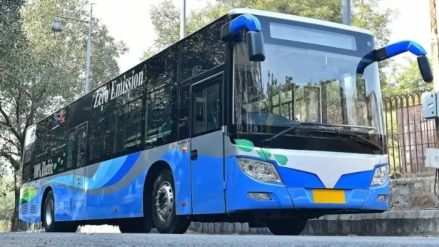
The Centre has concluded the country’s largest electric bus tender under the Prime Minister Electric Drive Revolution in Innovative Vehicle Enhancement (PM E-DRIVE) scheme, with PMI Electro emerging as the biggest winner. The company secured nearly half of the 10,900 electric buses put up for bidding, winning orders for 5,210 buses,
Currently, PMI Electro holds around a quarter of the 4,239 electric buses sold in India during 2025 and already has an order book of 3,000 buses, cementing its position as the country’s largest electric bus manufacturer.
Following PMI Electro, EKA Mobility, a subsidiary of Pinnacle Industries, emerged as the second-largest beneficiary with 3,485 buses, while Olectra secured 1,785 buses. The remaining 420 buses were awarded to the Anthony Travels consortium, according to sources.
Market Shift
Notably, major conventional bus manufacturers such as Tata Motors, VE Commercial Vehicles, and JBM Auto Auto failed to secure any orders in the tender.
In the case of Ashok Leyland, the government maintained that the company did not successfully submit its bid. Ashok Leyland, through its subsidiary OHM Global Mobility, has already challenged this decision in the Delhi High Court.
The announcement of the successful bidders was made after seeking legal advice, a senior official said.
The financial bids of 14 technically qualified bidders were opened. The rates discovered are attractive and lower than the estimates, a CESL statement said.
The results have been shared with the participating cities. “The respective City Transport Undertakings (CTUs) will thereafter issue Letters of Award (LoAs) and enter into concession agreements directly with the selected operators,” CESL said.
Ashok Leyland last week has requested Convergence Energy Services (CESL) to defer the tender finalisation due to the pending court case. OHM Global Mobility claimed it could not submit its bid because of a technical issue on the CESL portal. While the company stated that it had uploaded all the required financial and technical documents, CESL maintained that the submission was never successfully received.
Legal Hurdles
With the tender finally concluded after months of delays, the deployment of buses is expected to begin next year.
Under the current phase of the PM E-DRIVE scheme, nearly 4,500 electric buses were allocated to Bengaluru, 2,000 to Hyderabad, 2,800 to Delhi, 1,000 to Ahmedabad, and 600 to Surat, signalling a major push for electric mobility in India’s urban transport sector.
Under the Gross Cost Contract (GCC) framework tender, private operators will be responsible for the ownership, operation, and maintenance of the e-buses, along with the development of charging infrastructure and energy management systems at depots provided by the city authorities. The city transport agencies will pay a fixed per-kilometre fee, ensuring affordability and financial sustainability.


