




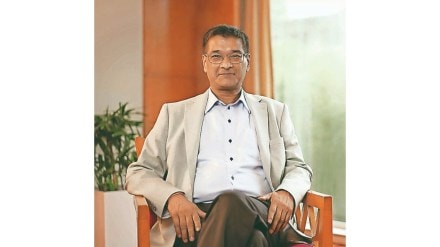
With a fabless-first model, a revenue target of $1 billion within the next four to five years, and a pipeline of over 50 Indian and global customers, L&T Semiconductor Technologies (LTSCT) is building products focused on MEMS sensors, power ICs, and silicon carbide components, positioning India to lead, not follow, in the global chip industry. Its chief executive, Sandeep Kumar, speaks to Sudhir Chowdhary on their growth plans and skilling initiatives. Excerpts:
What are your key priorities?
LTSCT is steadily advancing India’s semiconductor aspirations, backed by a healthy pipeline of 50+ global customer engagements and 10+ active product development programs. Our growth trajectory remains on track, and in several areas, we are ahead of initial projections. Our primary focus continues to be strategic customer partnerships, and we are witnessing strong momentum across key global markets, including Japan, Europe, the US, and India. The most significant growth is in our expanding customer interest, where we are methodically building a robust pipeline and deepening strategic relationships across regions.
Presently, our current customer portfolio reflects a balanced global footprint: approximately 30% in Europe, 40% in India, and the remaining 30% equally split between Japan and the US. This broad-based traction demonstrates not only our ability to compete globally but also our commitment to contributing meaningfully to the worldwide semiconductor value chain.
Alongside market entry initiatives, we continue to broaden our product portfolio and IP development across power, analog, RF, compute and connectivity modules. These efforts are central to our mission of positioning India on the global semiconductor map with products that are designed and owned in India, yet competitive worldwide.
How serious is the talent crisis?
We recognise the challenges created by the semiconductor talent and skill gap, which is why bridging this gap is central to India’s ambitions. India has world-class IC design expertise and a strong foundation in software and systems development. However, to evolve from a successful design services hub into a true global semiconductor powerhouse, we must strengthen capabilities across the entire value chain. The manufacturing, fab operations, packaging and testing (OSAT), and advanced process engineering skill development is well recognised. However, building leading-edge, world-class IC products will need a strong talent pool in systems architecture and conceptualisation of solutions that solve critical market challenges or create new markets.
How can it be addressed?
India would benefit from a coordinated, ecosystem-wide effort: industry-led training programmes, deep partnerships between MNCs and Indian universities to build hands-on labs and centres of excellence, and structured pathways. At L&T Semiconductor Technologies, we are committed to developing a robust talent pipeline through our iRISE programme, which provides budding engineers fresh out of colleges/institutions with practical knowledge and hands-on training across the semiconductor value chain. We also conduct unique programmes focused on nurturing engineers of experience so that they are well-equipped with the right skills to tackle real-world challenges in the industry.
In addition, we provide engineering students with in-house training and internship opportunities. During these internships, they gain hands-on experience by working on projects that tackle global industry challenges. These internships offer students the chance to collaborate with industry experts, and many of these interns eventually become full-time employees after graduation. We are also collaborating with leading institutions such as IIT Guwahati, IIT Bombay, BITS, and IISc to design specialised programmes that further strengthen and expand the country’s talent base.
What role can stronger collaboration between industry, academia, and government initiatives—such as the India Semiconductor Mission—play in building a future-ready semiconductor workforce?
Industry contributes practical expertise – whether in process engineering, packaging, design verification, or fab operations. Academia brings research depth and a scalable talent pool, while the government provides the policy support, infrastructure, and incentives needed to accelerate capability building. When these three forces align, we can establish centres of excellence, university-level cleanrooms, apprenticeship-driven learning models, and specialised programmes that nurture talent across every segment of the semiconductor value chain.
A key pillar of India Semiconductor Mission is the Design Linked Incentive (DLI) Scheme, created to boost India’s semiconductor design capabilities, fuel innovation, and support the growth of design-focused organisations. Alongside central government initiatives, states like Gujarat have taken the lead with India’s first dedicated semiconductor policy. Others – such as Andhra Pradesh, Uttar Pradesh, Karnataka, and Assam – are also playing pivotal roles by introducing supportive policies and incentives to strengthen the sector. Collectively, these efforts are expected to generate thousands of direct and indirect jobs, further solidifying India’s position in the global semiconductor landscape.
How can promoting diversity and regional outreach help India tap into untapped talent pools and strengthen its semiconductor ecosystem?
The semiconductor industry thrives on multidisciplinary thinking, and bringing together voices from diverse backgrounds leads to stronger problem-solving and more resilient teams. At LTSCT, we see diversity not just as inclusion, but as a strategic catalyst for strengthening India’s semiconductor ecosystem.
We firmly believe that the right talent isn’t concentrated only in metropolitan hubs – it is spread across the country. Tier-2 and Tier-3 cities hold immense untapped potential. By establishing training centres, scholarship programmes, and industry-academia collaborations in these emerging regions, we aim to build specialised education and training pathways, including state-of-the-art labs that ensure a steady pipeline of highly skilled engineers. Through deeper engagement with academia, we can foster a comprehensive ecosystem that supports both talent development and innovation in the semiconductor sector.


