




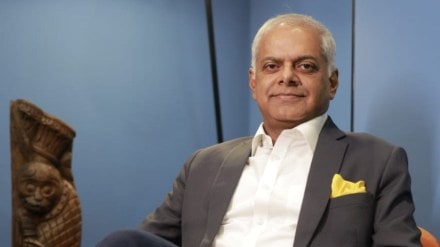
Manish Tiwary, chairman & MD, Nestle India, is the first external executive to occupy the corner office at the company, known for its tenured leadership and brands such as Maggi, KitKat and Nescafe. Tiwary, 55, is also among the few FMCG leaders in India with both consumer goods and e-commerce experience, having worked with Unilever for two decades, followed by Amazon India for nearly a decade. In his first interview since assuming office as CMD in August, Tiwary tells Viveat Susan Pinto what his priorities are for Nestle India and how he will drive its next chapter of growth. Excerpts:
1) You come with an outside-in view at Nestle India, how will this perspective shape your journey at the company? What is your roadmap for the firm?
Nestlé has been in India for over 113 years. My job is not to overhaul what works, but to sharpen our strategy. If the consumer proposition is strong, financial outcomes will follow. Our chicken noodles in the north-east are a great example—we redesigned the mix and relaunched the pack at Rs 10 from Rs 20 earlier. This met with success because we recognised that there were consumers lower down the income ladder. We can take this principle to most of our business segments. We have an urban monthly penetration of about 16-18% across noodles, confectionery, coffee. While our businesses are large, penetration levels are far from saturated. My priorities will be along three lines – consumer-centricity, volume-led growth, brand investment & technology-led efficiency. I believe FMCG companies must keep volume growth ahead of pricing. Growth must come from deeper penetration, not pricing, which to my mind, has a limited role. I am doubling down on this priority at Nestle India.
Tiwary on inflationary pressures
2) But food firms have to contend with inflationary pressures all the time, which impacts pricing. Is it possible to keep this factor out? What is your outlook on commodity inflation for the second half of FY26?
Inflation has begun to stabilise in the second half of the ongoing fiscal. It may have not come down to the levels we would have wanted it to be, but it is softening gradually. Alongside this, the last Union Budget made important changes to income tax, which released a significant amount of money into the hands of consumers. Aspirations have always been there—it is ultimately about whether consumers have the means to fulfill them. If you look at Nielsen numbers for food and beverages, the last couple of quarters have shown double-digit value growth. By contrast, a year ago, urban markets had flattened and volumes were negative. I see the positive trend continuing into the second half of the current fiscal.
3) With consumer loyalties shifting rapidly and small, regional and D2C brands making inroads into grocery baskets, how do you think legacy companies should respond to these issues?
I have a lot of respect for local and regional brands. Their success is coming on the back of genuine consumer needs they are addressing. Having said that, let me add here that I do see a lot of froth in the marketplace. A few may survive in the end among small players. As a legacy player, it is our responsibility to step up and address consumer need gaps in our categories. As legacy companies, we must ensure that while we have a large infrastructure, our mindset must remain as agile as a startup. This combination will allow us to deliver at the right cost. Assuming that you are large and therefore the best, may simply not work. At Nestle in India and South Asia, we emphasise on being fast, focused and flexible. This approach is now intrinsic to how we operate.
Tiwary on bolder bets for the brand
4)You also want to focus on fewer, bigger and bolder bets. Is this strategy coming from the froth you see in the marketplace and the need to stayed focused on a few key trends?
Yes. We must put serious investment behind doing fewer things bigger, better and bolder and avoid getting distracted by every new emerging trend. You cannot be good at everything you attempt. Innovation is important, but supporting innovation is equally critical. And when you think about support, you must recognise that resources are finite.
5) In the last few years, Nestle has tapped smaller towns under its ‘rurban’ strategy, but the push into rural areas has been limited. Will you go deeper into the hinterland?
Rural has hit a purple patch and it is up to me and my team to maximise this opportunity. I recall sitting in Vevey, Switzerland, reviewing internal statistics for Nestle India. I noticed that its rural contribution to sales was around 15%. When compared with other consumer goods companies, whose rural contributions are in the range of 40–60%, we are significantly lower. The fact that rural markets have consistently grown at 1.4 to 1.8 times the pace of urban markets, including in 2024 when overall momentum slowed—reveals a massive opportunity. Rural India is not about a few million consumers; it is vast. Add to this, the significant government investments being made in rural infrastructure, demand trends and income levels improving, structural changes unleased by reforms such as GST 2.0, and the headroom for growth is enormous.
6) What is your plan to accelerate investments in brands and manufacturing capacity in the country? Are you considering acquisitions especially in the D2C space?
If you look at the last two financial years, we have invested close to Rs 1,900 crore in one year (FY24) and Rs 2,000 crore in the last financial year (FY25). We currently operate nine factories, with the tenth plant under construction in Odisha. As we double-down on volume-led growth, we anticipate further expansion in capacity. Also, we need to invest to ensure our products are accessible and relevant in rural markets, where affordability is key. That said, at a broader level, I see the role of technology driving efficiency and saving costs. These savings can be channeled back into brand investment. This creates a virtuous circle, where efficiencies generate resources, resources fuel brand investment, and brand investment drives growth. As far as acquisitions are concerned, we are always on the lookout. If something fits into our portfolio and aligns with our philosophy, we would be open to it.
7) How do you propose to leverage AI in your business?
Artificial intelligence is a game changer across all parts of the business. But I emphasise to my people all the time that technology should be used to make jobs easier, not complicated. If you do the latter, you miss out on the efficiencies that can be achieved with AI, whether in faster product launches, engaging Gen Z consumers, or improving operational efficiency. Algorithms perform repetitive tasks better, freeing people to add greater value. This approach ensures that business growth is not linearly tied to headcount.


