




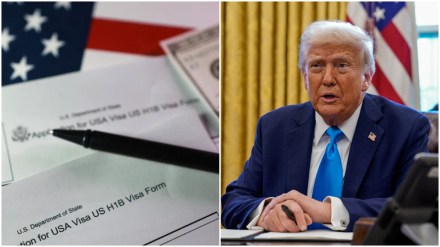
A federal judge has allowed the Trump administration to go ahead with a $100,000 fee on new H-1B visa applications, Bloomberg reported. This decision comes as a blow to many US technology companies that depend on skilled workers from other countries.
The US Chamber of Commerce said it is not done fighting the $100,000 H-1B visa fee and is considering an appeal after the court backed the Trump administration.
Court says H-1B fee is legal
US District Judge Beryl Howell ruled on Tuesday that President Donald Trump acted within the law when he increased the cost of the popular H-1B visa. The judge said the administration has the legal authority to make this change. “The lawfulness of the Proclamation and its implementation rests on a straightforward reading of congressional statutes giving the President broad authority to regulate entry into the United States for immigrants and nonimmigrants alike,” Howell wrote in an opinion Tuesday, according to Bloomberg.
Reacting to the ruling, Daryl Joseffer, Executive Vice President and Chief Counsel of the US Chamber of Commerce, said the fee would put H-1B visas out of reach for many employers.
“The $100,000 fee makes H-1B visas cost prohibitive for businesses, especially small- and medium-sized businesses that can least afford it,” Joseffer said. “We are disappointed in the court’s decision and are considering further legal options to ensure that the H-1B visa program can operate as Congress intended, to enable American businesses of all sizes to access the global talent they need to grow their operations.”
The ruling supports the Trump administration’s effort to tighten immigration rules and encourage companies to hire more workers from within the United States. By making the visa far more expensive, the government hopes to reduce demand for foreign workers.
Trump introduced the fee through a proclamation on September 19, a move that stunned many businesses. Companies said the sudden cost hike made it difficult, and in some cases impossible, to hire skilled foreign workers for important roles.
The decision is a setback for US tech firms, many of which rely heavily on H-1B visas to bring in skilled professionals. The US Chamber of Commerce, which had filed a lawsuit to stop the fee hike, lost this round. While the judge allowed the fee increase to move forward, the Chamber of Commerce still has the option to appeal the ruling, meaning the issue could return to court.
Business groups challenge the move in court
Earlier, the US Chamber of Commerce took the matter to the US District Court for the District of Columbia, arguing that the fee broke federal immigration law and crossed the limits of presidential power. The Association of American Universities joined the challenge. Jointly they asked the court to stop the fee from being enforced.
US District Judge Beryl A. Howell ruled that the Trump administration met the legal requirements under the Immigration and Nationality Act. The act allows the president to restrict entry into the United States. According to Bloomberg, in her ruling on Tuesday, Howell rejected requests to block the fee and instead supported the administration’s decision, granting its request for a summary judgment.
She wrote that the proclamation follows a clear reading of the law, which gives the president broad authority to control entry into the US for both immigrants and non-immigrants. The Chamber’s lawsuit is just one of several legal challenges filed against the $100,000 fee. In the latest case, a group of US states led by California and Massachusetts has also gone to court in an effort to stop the charge.
In its case, the Chamber said the Immigration and Nationality Act only allows visa fees that cover the cost of running the visa system. It also argued that any new fee should go through a public rule-making process, where people and businesses can comment before it takes effect.
The Chamber is being represented by the US Chamber Litigation Center and the law firm McDermott Will & Schulte. The US government is being represented by the Department of Justice.


