




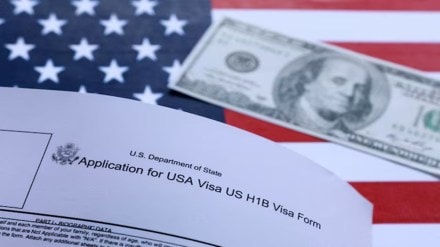
The US decision to replace the H-1B visa lottery with a new “wage-weighted” selection system marks a major shift from the way visas have been given for years, Indian IT industry body Nasscom said on Wednesday, according to PTI. The association warned that the move raises serious legal, economic and operational concerns.
Under the proposed change, the random lottery system will be replaced by a process that gives preference to higher-paid and higher-skilled workers. This is part of the Trump administration’s push to tighten scrutiny of both legal and illegal immigration, with special focus on the H-1B visa programme that many companies depend on to hire foreign talent. Indian professionals make up a large share of H-1B visa holders, over 70 percent in total, followed by China at nearly 12 percent.
H-1B row: Nasscom asks for phased rollout
Nasscom said that if the US goes ahead with a wage-weighted model, it must be introduced slowly. It added that delaying the rollout until the FY28 lottery cycle would be crucial. This would give employers enough time to adjust their hiring processes, meet compliance needs, and maintain confidence in the stability of the US talent and investment environment.
According to Nasscom, a sudden change would create confusion and uncertainty, especially for companies that plan hiring around university graduation cycles and product launches.
The final rule will come into effect from February 27, 2026, and will apply to the FY 2027 H-1B cap registration season.
Indian firms’ role in the US economy
Speaking of the contribution of Indian companies, Nasscom said, its member firms support more than 1.6 million skilled jobs across the US and contribute around USD 198 billion to the country’s GDP. This impact is larger than the economies of more than 20 US states.
“With over 2,64,500 employees directly in the US and a presence in more than 25 major American communities, Nasscom companies help strengthen both established and emerging technology hubs. Notably, more than two-thirds of these jobs are located outside Silicon Valley and New York, fostering inclusive growth in regions such as Texas, North Carolina, Ohio, and Illinois,” Nasscom said, according to PTI.
Concerns over wage ranking and distortions
Nasscom also raised concerns that assigning multiple selection entries based on Occupational and Employment Wage Statistics levels could take away the programme from its original focus on “speciality occupation.”
“Though the intent behind the proposed changes to promote high-skill employment, curb misuse, and protect US wages is well understood, a transparent, trusted visa framework is essential to maintaining the strength of the US technology ecosystem,” Nasscom said, according to PTI.
Entry-level jobs and future talent at risk
The association declared that many H-1B applications at Level I and Level II wage bands are for entry-level roles. These jobs are often filled by graduates from US universities in science, engineering and computing fields.
These early-career roles are a key part of STEM. Nasscom warned that limiting such opportunities could weaken the future talent base and discourage international students from choosing the US for higher education.
Nasscom noted that while the intent behind the changes is understood, the visa system must remain transparent and trusted to protect the strength of the US technology ecosystem.
India accounted for 71 per cent of H-1B holders last year. The association warned that reforms should strengthen, not weaken, America’s innovation advantage. It said the H-1B programme is not just about filling labour shortages, but about securing US leadership in industries that will shape global power in the 21st century.
The latest US move comes at a difficult time for India’s USD 280 billion IT industry. Companies are already grappling with a record USD 1,00,000 visa fee and fears of a possible 25 per cent HIRE outsourcing tax.


