




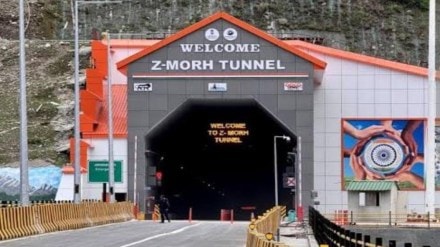
The Z-Morh Tunnel is poised to become a game-changer for connectivity between Kashmir and Ladakh, marking a significant step in establishing an all-weather link between the two regions. Prime Minister Narendra Modi is set to inaugurate this landmark project on Monday, January 13, symbolising a major leap forward in regional development and accessibility.
Jammu and Kashmir Chief Minister Omar Abdullah expressed anticipation for the upcoming inauguration in a recent post on X. Highlighting its significance, he emphasised that the project would play a transformative role in boosting winter tourism in the region. “Jammu and Kashmir, particularly central Kashmir, is eagerly awaiting the inauguration of this crucial infrastructure in the coming days. This development will undoubtedly be a game-changer for the growth of winter tourism in the valley,” Abdullah remarked in his post.
Reacting to CM Abdullah’s post, PM Modi took to X, saying that he has been eagerly waiting for his visit to Sonmarg for the tunnel inauguration. “ I am eagerly awaiting my visit to Sonmarg, Jammu and Kashmir for the tunnel inauguration. You rightly point out the benefits for tourism and the local economy. Also, loved the aerial pictures and videos!,” read PM Modi’s post.
Year-Round Access to Sonamarg
Located in the Ganderbal district of central Kashmir, the Z-Morh Tunnel promises year-round access to the scenic town of Sonamarg. Known for its stunning landscapes, Sonamarg has traditionally been cut off during the harsh winter months due to heavy snowfall and frequent avalanches. The tunnel, constructed beneath the Thajiwas Glacier, bypasses these hazardous areas, ensuring safer and more reliable travel.
Local stakeholders, particularly those in the tourism sector, are optimistic about the tunnel’s potential. Hoteliers and business owners believe it will transform Sonamarg into a thriving winter tourism destination. With uninterrupted access, the region is expected to attract more visitors and open up opportunities for new winter activities, boosting the local economy.
Cutting-Edge Features of the Z-Morh Tunnel
Constructed at a cost of Rs 2,680 crore, the 6.5-kilometer-long Z-Morh Tunnel incorporates state-of-the-art engineering and technology. Key features include:
- A 10.8-meter-long main tunnel for two-way traffic.
- A 7.5-meter-wide escape tunnel designed in a horseshoe shape for safety.
- An Intelligent Traffic Management System to regulate vehicle movement efficiently.
- Culverts of various lengths to enhance structural stability and efficiency.
Beyond improved connectivity, the tunnel is expected to enhance adventure tourism opportunities near the Thajiwas Glacier and Sindh River, further enriching the region’s appeal.
Overcoming Challenges and Ensuring Security
The Z-Morh Tunnel project has not been without its challenges. In October 2023, a tragic militant attack at the construction site resulted in the loss of seven workers. Since then, security has been significantly tightened. Ahead of the Prime Minister’s visit, extensive safety measures, including additional checkpoints and heightened vigilance, have been implemented to ensure the smooth inauguration of this critical infrastructure.
Meanwhile, comprehensive security measures have been implemented ahead of Prime Minister Narendra Modi’s inauguration of the strategically significant Z-Morh Tunnel on January 13, coinciding with the festival of Lohri. Paramilitary forces have been extensively deployed to ensure the event proceeds without incident.
Special Protection Group (SPG) officers have conducted a detailed survey of the area, assessing potential risks and overseeing arrangements. As a precaution, the Kargil-Srinagar highway has been closed to civilian traffic until Monday.
Additionally, the Indian Army and CRPF personnel have been stationed at key vantage points, maintaining a strong presence in the snow-laden heights surrounding the tunnel to bolster security and preempt any threats.
What makes Zojila Tunnel Crucial for the Region
The Z-Morh Tunnel is a crucial precursor to the Zojila Tunnel, which is currently under construction and poised to be Asia’s longest tunnel. Spanning 13.14 kilometers, the Zojila Tunnel is being built at an estimated cost of Rs 6,800 crore. It will traverse the Himalayan range at the Zojila Pass, connecting Ganderbal in Kashmir to Drass in Kargil.
Once completed, the Zojila Tunnel will slash travel time between Ganderbal and Kargil from three hours to just 20 minutes. Key features of this tunnel include:
- Four culverts spanning a total of 810 meters.
- Four Nilgrar tunnels with a combined length of 4,821 meters.
- Three vertical ventilation shafts for optimal airflow and safety.
Strategic and Economic Implications
The Zojila Tunnel is strategically critical for ensuring the smooth movement of goods and defense supplies to Ladakh, a region often cut off during winters due to the closure of the Zojila Pass. Together with the Z-Morh Tunnel, this project will provide uninterrupted access, fostering economic growth and social integration. Construction of the tunnel initially began in 2012 under the supervision of the Border Roads Organisation (BRO), with the project being awarded to Tunnelways Limited. However, the project later transitioned to the National Highways and Infrastructure Development Corporation Limited (NHIDCL), which reissued the tender to continue and complete the work.
The inauguration of the Z-Morh Tunnel marks a turning point for Kashmir and Ladakh, unlocking year-round connectivity and stimulating tourism and commerce. As infrastructure projects like the Zojila Tunnel progress, the integration of these regions into India’s economic framework will strengthen, driving development and prosperity.


