




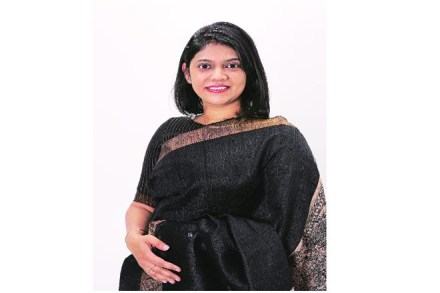
One of the biggest roadblocks to delivering quality healthcare is the lack of adequate knowledge on the scientific advances and updated treatment protocols on the part of general physicians working in the primary healthcare system. Having worked as a healthcare consultant in the United States and other developed countries, Savitha Kuttan made a decision to use her expertise to address this challenge. In 2016, she set up Omnicuris, a cloud based platform, targeted at doctors looking to keep themselves abreast of the latest developments in medicine.
Kuttan says, “The healthcare system in our country focuses primarily on tertiary care. Primary care has always taken a backseat, both on the public and private fronts. When the current government launched its flagship Ayushman Bharat scheme with an ambitious plan to have more than a lakh and a half fully functional health and wellness centres by 2022, the question of skill upgradation of physicians was left unanswered. It was a little puzzling as it is something that afflicts both public and private health sectors.”
Kuttan points out that more people are now visiting specialists for medical consultation. This compounding trust deficit on part of the public has not only eroded the faith in the primary healthcare system but has also pushed up healthcare costs. “The lack of knowledge, leading to late or wrong diagnoses, is one of the biggest factors driving this transition. That is where we decided to step in,” she says.
Partnering with institutes of learning and medical associations, whose leading experts prepare the course material, Omnicuris signed MoUs with various state governments to disburse video content, from didactic lectures and assignments to interactive sessions and assessments, in a bid to help doctors educate themselves on the latest medical developments so they can give patients the standard of care they deserve. The certifications are provided by the respective medical associations.
“We strongly believe that doctors who have worked hard for most of their adult lives to get to where they are must not be charged for continuous medical education. Traditionally, they had to travel to medical conferences to learn about the medical advancements in their field. This entailed spending upwards of Rs 6,000 on travel and accommodation. Expecting them to do it more than six times in a year is unreasonable,” she comments.
Moreover, doctors serving in rural and remote areas have time and resource constraints. The situation is ironic because they are the ones who need it the most. “We have addressed this problem by making our courses available to doctors for no fee. Our revenue comes in the form of grant from medical associations, universities, state governments and third party educational grants,” she adds.
The social enterprise was met with enthusiastic response from doctors, more than a lakh of whom have signed up to access the courses on the platform. With access controls mandated by the medical associations, the modules have helped doctors in both the private and public sector improve the standard of care. It is enabling doctors to educate their patients digitally as well.


