




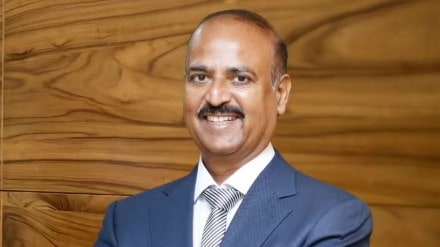
The National Health Claims Exchange (NHCX) brings the entire health insurance ecosystem onto one structured digital platform. Tapan Singhel, MD & CEO, Bajaj General Insurance and chairman of General Insurance Council, tells Saikat Neogi while all insurers are already on NHCX, hospital participation has been slow. Once hospitals join, real-time digital exchange will make claims faster, simpler, and more transparent. Edited excerpts:
How can the growing friction between health insurers and hospitals over claim settlements be resolved?
To address this issue, we must go back to what is already mandated by law and by the regulator. The first step is the common empanelment framework created by the General Insurance Council, which ensures that customers get cashless treatment irrespective of which insurer’s policy they hold. We have been requesting hospitals to join this, and while there was initial resistance, close to a thousand hospitals have come on board, and over 6,000 have registered, which is a very positive shift.
The second requirement is the adoption of the NHCX. All insurers are already on NHCX, but hospital participation has been slow. Once hospitals join, real-time digital exchange will make claims faster, simpler, and more transparent. Third, as per Supreme Court directions and provisions of some state governments, all hospitals are required to display their charges transparently. The recent Kerala judgment also reinforces this. If these three elements move toget-her, customers will get seamless cashless access, more transparent pricing, and quicker payments.
Tapan on NHCX
How can the NHCX help in streamlining and digitising health insurance claims?
Instead of fragmented, manual processes, NHCX creates a single rail via which pre-authorisations, clinical documents, and claims data move in real time and in a single standard format. A key strength is its integration with the Ayushman Bharat Digital Mission through Ayushman Bharat Health Account (ABHA). With the customer’s consent, hospitals and insurers can access accurate medical records, which removes repeated paperwork and speeds up approvals. This improves trust, reduces billing disputes and helps prevent duplicate or unnecessary treatments. Real-time digital trails also make fraud detection far more proactive. As more hospitals join and ABHA usage grows, customers will experience faster, more predictable and transparent claims.
What is the progress on the ‘cashless everywhere’ initiative rolled out two years ago?
The insurance industry has put the framework, systems and agreements in place, and insurers have their existing networks, pan-India. The General Insurance Council has strengthened the initiative through the Common Empanelment process and by setting up an independent redressal committee to help address concerns raised by hospitals.
While there were some initial bottlenecks, we now see hospital bodies and insurers working together toward a more customer-centric approach. The next stage will depend on wider hospital/provider participation. As more hospitals join the model, customers will experience uniform cashless access, simpler pricing and a smoother journey. The vision is simple: to make cashless treatment available for every customer across the country.
As medical costs rise, why should we look at riders and super-top health insurance?
According to multiple reports, medical inflation in India was about 12% in 2024, higher than the global average of 10%, and is projected to rise to 13% in 2025. A procedure like Coronary Artery Bypass Grafting (CABG) that cost around 2 lakh in 2018–19 is now close to6 lakh, three times in just five years. If this continues, we must ask whether the average Indian can afford healthcare a decade from now. This is not an individual issue but a national challenge.
This is why a layered protection plan becomes important. OPD riders help manage routine medical expenses, while non-medical riders cover consumables and charges that often fall outside a standard claim. Super top-ups are among the most effective ways to secure much higher cover. Once the aggregate deductible is crossed, the full super top-up limit becomes available at a fraction of the cost of a standalone policy, making it especially valuable for major surgeries, long hospital stays or high-cost procedures. Together, a base policy, a super top-up and the right riders ensure rising medical costs do not hinder access to timely, quality care.
Tapan on emerging trends in non-life insurance
What are the emerging trends in non-life insurance in the country?
The non-life insurance industry in India is entering a very exciting phase. Three forces are coming together: strong regulatory vision, rapid digital adoption and the emergence of new risks. Health will continue to drive growth, supported by simpler processes as NHCX and common empanelment expand. We will also see a significant shift in how people buy and manage insurance.
Bima Sugam will bring insurers, distributors and customers onto one digital platform, making protection far more accessible across the country. Generative AI will reshape the customer journey. It will enable real-time guidance, personalised product suggestions, faster servicing and even smoother claims, while the data protection law ensures that insurers handle customer information with greater responsibility and transparency.
On the regulatory front, the upcoming Insurance Amendment Bill and higher FDI limits can bring more players into India, expand coverage, deepen competition and accelerate innovation. At the same time, rising climate events, cyber risks and supply-chain disruptions are increasing the need for climate-linked covers, parametric solutions and stronger financial protection for SMEs and MSMEs.


