




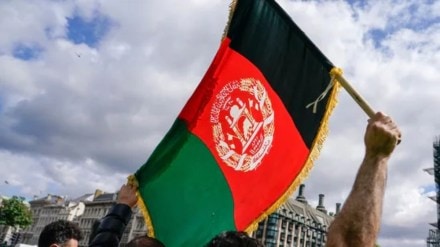
At the fifth gathering of the Moscow format on Afghanistan, special representatives and high-ranking officials from several countries reiterated their call to the Afghan authorities to establish an all-inclusive government system that represents the interests of all major ethnic and political groups within the nation.
In Kazan, all came together to discuss the future of war-torn Afghanistan. Amir Khan Muttaqi, Afghanistan’s Acting Foreign Minister, also participated in the meeting.
Earlier this week (Sept 29, 2023) countries including Russia, India, China, Iran, Pakistan, Kazakhstan, Kyrgyzstan, Turkmenistan, and Uzbekistan were present. Notably, Qatar, the United Arab Emirates, Saudi Arabia, and Turkey were invited guests at the event. Amir Khan Muttaqi, Afghanistan’s Acting Foreign Minister, also participated in the meeting.
Agenda of the Moscow Format
During this meeting, the attendees shared their thoughts on the ongoing situation in Afghanistan, with a strong focus on regional security and the country’s involvement in regional economic activities. The consensus was clear: it is of utmost importance for Washington and its allies, who hold the primary responsibility for rebuilding Afghanistan’s economy after the conflict, to immediately and unconditionally release Afghan assets. Furthermore, any return of US and NATO military forces to Afghanistan or its neighbouring countries was deemed unacceptable, regardless of the pretext.
They also stressed the need to intensify efforts in counter-terrorism and anti-drug operations. In a united front, all attendees pledged to continue providing humanitarian aid to Afghanistan.
As the meeting concluded, the participants jointly adopted the Kazan Declaration of the Moscow format consultations on Afghanistan.
Kazan Declaration 2023: Charting a Path Forward for Afghanistan
Special representatives and top officials expressed deep concern about the challenging security situation in Afghanistan, mainly due to the increased activities of terrorist groups, particularly ISIS. Together they commended the current Afghan authorities for their dedicated efforts in combating ISIS and urged them to continue their fight against all forms of terrorism. And called upon them to take effective measures to dismantle, eliminate, and prevent the presence of any terrorist groups within Afghanistan, ensuring that it does not become a hotbed of terrorism and instability that threatens regional stability.
The countries present also acknowledged reports of a reduction in poppy cultivation in Afghanistan, a result of the current Afghan authorities’ successful actions. It was stressed that it is crucial to maintain a genuine and effective anti-drug policy, including tackling industrial drug production, as this issue poses a significant and dangerous challenge.
Furthermore, they called on the current Afghan authorities to enhance cooperation with regional countries in combating terrorism and drug trafficking originating from Afghan territory. Most participants emphasized their firm opposition to external support for terrorism within Afghanistan.
Regrettably, it was noted that there has been limited progress in forming an inclusive government in Afghanistan that truly represents the interests of all its ethnic and political groups. Despite the appointment of some individuals from various Afghan ethnic backgrounds to the Kabul administration, and it was observed a lack of political diversity. They all once again urged the current Afghan authorities to engage in practical, results-driven dialogues with representatives of alternative ethnic and political groups to facilitate a peaceful resolution and the formation of a more balanced, broad-based, inclusive, accountable, and responsible government in Afghanistan.
The Kazan Declaration called upon the current Afghan authorities to create conditions that improve the well-being of the Afghan people, prevent further migration, and enable the return of refugees.
And stated that it is the shared belief that fundamental rights and freedoms in Afghanistan, including equal access to work, education, and justice regardless of gender, ethnicity, or religion, must be respected.
The invited countries expressed concern about restrictions on women’s employment and girls’ education, urging the current Afghan authorities to promote modern education in alignment with international standards.
Many participants in the Moscow format meeting recognized the UN Secretary-General’s efforts to coordinate actions between international and regional partners in the Afghan context during the Special Representatives’ meeting in Doha in May 2023. And emphasized that cooperation with non-regional players is possible if the US-led Western coalition, whose actions over the past 20 years contributed to the current crisis in Afghanistan, acknowledges and takes responsibility for post-conflict reconstruction. This includes unfreezing Afghan national assets and immediately lifting unilateral sanctions.
The countries collectively advocated for Afghanistan as an independent, united, and peaceful nation, firmly opposing the deployment of military infrastructure facilities from third countries in Afghanistan and its neighbouring states under any pretext.
While appreciating the potential for regional economic projects involving Afghanistan, they also emphasized the importance of strengthening bilateral and multilateral economic ties. And reaffirmed their commitment to preventing the politicization of humanitarian assistance and stressed the need to continue providing humanitarian aid to Afghanistan.
Furthermore, according to the Kazan Declaration, the countries acknowledged Iran’s proposal to enhance regional cooperation on Afghanistan through the establishment of a regional contact group to discuss matters of common interest.


