




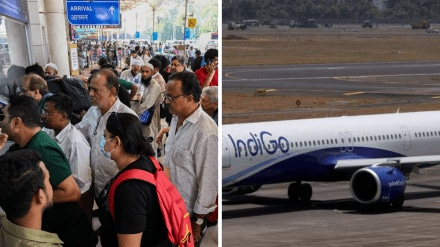
IndiGo, India’s largest airline and most-travelled low-cost carrier, is struggling to cope with the new flight duty rules. Over the past few days, hundreds of flights have been delayed or cancelled. On Wednesday alone, about 200 flights were cancelled. The numbers crossed the 300 mark on Thursday and are still rising.
The main reason for these disruptions is crew shortages after the second phase of the Flight Duty Time Limitation (FDTL) rules came into effect. These rules, imposed to reduce pilot fatigue, have forced airlines to adjust crew schedules, and IndiGo seems to have been caught unprepared.
Understanding the New FDTL rules
Under the new rules, pilots’ weekly rest has increased from 36 hours to 48 hours. Night landings for pilots are limited to two per week, down from six. Night hours are extended by an extra hour. These changes have made crew scheduling more challenging for IndiGo, given that the airline operates numerous late-night flights. The rules were supposed to start in June 2024, but were delayed after airlines, including IndiGo, requested more time.
- Pilots must have 48 consecutive hours of weekly rest (up from 36 hours).
- Night hours are now 12 am–6 am, extended by one hour (earlier 12 am–5 am).
- Each pilot can have a maximum of two night landings per week.
- Pilots cannot have more than two consecutive night duties.
- Airlines must adjust rosters and submit quarterly fatigue reports.
The DGCA then implemented them this year in two phases, in July and November, following a Delhi High Court direction. The first phase caused minimal disruption. But the second phase, affecting night-time flights and crew utilisation, has hit IndiGo more than any other airline.
Why is IndiGo the most impacted?
IndiGo operates on a low-cost, high-efficiency model. With over 400 planes, it operates more than 2,300 flights a day and connects over 90 domestic and 45 international destinations. Its aircraft and crews are used more intensively than other airlines. Even a 10% cancellation rate means over 230 flights could be cancelled in a single day.
The airline was already facing problems because of the recent Airbus A320 recall. In India, IndiGo and Air India operate the most A320S, and for IndiGo, these planes make up the majority of its fleet. Each A320 usually flies several times a day, so even a small delay can affect other flights. The situation gets worse when pilots hit their duty hour limits, because then it means the airline has to find a replacement.
According to DGCA, IndiGo had 1,232 flight cancellations in November. 755 were due to crew and FDTL issues. Among these 258 due to airspace and airport restrictions, 92 were from air traffic control system failures, and 127 were from other reasons. On-time performance dropped from 84.1% in October to 67.7% in November.
Pilot associations say IndiGo was not ready for the new rules, despite having two years of notice.
IndiGo delay: On-time performance plummets
Only 19.7% of IndiGo flights were on time on Wednesday, down from 35% on Tuesday and around 50% on Monday. This has caused chaos at airports, with social media filled with complaints from stranded passengers. Many had no choice but to book expensive flights on other airlines. IndiGo has apologised and is trying “calibrated adjustments,” which include rescheduling and cancelling some flights to match available crew.
IndiGo said Wednesday evening that “unforeseen operational challenges” caused the disruptions. These included technology glitches, winter-related schedule changes, bad weather, air traffic congestion, and the full implementation of FDTL rules.


