
The fastest man on the planet, Usain Bolt, has done a top speed of 44.72 km/h propelled only by his legs. That is blistering fast in human terms, especially if we also consider those who drive at 40 km/h most of their lives. But the good thing about humans is that our brains run faster than our legs and hence we can build machines that can take us faster than the speed of sound. Thrust SSC is a well-known name for it is the first land vehicle to exceed the speed of sound. But a lot must have happened before we got to that. Dig a little into the history and you will find that the world’s first speed record was set in an electric car.
Who and where and when and what were they driving?
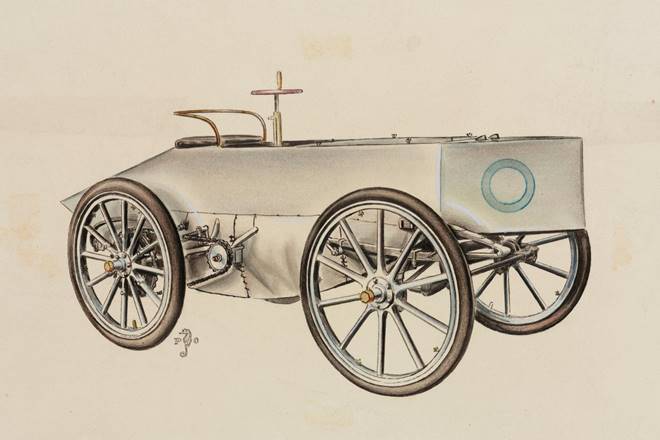
Charles Jeantaud founded a company for the manufacturing of automobiles under the brand name Jeantaud in 1893. He had built his first car which was fully electric in 1881 and so had experience in electric mobility. Electric car model Jeantaud Duc did a top speed of 63.15 km/h with French race car driver Gaston Chasseloup-Laubat behind the wheel. The fame didn’t last very long as by then there had come several who wanted to set or break speed record now that speeds were started to be recorded as relevant milestones in automobile advancement.
A revolution that was started by an electric powertrain soon saw the prowess of petrol-powered vehicles take over. In 1904, Societe des Moteurs Gobron-Brillié, a company which until 1930 manufactured the Gobron-Brillié, a car famous for surpassing the 100 mph (161 km/h) barrier.
Just two years later, American racing driver Fred Marriot drove the Stanley Rocket to a world land speed record of 205.5 km/h on the Dayton Beach Road Course. Fast-forward to 1927, enter Sunbeam 1000HP. Ironically called ‘The Slug’, it was built by the Sunbeam company in Wolverhampton, England. It was powered by two jet engines and a top speed of 322 km/h and was the first non-American car to race on Daytona Beach.
History of motorcycle land speed records: Suzuki rules this club of fastest bikes of their times
These have been the humble beginnings of speed which has now allowed a man to go faster than the speed of sound. The man was Andy Green, the year was 1997, and the car was the Thrust SSC. Powered by two afterburning Rolls-Royce Spey 202 jet engines used in the F-4 Phantom which preceded the F-15, the SSC had a combined power output of 1,10,000 bhp – enough to break the sound barrier at 1,228 km/h.
Electric cars today have evolved to those like Rimac One or Pininfarina Battista which make in excess of 1500 hp. What if electric cars had caught on after the Jeantaud set a record, would the automobile world be different and would we be fretting over matters other than air pollution due to combustion engines? Perhaps. But the combustion engine has given us some fantastic soundtracks from cars over the years and we would’ve missed out on a whole chunk of fun if they didn’t catch on.