
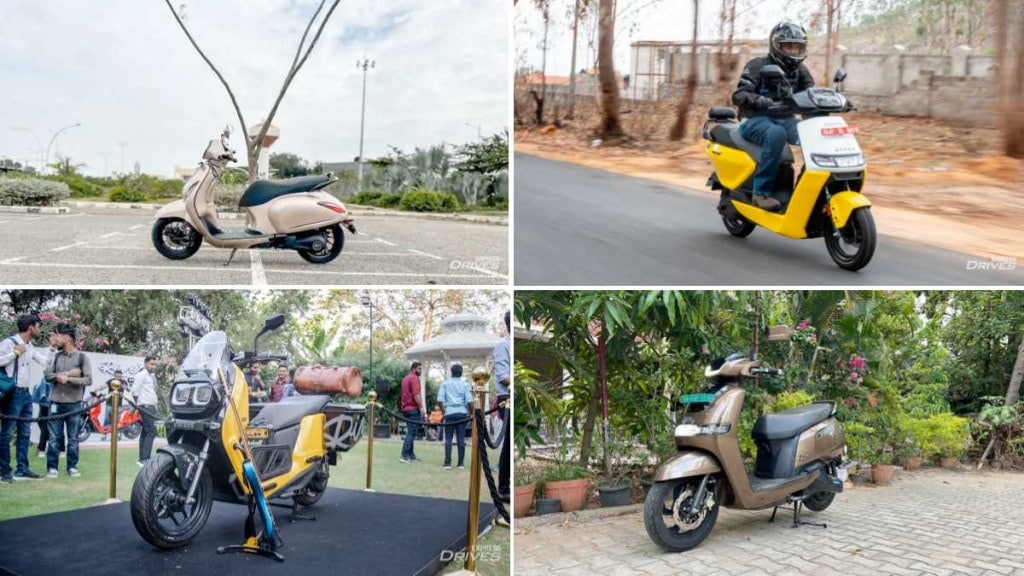
For decades, motorcycles have been the preferred mode of mobility for the masses due to their higher fuel efficiency compared to scooters, reliability over broken roads, and the ability to travel a longer distance comfortably. However, sales data for 2025 shows that motorcycles are hitting a growth plateau, even as scooters are growing in double digits.
The January-November 2025 sales data collated from the Society of Indian Automobile Manufacturers (SIAM) shows that this year, scooters grew a healthy 10.7%, even as motorcycle sales dropped 1%.
Previously, both scooters and motorcycles had been growing comfortably—in 2023, scooters grew 9%, while motorcycles rose 9.2%, and in 2024, scooters increased by 21%, while motorcycles grew 14%.
Read FE 2026 Money Playbook: Your Ultimate Investment Guide for the new year
Convenience Factor
Analysts said the reasons for change in this balance are several. First is the urbanisation effect. As cities and towns, and even villages, get more and more congested, buyers have started preferring gearless two-wheelers for convenience. There are dozens of such choices among scooters, and not even a single gearless model among mass-market motorcycles.
Second is electrification—among two-wheelers, the transition to electric mobility is mostly happening in scooters, with just a couple of electric motorcycles. Those EV sales are adding to scooter volumes.
Third is the quick commerce boom. Zomato, Amazon, Swiggy, Blinkit delivery partners almost exclusively use scooters because they offer good storage space, instead of motorcycles.
Beyond the Commute
Another reason, shared by a Hero MotoCorp dealer from Gurgaon, is the gender effect. “A motorcycle is almost always a ‘male’ purchase,” he said. “But a scooter is a family asset—it can be used by the father to go to his shop, by the mother to go to the market, and by the daughter to go to college.”
He added that even though motorcycles have higher fuel efficiency, two-wheeler buyers are moving on from mileage to convenience. “In a price-sensitive market like India, motorcycles were the first choice because of their 60-70 km/litre fuel efficiency,” he said. “But we are moving away from fuel efficiency to convenience. In stop-and-go traffic of modern India, the clutch pain is immense, and the fuel efficiency advantage is lost. In addition, modern Hero scooters— and even those by other manufacturers—return more than 50 km/litre, narrowing the gap with motorcycles.”
In 2026, scooters are expected to grow at a far faster rate than motorcycles. Industry analysts from Icra and CareEdge told FE that as urban traffic continues to worsen, even motorcycle loyalists are expected to shift to scooters. “A lot of rural buyers are moving to scooters because the road infrastructure is getting better—motorcycles have big wheels that swallow potholes, but nowadays potholes aren’t a worry, traffic is, in which scooters are more comfortable,” they said. “In addition, scooters generally have fewer moving parts, smaller engine, and simpler drivetrains, and, therefore, routine maintenance and minor repairs tend to be cheaper than on motorcycles, and insurance premiums are typically lower, reducing total cost of ownership.”
They added that motorcycles were built for the old India of broken roads and low purchasing power for fuel, and scooters are built for the new India of traffic jams and urban convenience.


