
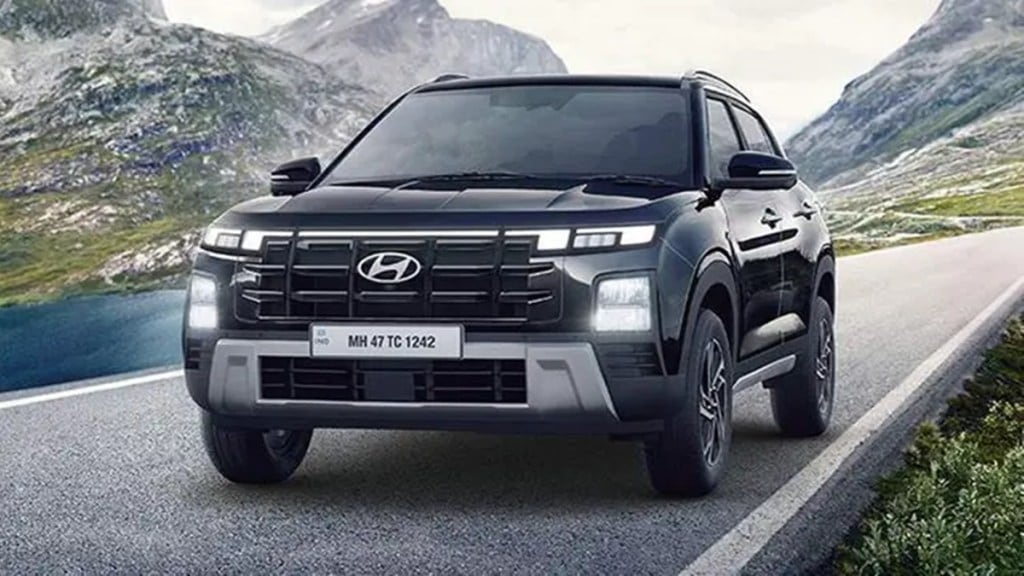
The Hyundai Creta has retained its position at the top of the mid-size SUV segment in 2025, but the model is now facing its most competitive phase since its debut a decade ago. While sales momentum remains strong, a wave of new launches and major updates from rivals is intensifying pressure on the segment leader.
Between January and November 2025, the Creta averaged monthly sales of over 17,000 units, around 7% higher than the same period last year. Demand picked up further during the festive season, with October volumes crossing 18,000 units.
The Creta’s sustained performance is on the back of a wide spread of powertrain options, an extensive feature list and strong brand recall. It also remains one of the few models in the segment to offer a diesel engine, which continues to draw interest. So far this year, petrol variants account for about 52% of Creta sales, while diesel contributes roughly 44%, reflecting balanced demand across fuel types.
However, competition seems to be building, with rivals such as the Kia Seltos, Maruti Grand Vitara, Toyota Hyryder, Volkswagen Taigun, Skoda Kushaq and Citroën Aircross, coming up with new products.
Victoris and Sierra Effect
Among the most significant disruptors is the Maruti Victoris, launched on September 15. Since entering the market, the Victoris has averaged close to 10,000 units a month, signalling strong early acceptance. Unlike the Grand Vitara, which is sold through Maruti Suzuki’s Nexa outlets, the Victoris is retailed via the company’s Arena network, giving it wider reach. It also offers petrol, CNG and strong-hybrid powertrains, directly targeting buyers prioritising fuel efficiency and lower running costs. This strategy complements the Toyota Hyryder, which has stabilised at around 8,000 units a month and continues to expand hybrid penetration in the segment.
Tata Motors has also added momentum to the segment with the launch of the new Sierra in November. Positioned aggressively on price, the Sierra matches the Creta’s engine options.
Future Outlook
Similarly, Kia’s recently unveiled new-generation Seltos will also offer a strong alternative to buyers in the segment. Despite its age, the outgoing Seltos averaged around 5,800 units a month in 2025. The new version is larger than both the Creta and Sierra, featureing a comprehensively updated design and retaining familiar powertrains shared with the Creta.
The pressure is set to build further with Renault’s planned re-entry into the segment through the new Duster on January 26. Once a segment leader, the Duster will return with a petrol-only strategy, reflecting changing market preferences. Facelifts for the Volkswagen Taigun and Skoda Kushaq are also expected early next year, bringing upgraded interiors and features such as panoramic sunroofs, now increasingly standard expectations in the category.
Industry experts say the Creta is entering its toughest phase yet. V G Ramakrishnan, managing director at Avanteum Advisors, says the influx of well-equipped new models is forcing established players to react faster and rethink feature strategies. Ravi Bhatia of Jato Dynamics said that products such as the Victoris and Sierra are altering value perceptions by offering higher feature content at lower trims.
While Hyundai’s brand strength, dealer reach and proven product fundamentals continue to support the Creta’s leadership, analysts agree that sustaining dominance in a rapidly evolving segment will demand faster updates and sharper differentiation.


