
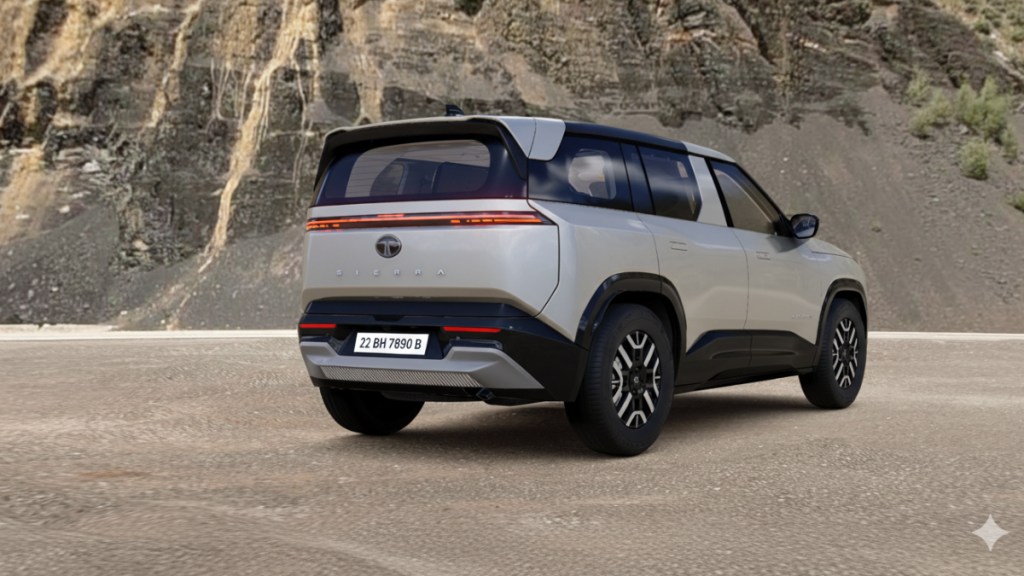
The Bharat (BH) Series vehicle registration, introduced by the Ministry of Road Transport and Highways (MoRTH) in 2021, continues to gain popularity among professionals with transferable jobs. This pan-India vehicle registration system eliminates the need for re-registering your vehicle when relocating to another state, thus saving time and avoiding additional taxes or paperwork. For new car buyers in 2026, opting for a BH number plate during purchase is straightforward, especially if you meet the eligibility criteria.
The BH plate format is unique: YY BH #### XX, where:
– YY is the year of registration (e.g., 25 for 2025)
– BH denotes Bharat Series,
– #### is a random four-digit number,
– XX are two random letters (excluding I and O).
Eligibility criteria for BH number plates
To qualify for BH series registration on a new car, you need to meet the following requirements:
– Central or State Government employees
– Defence personnel
– Employees of Public Sector Undertakings (PSUs) or banks
– Private sector employees whose company has offices in at least four states or Union Territories
Note that the BH series number plate is available only for non-transport (personal) vehicles, including cars, motorcycles, and two-wheelers. Commercial vehicles like taxis or trucks are not eligible.
How to apply for BH number plate for a new car
The easiest way to get a BH number plate is during the purchase of a new car, as most authorised dealers can handle the process on the official Vahan portal (https://vahan.parivahan.gov.in/).
– When buying your new car, tell the dealership you want BH series registration. Confirm they support it (most major dealers do).
– The dealer will fill out Form 20 (application for registration) on the Vahan portal on your behalf.
Submit Eligibility Proof:
- Government / PSU / Defence employees: You need to provide your official ID card.
- Private sector employees: Submit Form 60 (working certificate), employment ID, and a certificate from your employer confirming offices in 4+ states/UTs.
– State authorities or the RTO will verify your documents.
– During the application, choose “BH” as the registration series type.
– Upload additional standard documents, which include:
- Invoice from the dealer
- Insurance certificate
- Address proof (Aadhaar, etc.)
- PAN card
- Temporary registration (if applicable)
- PUC (Pollution Under Control) certificate
– Now make an online payment (details below). After approval, the Vahan portal generates a random BH registration number.
– The dealer or RTO will issue the Registration Certificate (RC) and high-security number plate.
The entire process is largely handled online via Vahan, minimising RTO visits.
Road tax and fees for BH series
Unlike regular state registrations (one-time road tax for 10-15 years), the BH series number requires road tax payment every 2 years (or multiples like 4, 6, etc.), up to 14 years. After 14 years, it’s annual at half the previous rate.
Here are the tax slabs (on invoice price excluding GST, as of 2025):
– Vehicles under Rs 10 lakh: 8%
– Rs 10-20 lakh: 10%
– Above Rs 20 lakh: 12%
– Diesel vehicles: +2%
– Electric vehicles: -2%
– Hybrid/CNG: Standard rates apply
Additional fees include registration charges, smart card, HSRP (High Security Registration Plate), and FASTag.
This biennial tax system offers flexibility but may cost more long-term if you stay in one state (compared to states with lower upfront tax).
Benefits of BH series plate
– No re-registration or NOC required when moving states
– Nationwide validity
– Ideal for frequent relocators
– Streamlined digital process
With rising job mobility in India, the BH series is a practical choice for eligible buyers. Consult your dealer or visit the Vahan portal for the latest updates, as rules may evolve. If you’re not eligible, standard state registration remains the default option.


