


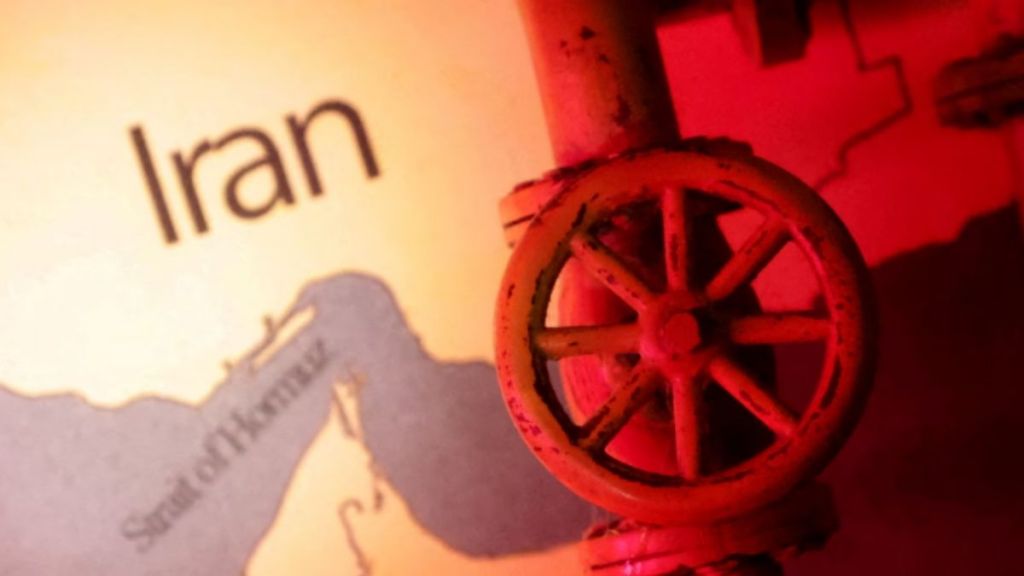

Oil prices dramatically neared $100 a barrel in early trading on Wednesday as renewed hostilities between the United States and Iran increased fears of supply disruption, with the conflict still surrounding conversations about exerting authority over the Strait of Hormuz.
Brent oil closes in on $100 a barrel
The international benchmark Brent crude futures surged 1.4% to $99.33 a barrel by 0212 GMT, while US West Texas Intermediate crude (WTI) was also up 1.4% to $94.34 a barrel, Reuters reported. At the time of writing (9:16 am IST), Brent stood at $99.337, as seen on the Trading Economics real-time tracker.
The consistently surging oil prices indicate how hopes for a permanent solution to the West Asia conflict are gradually fading away. With the US and Israel launching their joint military operation against Iran on February 28, the war will soon enter its seventh month, and it’s only further intensifying, as seen in the past few days.
The latest price hike comes after the Iranian-backed group Houthis in Yemen launched strikes on several Saudi cities, again dragging a US ally into the growing conflict. The last few days have also seen US military forces targeting multiple Iranian oil tankers, while Iran hit a US base in Jordan.
Experts sound the alarm on rising oil prices
ING analysts pointed out in a new note that recent developments have only reinforced the view that the resumption of peace talks between the US and Iran seems a far cry at this point. They added, “In the meantime, the market is likely to continue to price in a sizeable risk premium,” as quoted by Reuters.
Similarly, OCBC analysts said in their note, “Iran’s attacks on Saudi energy facilities and the subsequent destruction of five Iranian tankers raised concerns about another prolonged disruption to oil supplies,” as quoted by Reuters.
Meanwhile, Daan Struyven, co-head of global commodities research at Goldman Sachs, also hinted at the risky possibility of oil prices soaring above $120 a barrel amid continued attacks on shipping. Speaking to CNBC’s ‘Squawk Box Asia,’ Struyven flagged the chances of the staggering price surge as “definitely plausible.”
Pointing out that intensified hostilities in West Asia were even signalling a scenario wherein exports could fail to recover in the next few months, he told CNBC, “The developments over the last few days do suggest that that alternative upside price scenario, where exports actually stagnate over the coming few months, and where Brent exceeds $120 is the probability of that scenario is definitely going up as we’re seeing an intensification and broadening of the shipping attacks.”
Latest developments that triggered the scary price surge
Although military action between the US and Iran had noticeably halted for about a month, the strikes resumed towards the end of August following US President Donald Trump’s decision to exert “economic pressure” on Tehran, in addition to hitting its ally countries with sanctions as well.
Tuesday particularly saw the US and Iran engaging in a tit-for-tat scenario, as both sides intensified their attacks against the other. Iranian-backed Houthis’ attacks on four cities in the south of Saudi Arabia left 73 people wounded, while oil installations in the area were set ablaze.
Subsequently, the US military’s Central Command (Centcom) announced that it destroyed five Iranian crude vessels the same day, posting a video of the attacks. CENTCOM called it a response to Iran’s Islamic Revolutionary Guard Corps (IRGC) targeting a US Navy warship with ballistic missiles twice just days ago.
Issuing yet another warning against Tehran, US Secretary of State Marco Rubio told reporters during a visit to Colombia that every time Iran continues to try to attack US naval ships, it will lose tankers.
Iran’s retaliatory stance has since involved launching a ballistic missile attack on a US base near Al Azraq in Jordan, according to an IRGC statement pushed by state media. Despite Iran claiming heavy damage in the aftermath, Jordan said its air defences intercepted 18 of the 20 Iranian missiles, adding there were no casualties reported.
US continues to apply economic pressure on Iran
Meanwhile, Tuesday also saw the US issuing 36 Iran-related sanctions in a bid to target the country’s aviation sectors and companies, as part of Trump’s ‘Operation Economic Outcast.’ In late August, the White House formally released details of the POTUS’ economic operation against Iran, describing it as an “unprecedented campaign to sever every remaining economic lifeline sustaining the Islamic Republic of Iran.”
The US Treasury Department has since revealed that the latest offensive was aimed at grounding the Iranian Mahan Air, which was already facing both US and EU sanctions. US authorities asserted that these sanctions would ultimately expand to all other Iranian airlines.
Moreover, Treasury’s Office of Foreign Assets Control even suspended three Iran-related aviation authorisations that allowed non-US airlines to fly US-origin or US-controlled commercial aircraft into Iran.
”Under Operation Economic Outcast, we promised severe consequences for those providing financial lifelines to the Iranian regime,” Bessent said in a statement. “Let this be a warning to anyone doing business with Iran’s remaining airlines, all of which we sanctioned today: You are at risk of being cut off from the global financial system.”
Strait of Hormuz in limbo
Iran, on the other hand, said it captured a US unmanned submarine at the entrance of the Strait of Hormuz. As per Iranian state media, the 19-foot vessel, Dive-LD, was built by California defence firm Anduril. It can carry out missions such as mine countermeasures, seabed mapping, intelligence gathering and the inspection of underwater infrastructure such as cables and pipelines, Reuters reported.
“We trapped one of the most modern, intelligent and unmanned submarines of the terrorist American army at the entrance to the Strait of Hormuz. This submersible is equipped with the latest technologies,” the Revolutionary Guards Navy said in a statement, as reported by Iranian state media.
Earlier this week, Iranian Foreign Ministry Spokesman Esmail Baghaei told reporters that a deal with Oman to navigate a safe route through the Strait of Hormuz was just days away. The critical waterway has remained severely affected since the war started in February.
Six commodity vessels managed to cross the Hormuz Strait on Tuesday, according to Kpler’s preliminary shipping data cited by Reuters. The number fell from nine the day before and remained below the 10-day average of about 12.