


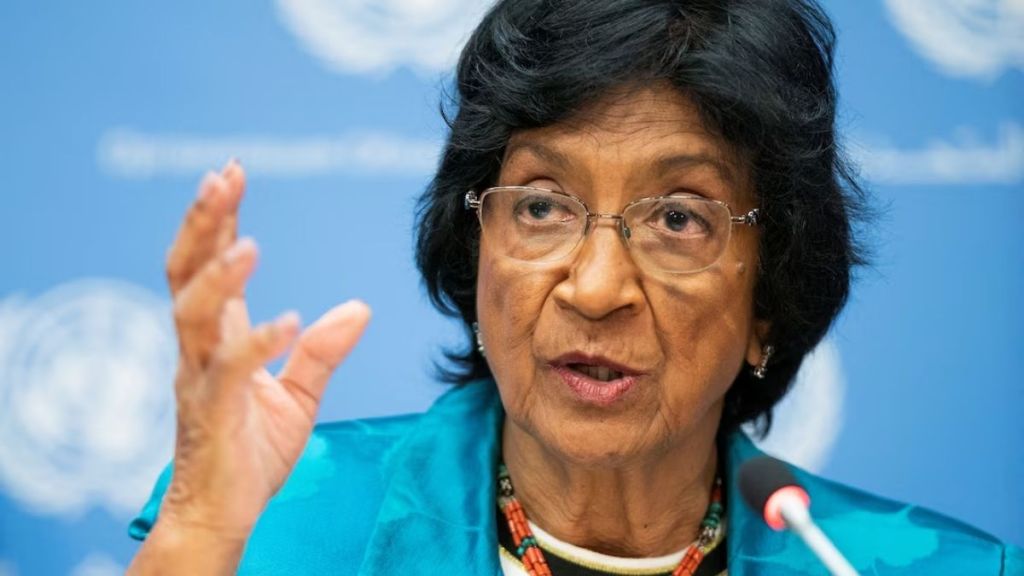

Navi Pillay Nobel Peace Prize Winner 2026: Indian Tamil-origin South African jurist Navanethem “Navi” Pillay, a former United Nations High Commissioner for Human Rights, won the 2026 Nobel Peace Prize on Friday for her work promoting peace, international law and accountability.
The Norwegian Nobel Committee recognised her career defending victims of violence and challenging abuses of power, reported Reuters.
Pillay, 85, worked as a lawyer during South Africa’s apartheid era before serving as a judge at the International Criminal Tribunal for Rwanda (ICTR) and the International Criminal Court (ICC). She led the UN human rights office from 2008 to 2014.
“A common thread runs from her early work defending Nelson Mandela and others who stood up against apartheid to her service as a judge in some of the key international court cases of our time,” the committee said, according to Reuters report.
The prize carries an award of 12 million Swedish kronor, worth about $1.2 million. It will be presented in Oslo on December 10, the anniversary of Alfred Nobel’s death, reported Reuters.
Who is Navi Pillay?
Born on September 23, 1941, in Clairwood, Durban, Pillay comes from a South African family of Indian Tamil descent. She grew up under apartheid, the system of racial segregation that denied non-white South Africans equal rights.
According to South African History Online, she earned a Bachelor of Arts degree in 1963 and a Bachelor of Laws degree in 1965 from the University of Natal. In 1967, she became the first Black woman to establish her own law practice in Natal.
Pillay represented anti-apartheid activists and worked on cases involving political detention, torture and solitary confinement. In 1973, she secured a ruling that established political prisoners’ right to access legal counsel.
She later pursued postgraduate studies in the United States, earning a Master of Laws degree from Harvard University in 1982 and a Doctor of Juridical Science degree in 1988.
How did she become an international judge?
In 1995, Pillay became an acting judge of South Africa’s High Court and was elected to the International Criminal Tribunal for Rwanda, which prosecuted people accused of responsibility for the 1994 genocide.
She became the tribunal’s president in 1999 and served until 2003. She was its only woman judge during its first four years, South African History Online reported.
One of the tribunal’s landmark cases involved Jean-Paul Akayesu, a former Rwandan mayor convicted of genocide and crimes against humanity. The judgment established that rape could constitute an act of genocide under certain circumstances and recognised rape as a crime against humanity.
The ruling became an important precedent in international law on sexual violence during armed conflict. Pillay joined the International Criminal Court in The Hague in 2003, serving in its Appeals Division until 2008.
What did she do as UN human rights chief?
Pillay became UN High Commissioner for Human Rights in September 2008 and held the position until 2014. The office promotes and protects human rights globally, including by raising concerns about alleged violations and engaging governments.
During her tenure, she called for investigations into alleged human rights violations by both sides following the end of Sri Lanka’s civil war in 2009. Her remarks drew criticism from the Sri Lankan government at the time, South African History Online reported.
Her role involved addressing allegations against governments and pressing for accountability under international human rights standards.
Pillay also worked on equality and women’s rights in South Africa. She participated in the Women’s National Coalition, which sought to advance women’s rights during the country’s transition from apartheid.
She contributed to efforts to secure an equality clause in South Africa’s Constitution, which prohibits discrimination on grounds including race, gender, religion and sexual orientation. She also co-founded Equality Now, an international organisation working to advance the rights of women and girls.
Her work covered issues including discrimination, domestic violence, torture and the rights of detainees.
Nobel Peace Prize significance
The award recognises a career spanning legal defence under apartheid, international criminal justice and human rights advocacy at the United Nations.
Pillay also chaired the UN Commission of Inquiry on the Occupied Palestinian Territory. A report published in 2025 concluded that Israel had committed genocide in Gaza. Israel rejected the findings as “scandalous”, Reuters reported.
The award ceremony is scheduled for December 10 in Oslo.