


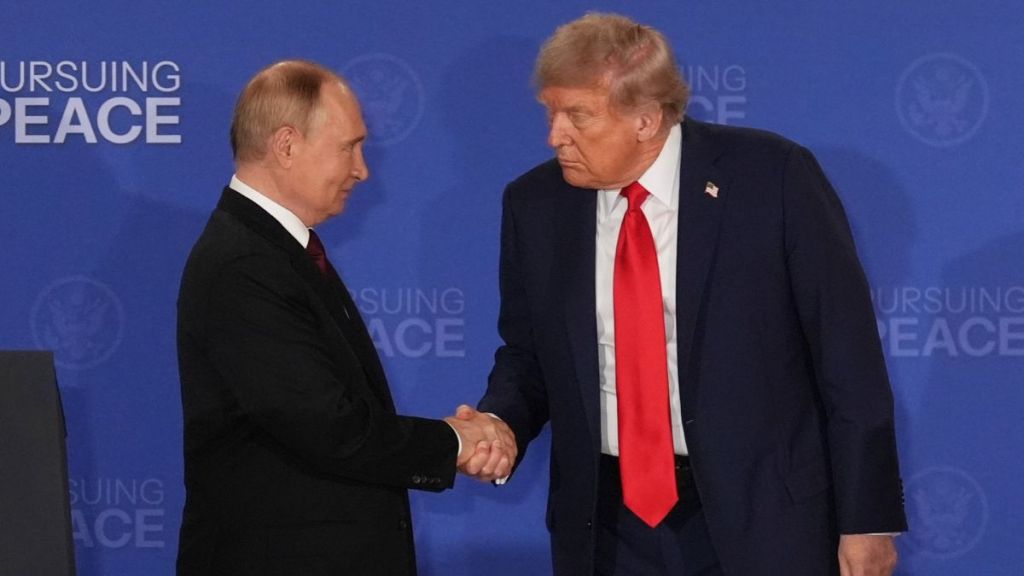

The United States and Russia are discussing plans to bring American energy companies back to the Russian market as part of efforts to end the war in Ukraine, reported the Financial Times. The proposals include restarting oil projects, resuming Russian oil sales to Europe and easing some restrictions on business ties between the two countries.
The discussions could mark a major change after years of economic isolation for Moscow. However, US officials have repeatedly said the proposed deals would not go ahead until the fighting ends.
According to the Financial Times, which cited people familiar with the talks, the White House and the Kremlin have discussed restarting a joint venture involving American and Russian oil companies off Sakhalin Island in Russia’s Far East.
The two sides have also discussed involving US oil companies in plans to resume Russian oil sales to Europe through the Druzhba pipeline.
US President Donald Trump’s special envoy, Steve Witkoff, discussed possible business deals with Russian President Vladimir Putin during a meeting in St Petersburg in early September, the FT reported.
During a visit to Moscow last week, photographs released by the Kremlin press pool showed Witkoff with the words “Business Deals” written on his notepad.
US, Russia discuss several business deals
The proposals go beyond oil and gas. According to the FT, the two countries have discussed allowing US airlines to use Russian airspace again for transit and overflights. This could reduce fuel costs by allowing airlines to take shorter routes.
Another proposal involves restarting cooperation between American and Russian companies to produce and supply titanium, a metal used in civilian aircraft.
The two sides have also discussed selling Russian oil major Lukoil’s international assets to investors with links to the White House.
Other proposals include a liquefied natural gas (LNG) project in Alaska involving Russia’s Novatek and the possible resumption of gas supplies to Europe through the remaining Nord Stream pipelines. Almost all of the pipelines were destroyed in a bombing in 2022.
The discussions also cover easing sanctions on potash fertilisers and allowing exports through Baltic ports. Such a move would require approval from the European Union.
Another proposal would transfer the management of the Zaporizhzhia nuclear power plant in Russian-occupied Ukraine to a US entity. Under the plan, electricity generated by the plant would be shared between Ukraine and Russia.
What the US-Russia oil shift means for India
On October 9, the US Treasury authorised the sale and import of Russian diesel into global markets, including the US, until April 7, 2027.
A separate easing of sanctions and tariffs under a new US law has led analysts to expect India to keep its Russian crude oil purchases close to current levels.
According to Kpler estimates, India’s Russian oil imports were expected to reach 1.8 million to 1.9 million barrels per day in October. This would be below the peak of 2.6 million barrels per day in June and 2.57 million barrels per day in July.
Price has been a major reason for India’s purchases of Russian crude. Before the war, Russia accounted for around 2% or less of India’s oil imports. Its share later rose to around 40% to 50% at its peak as discounted Russian crude made oil processing more profitable for Indian refiners.
In September, Russia’s Urals crude traded at around $23 a barrel below the international Brent benchmark, according to Business Standard.
However, India’s buying pattern is changing as refiners look for cheaper supplies from other regions.
Petroleum Minister Hardeep Singh Puri said on Tuesday that Russian oil imports had fallen as Indian refiners bought more discounted crude from Gulf countries.
Crude from the Gulf accounted for around 54% of India’s oil imports in September, returning to levels seen before the Russia-Ukraine war.
Puri also said India was not facing pressure from the US to reduce its Russian oil purchases.
The latest shift follows earlier changes in India’s buying decisions after Washington imposed sanctions on Russian oil producers Rosneft and Lukoil last year.
Russian diesel could challenge Indian exporters
A return of Russian diesel to global markets could put pressure on Indian refiners that have benefited from lower Russian supplies.
India has become an important supplier of diesel to international markets, including Europe.
According to Vortexa data, Indian refineries supplied around 60% of the diesel shipped through the Bab-el-Mandeb strait towards Europe in August, as Russian exports remained low.
Earlier this year, India’s diesel exports to Southeast Asia reached a seven-year high in March. The Iran war disrupted supplies from the Gulf, allowing Indian refiners to benefit from higher profit margins in Asian markets. This happened even as the Indian government brought back export taxes on diesel.
If Russian diesel shipments increase, Indian exporters could face greater competition in overseas markets.
US eases Russian diesel restrictions
Alongside discussions on wider business ties, Washington has already taken steps to allow Russian diesel into global markets.
Speaking to CNBC, US Energy Secretary Chris Wright said the US could allow more Russian diesel shipments depending on Moscow’s actions.
Wright described the suspension of sanctions on Russian diesel as an incentive for Russia to end the war, calling it a “carrot”.
He said more tankers could “quite possibly” sail under the waiver.
According to ship-tracking data cited by CNBC, a Russian-flagged tanker was expected to reach the US East Coast around November 9.
Under the arrangement between Trump and Putin, Russia would export 800,000 tonnes of diesel in October and November.
However, analysts say this amount is too small to have a major effect on prices, given global demand of around 28 million barrels a day.
Trump is also facing pressure over fuel costs ahead of the US midterm elections next Tuesday. Prices have risen sharply since the US and Israel attacked Iran on February 28.
Ukrainian President Volodymyr Zelenskyy has criticised the diesel arrangement. Ukraine has targeted Russian oil refineries this year in an effort to reduce revenue for the Kremlin.
The attacks led Moscow to impose a ban on diesel exports in July. Russia has since partially eased the restrictions to meet the terms of the arrangement.