


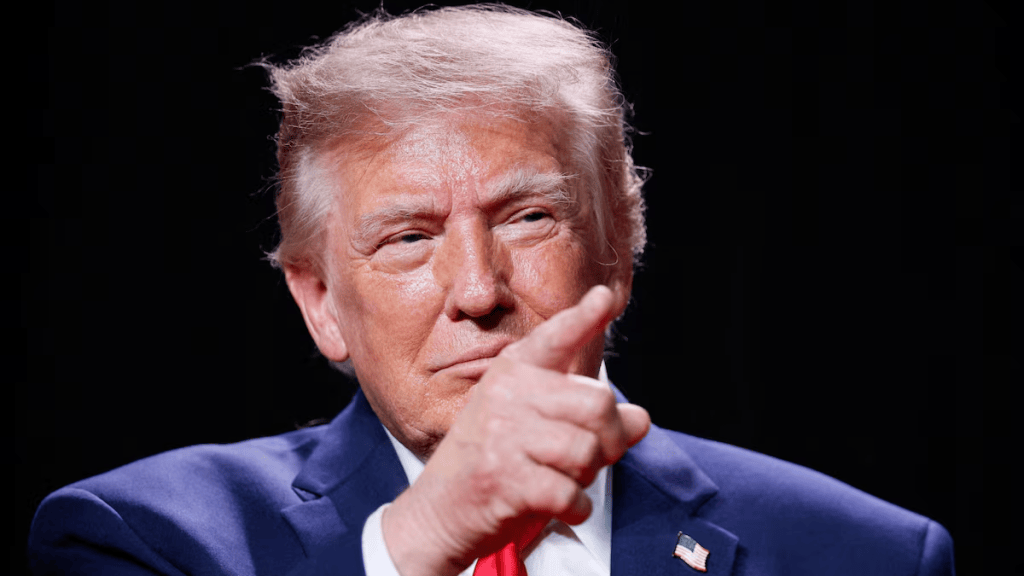

The White House has published six videos featuring US President Donald Trump on YouTube and Truth Social within 24 hours, even as his administration faces a court order barring the use of taxpayer funds for television advertisements promoting the president. The videos appeared on Monday, shortly after a federal judge in New York ordered the Trump administration to stop airing the disputed television advertisements using government money. The ruling came in the middle of criticism that the advertisements were partisan and could influence voters ahead of the November 2026 midterm elections.
The new videos focus on Trump’s record, policy promises and political opponents. Several feature footage of the president delivering speeches, while others highlight his administration’s actions and promises to voters. The development has raised questions about the administration’s continued use of political messaging after the court’s intervention, including whether shifting such content to social media changes the legal concerns surrounding the campaign.
What is the taxpayer-funded ad order?
On Sunday, US District Judge Jennifer L. Rochon of the Southern District of New York issued a temporary restraining order preventing the Trump administration from using federal funds to develop, produce, distribute or air the disputed advertisements for 14 days. The order followed a lawsuit filed by government watchdog group Common Cause, Democratic candidate Robert Hunter, Service Employees International Union Local 32BJ and its political action committee.
The plaintiffs argued that the administration was using public money to promote Trump and advance his political interests before the midterm elections. The advertisements were funded through a $20 million advertising purchase by the Department of Homeland Security (DHS). According to media tracking firm AdImpact, the advertisements had cost taxpayers more than $12 million.
Judge Rochon directed the administration to cancel the remaining advertisements and prohibited it from entering into, renewing or expanding agreements to develop and air the disputed campaign. In her ruling, Rochon said the plaintiffs “have demonstrated that they are likely to succeed on the merits, will suffer irreparable harm in the absence of an injunction, the balance of the equities tips in their favor, and an injunction serves the public interest”.
The White House has defended the advertisements as public service announcements similar to those used by previous administrations to communicate government policies. Critics, however, have argued that the videos focus heavily on Trump and do not primarily help citizens access specific government services. The administration had previously said it would stop purchasing television advertisements after Sunday. A court filing on Monday alleged that some advertisements continued to air on television networks, including ABC and CBS.
US Attorney for the Southern District of New York Jamie M. McDonald later said the government had not received the restraining order until Monday morning. The administration had informed the vendor distributing the advertisements that they would now cease, according to a status report filed with the court.
Why has the White House released new videos?
The White House’s latest social media videos focus on Trump’s achievements, policy positions and campaign promises. The videos were published on its YouTube channel and shared on Truth Social on Monday. The videos did not include descriptions or details identifying who paid for or produced them.
One video features footage of Trump delivering speeches and appearing at rallies, accompanied by dramatic music and a voiceover quoting Theodore Roosevelt’s 1910 speech, “The Man in the Arena”. The video ends with Trump signing an executive order at his desk in the Oval Office. The speech argues that credit belongs to those who take action and risk failure, rather than to those who merely criticise them.
Another video features Trump warning that people who steal from the American public will go to prison. The message resonates his administration’s efforts to target waste and fraud in the federal government. A separate video focuses on Democrats who voted against a measure to eliminate taxes on tips, a promise Trump subsequently fulfilled. It features images of Democratic lawmakers Elizabeth Warren, Chuck Schumer, Jon Ossoff, Jamie Raskin, Alexandria Ocasio-Cortez and Hakeem Jeffries.
The longest video runs for nearly 90 seconds and features White House Deputy Chief of Staff Stephen Miller outlining what he considers the president’s achievements. These include efforts to address trade imbalances, the removal of Venezuelan leader Nicolás Maduro and measures to strengthen border security. Two other videos focus on the administration’s no-tax-on-tips message and Trump’s repeated promise to give American adults $5,000 each if Republicans win the midterm elections. The videos’ release comes as the administration faces legal challenges over its use of public money for advertisements that critics say promote Trump and his political agenda.
What has the White House said about the controversy?
Trump has defended the television advertisements, describing them as a standard form of government communication. On October 5, he said on Truth Social that he considered the advertisements “to be a positive promotion” for the United States. He also indicated that he would use political fundraising to pay for the advertisements going forward. The White House later clarified that there were no immediate plans to reimburse the government for the money already spent.
The administration has maintained that the advertisements were intended to communicate government policies and achievements. Critics have questioned this explanation, arguing that the campaign resembles political advertising rather than conventional public service announcements. Senate Majority Leader John Thune, a Republican from South Dakota, also criticised the use of taxpayer money for the advertisements. “It shouldn’t be paid for with taxpayer dollars,” he told reporters.
Why are Democrats and watchdog groups opposing the ads?
The Democratic National Committee (DNC) has filed a separate lawsuit against the Trump administration, arguing that the advertisements could give Republicans an electoral advantage ahead of the November midterms. The DNC has alleged that the administration unlawfully used appropriated federal funds for publicity or propaganda purposes. It has asked the court to declare the spending unlawful and prevent the administration from continuing to use public money to develop and distribute the advertisements.
“While the American people are facing skyrocketing gas and food prices, Trump is hellbent on wasting taxpayer resources in a desperate attempt to boost his own cratering approval ratings. The American people are sick and tired of Trump and his Republican enablers, and in November they will hold them accountable. The DNC will continue to fight in court to bar Trump from using taxpayer resources for more of this blatant propaganda,”DNC spokesperson Angelo Fernandez told NewsWeek.
Common Cause has also criticised the administration’s shift towards social media videos. The temporary restraining order remains in effect for 14 days, restricting the administration’s use of federal funds for the disputed advertisements. A hearing in the DNC’s lawsuit was scheduled for October 15.
The central legal question is whether the administration’s spending on the advertisements violates restrictions on the use of appropriated government funds for publicity or propaganda purposes. The publication of the new social media videos adds another dimension to the dispute. The court order specifically addresses the challenged advertisements and the use of federal funds to develop and distribute them. The fact that the White House has published videos on YouTube and Truth Social does not, by itself, establish whether their production or distribution violates the order.
The administration’s funding arrangements for the new videos were not disclosed in the material published on Monday. Their release nevertheless comes at a time when the use of taxpayer money for Trump’s political messaging is facing legal scrutiny and bipartisan criticism. The outcome of the legal challenges could determine whether the administration can continue using public funds for the disputed advertisements, as well as the limits on government-funded political messaging ahead of the midterm elections.