


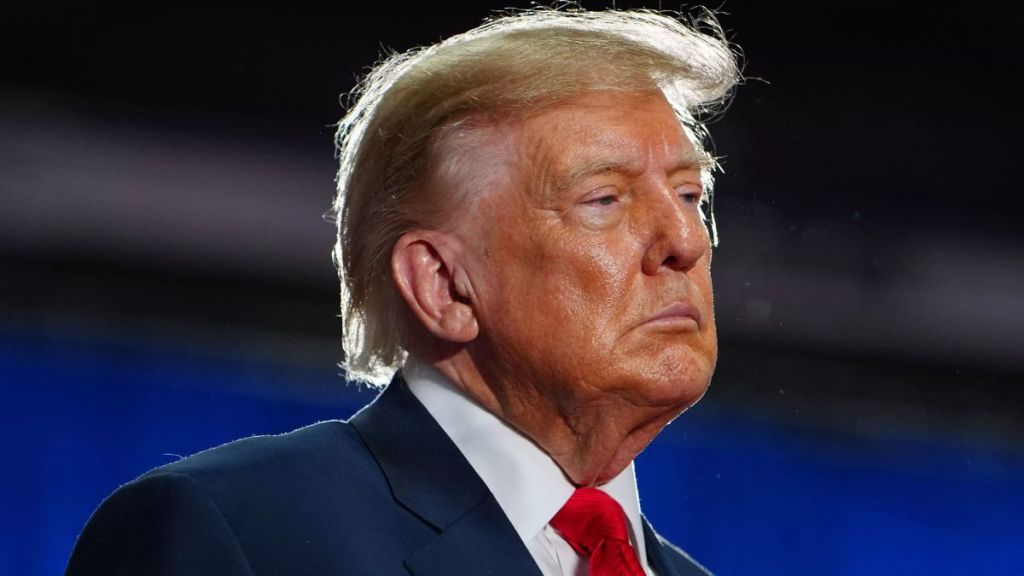

US President Donald Trump announced on Saturday that German luxury carmaker Audi plans to invest $4 billion in an assembly plant in Georgia, which is expected to produce 200,000 sport utility vehicles (SUVs) annually.
The proposed factory is expected to create around 4,500 jobs. Construction is scheduled to begin next year, production is expected to start in the early 2030s, Audi said, according to Reuters.
Trump made the announcement at a rally in Perry, near Macon in central Georgia, as he seeks to build support for Republicans ahead of the November 3 midterm elections. Georgia has competitive races for the US Senate and governor.
Audi CEO Gernot Doellner said the company plans to manufacture its largest and most premium SUVs in Macon, Georgia.
“We are planning to bring our biggest and most premium SUVs, and produce them here in Macon, Georgia,” Doellner said at the event. “This is a long-term investment because we believe in the American market.”
According to a US official who spoke to Reuters, the plant is expected to assemble Audi’s Q7, Q8 and Q9 SUVs. However, the final investment decision is still pending.
Trump tariffs and Audi’s US expansion
The announcement comes as Trump continues to pressure foreign automakers to shift production to the United States. His administration has imposed tariffs on imported vehicles, steel, aluminium and car parts to encourage domestic manufacturing.
Currently, Audi imports all its vehicles to the US from Europe or Mexico. The company’s imports were hit by Trump’s tariffs, which cost it around 1.2 billion euros, or $1.4 billion, last year.
Republican US Senator Bernie Moreno said the tariffs helped bring the investment to the country. “With this investment, Audi will build all of their SUVs exclusively in the U.S.,” Moreno said. He added that the plant “would never have happened without tariffs, without common sense regulations and without eliminating California’s ability to regulate fuel economy standards.”
Trump has presented the planned factory as evidence that his trade policies are encouraging companies to invest in the US. Critics, however, argue that tariffs have raised vehicle prices and created uncertainty for automakers, leading some companies to delay investment decisions.
The expansion comes at a difficult time for Audi. Its global sales declined for the second consecutive year and fell 7% in the first half of 2026. Competition in China and US tariffs have affected demand, while the company’s US sales have dropped 16% this year.
Audi plans more production in South Carolina
Audi is also planning to produce 25,000 vehicles annually in neighbouring South Carolina, according to a US official who spoke to Reuters. Some of these vehicles, which are currently manufactured in Europe, would also be exported.
The vehicles are expected to be assembled at a $2 billion facility being built by Scout Motors, Volkswagen’s off-road vehicle brand, in Blythewood near Columbia, South Carolina.
Volkswagen CEO Oliver Blume has said the region is important for the group’s profitable growth. The proposed Audi factory in Georgia could further expand the company’s manufacturing operations in the US.
Concerns over German jobs
The planned American expansion has raised questions about the future of Volkswagen Group’s operations in Germany, where the company is facing rising costs, strong competition from Asian automakers and pressure to reduce spending.
Christiane Benner, head of Germany’s IG Metall union and Volkswagen’s deputy supervisory board chair, said increased production in the US made business sense. However, she stressed that the company must explain how the investment would affect workers across its factories. She also said Volkswagen’s supervisory board must make the final investment decision.
Olaf Lies, premier of Germany’s Lower Saxony state, said increased production in the US could create opportunities if German workers also benefited. Lower Saxony is Volkswagen’s second-largest shareholder.
Lies warned that growth in the American market should protect jobs and economic activity in Germany rather than replace them. Volkswagen is already dealing with tensions between management and workers over possible large-scale job cuts and factory closures. Audi’s Neckarsulm plant in southwestern Germany is among four Volkswagen factories that could face closure after 2030.
Other automakers consider US investments
Audi’s proposed investment comes as other foreign automakers consider expanding their manufacturing operations in the US amid uncertainty over trade policies.
In July, Japan’s Toyota Motor said it would invest $3.6 billion in a truck assembly line at its manufacturing campus in San Antonio, Texas. The 2.5-million-square-foot facility is expected to shift some truck production from Mexico to the US, be completed by 2030 and create 2,000 jobs.
Honda Motor is also considering building an assembly plant in the US. However, the Japanese automaker has warned that it may not proceed unless the United States-Mexico-Canada Agreement (USMCA) is extended.
South Korea’s Hyundai said last year that greater certainty over the trade agreement would allow it to unlock more than $20 billion in new US investments.
Trump has also cut government incentives for electric vehicles, contributing to a reduction in US electric vehicle and battery production. Employment in the country’s vehicle and auto-parts industries has also fallen since he took office in January 2025, according to Reuters.
Audi’s proposed Georgia factory could expand US vehicle production and create thousands of jobs. However, its long-term impact will depend on the final investment decision, market demand and the effect of US trade policies on automakers and their workers.