


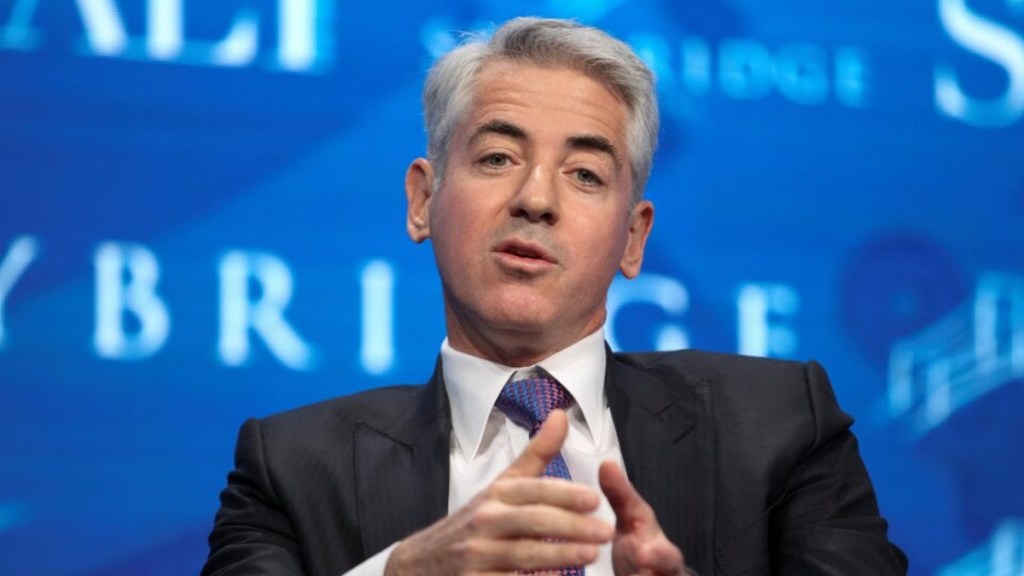

Billionaire investor Bill Ackman has publicly questioned the viability of a proposed $300 billion reconstruction fund for Iran, claiming that it is unclear who would finance such an effort after years of tensions between Tehran and its regional rivals.
The debate follows a memorandum of understanding (MoU) signed by US President Donald Trump and Iranian President Masoud Pezeshkian, which included a commitment to work with regional partners on a reconstruction and economic development plan for Iran worth at least $300 billion.
I don’t understand who is going to invest in a $300 billion reconstruction fund for Iran. The U.S. is not doing so, and why would the Qataris or any other country in the Middle East that was just attacked by Iran invest one penny to support Iran’s reconstruction?
— Bill Ackman (@BillAckman) June 20, 2026
Most of the…
Ackman said he could not understand where the money would come from. Posting on X, “I don’t understand who is going to invest in a $300 billion reconstruction fund for Iran. The U.S. is not doing so, and why would the Qataris or any other country in the Middle East that was just attacked by Iran invest one penny to support Iran’s reconstruction?
Most of the damage inflicted on Iran was directed to military targets. Why would anyone want to help Iran rebuild its military capabilities? Even if the funds were limited to humanitarian-related infrastructure, if such a thing exists the money is fungible, and we know the first freed up dollar will go to rebuild Iran’s ballistic and nuclear capabilities. What am I missing?”
What the agreement says
The controversy centers on a provision in the newly signed US-Iran MoU that states the United States will work with regional partners to develop a reconstruction and economic development plan for Iran worth at least $300 billion. The agreement does not specify where the money would come from or how the mechanism would operate. Instead, it leaves the implementation details to a 60-day negotiation period. Under the agreement, the United States also commits to providing any necessary licenses, sanctions waivers, or permissions needed to support the plan.
Trump rejects claims of US funding
President Trump has pushed back against claims that American taxpayers would finance the reconstruction effort. In a Truth Social post, Trump wrote, “There is no 300 Billion Dollar payment to Iran by the U.S. That’s Fake News!” He dismissed criticism of the plan as Democratic “propaganda” and insisted that no direct US funding was involved. Vice President JD Vance backed that position in an interview with The New York Times, saying, “Not a cent of American money goes to Iran.”
Vance later suggested that regional Arab countries and outside investors could potentially contribute to the reconstruction effort. According to him, economic integration could help create conditions for a more durable peace in the region. However, no country has publicly committed funding to the proposed plan. Vance also said Iran would only gain access to reconstruction resources if it complied fully with the agreement and changed its behaviour.
Political backlash grows
Regardless of the administration’s assurances, the proposal has become a political issue in Washington. Democrats have linked the $300 billion figure to domestic spending priorities, arguing that such a large amount of money could instead be used for programs benefiting Americans.
Senator Amy Klobuchar wrote on X, “With $300 billion, we could end homelessness, fund cancer research for 40 years, and give every child free pre-K for over 7 years. Instead, Trump is sending it to Iran.”
Senate Democratic leader Chuck Schumer also criticized the proposal, saying, “Democrats will not be helping Trump send $300 billion to Iran.”
Representative Jason Crow made a similar argument, writing, “Republicans won’t find the money to help Americans keep their healthcare. But they will find the money to get Iran $300 billion.”
Some Republicans join criticism
Criticism has not been limited to Democrats. Republican Senator Roger Wicker, a longtime Iran hawk and Trump ally, questioned the scale of the proposal.
Wicker said the $300 billion figure, even if it does not involve taxpayer funding, would make “Iran’s payoff under President Obama’s 2015 deal look like a pittance by comparison.”
His comments referred to the 2015 Joint Comprehensive Plan of Action (JCPOA), under which Iran gained access to roughly $55 billion in frozen assets in exchange for limits on its nuclear program and international inspections.
Trump withdrew the United States from that agreement in 2018 and has frequently argued that any future deal with Iran would be stronger than the JCPOA.
Representative Thomas Massie also criticised the reconstruction proposal, writing on X that “$300 billion is 5X as much as Congress spends on our roads & bridges annually.” He added, “I’m tired of winning,” a sarcastic reference to one of Trump’s frequently used political slogans.