


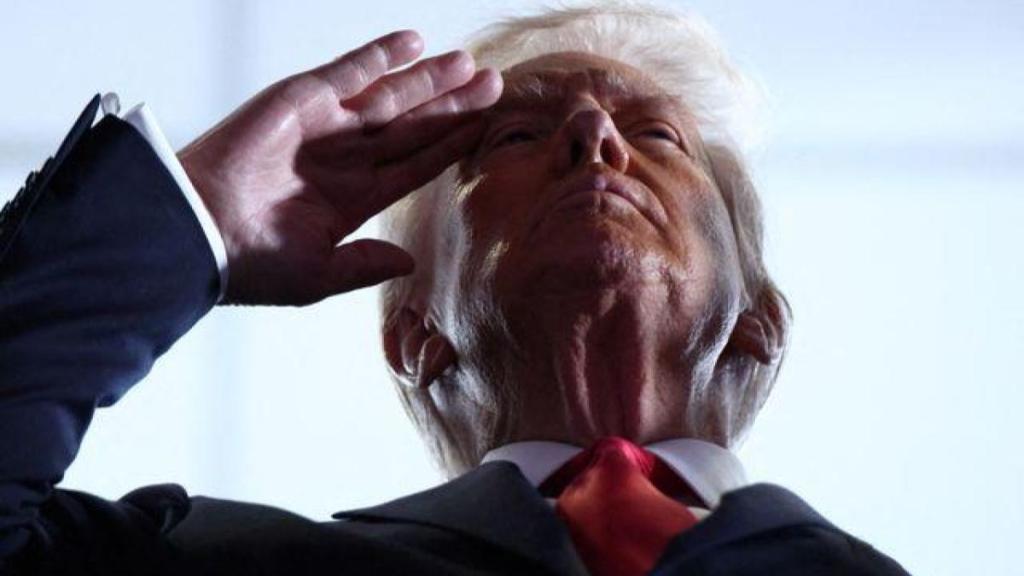

Democrats have won the House of Representatives and the Senate in the November 3 midterms, handing Donald Trump a defeat that will make his final two years in office considerably harder. Reuters reported sweeping gains in Republican strongholds as anger over living costs and the Iran war reshaped Washington. But what, exactly, has the president lost?
His party’s protection on Capitol Hill, certainly. His constitutional powers, much less so.
Calling Trump a “lame duck” describes his political position. A “lame-duck” president is a leader nearing the end of their term, whose political influence and ability to push through policies have weakened. This could be a second-term president facing midterm election setbacks or an outgoing president whose successor has already been elected.
There is also a timing catch. Under the 20th Amendment, the new congressional terms begin on January 3, 2027. Republicans retain the outgoing Congress until then. Trump’s presidential term runs until January 20, 2029.
The coming struggle is over how much he can accomplish while Democrats control legislation, investigations and confirmations.
What Trump can do
Trump can reject bills Democrats send him. CRS’s guide to veto overrides explains that overturning his decision requires two-thirds of members voting in each chamber, with a quorum present. Winning ordinary majorities does not clear that hurdle.
Most legislation also needs 60 Senate votes to overcome a filibuster under current rules. Democrats can control the agenda without being able to enact it.
Expect the White House to lean harder on executive action. Trump can direct agencies, change administrative priorities and revoke earlier presidential orders where the law permits.
This leaves room to advance domestic priorities through administration and enforcement, even when legislation stalls. The loss of a congressional majority does not halt the work of executive agencies.
Trump will still conduct diplomacy and serve as commander-in-chief. He can negotiate with Moscow, Beijing or Tehran without first winning a congressional confidence vote.
He can also use executive agreements to conduct foreign policy. The Senate’s official guidance explains that these do not go through the treaty approval process. They still need a valid legal basis, and commitments requiring new legislation or money bring Congress back into the picture.
Indian exporters should be especially wary of treating the midterms as a tariff-repeal referendum.
Congress holds the constitutional power over tariffs, but has delegated significant authority to presidents. CRS’s March 2026 review lists several available statutes, including Section 232 for national-security concerns and Section 301 for specified foreign trade practices.
Those statutory routes remain available. Democrats can try to narrow them, but legislation faces Trump’s veto. Reuters reported on November 1 that Democratic gains were more likely to produce investigations and repeal votes than sweeping tariff rollbacks.
New Delhi gains potential allies in Congress. It still needs to negotiate with the administration.
Trump retains substantial authority over how existing immigration law is administered. The executive branch conducts enforcement, while the State Department handles visa issuance, refusal and revocation under powers delegated by Congress.
A July CRS report explains that visa powers are broad but constrained by statutes and the Constitution. A Democratic majority does not automatically reverse those administrative decisions.
Funding makes the picture more complicated. CRS’s FY2026 Homeland Security appropriations report records that a June law provided Immigration and Customs Enforcement and Border Patrol funding through fiscal 2029.
That means an annual spending standoff would not automatically switch off the enforcement machinery. Rescinding existing funding would itself require legislation.
Trump also retains his pardon power. The Justice Department explains that presidential clemency covers federal offences, not state convictions or impeachment. http://www.justice.gov
Politically, he can still rally supporters, endorse candidates and blame Democrats for obstruction. Yet Republicans looking towards 2028 may become less willing to absorb the electoral cost of loyalty.
What Trump cannot do now
The restraint works both ways. Trump cannot enact fresh tax cuts, rewrite healthcare statutes or secure new spending simply by announcing them. He needs Congress to legislate and from January that means bargaining with Democratic majorities.
An executive order is no substitute for legal authority. In Executive Orders: An Introduction, CRS explains that such directives must rest on constitutional powers or authority delegated by Congress. Courts can review whether an administration has exceeded those limits.
Money presents another constraint. Congress decides what funding to provide and on what terms. Trump can veto a spending bill, but that veto cannot manufacture an appropriation.
Nor can he simply cancel spending he dislikes. The Government Accountability Office says withholding enacted funds must comply with the Impoundment Control Act’s procedures and limits. A budget confrontation could produce concessions or a shutdown; it does not automatically produce presidential control.
Appointments are a particularly consequential loss. According to an assessment by Reuters, a Democratic Senate could block judicial nominees, Cabinet appointments and ambassadors, including a Supreme Court nominee if a vacancy arises.
That does not remove officials already confirmed. It does make replacing them, filling vacancies and extending Trump’s judicial legacy harder. Reuters also reported that Republicans would likely rush confirmations before January.
He can use acting officials in some executive posts, but the Government Accountability Office’s guidance explains that the Vacancies Act imposes eligibility rules and time limits.
His tariff powers also have conditions. They may require investigations and findings, or impose limits on duration and rates. They are not an unrestricted presidential right to tax imports.
The courts have already demonstrated that distinction. In its February 20 ruling in Learning Resources v Trump, the Supreme Court held that the International Emergency Economic Powers Act did not authorise presidential tariffs.
On immigration, Trump cannot simply rewrite statutory H-1B caps. His remaining influence over administration and enforcement means there is no immediate visa reset for Indian students and professionals. Democrats can pursue immigration reforms, but must navigate the same legislative barriers that obstruct their other priorities.
He cannot treat every international bargain as his to settle alone. Formal treaties require consent from two-thirds of senators present. On military policy, CRS’s national-security overview identifies funding restrictions, legislation, hearings and arms-transfer reviews as tools Congress can use to constrain a president.
Its War Powers Resolution explainer also describes reporting, consultation and time limits governing certain military deployments without congressional authorisation. These provisions are not a licence to wage war indefinitely.
Democrats could therefore make the Iran war harder to sustain politically and financially. They cannot assume that winning an election instantly ends military operations.
For India and other partners, Trump remains the person negotiating American commitments. The durability and financing of those commitments will increasingly require looking beyond the White House.
Democratic committee chairs can turn scrutiny into a recurring political problem. The Associated Press reported that prospective investigations include administration policies, the Trump family’s business dealings and corporate influence. Disputes over documents and executive privilege could delay disclosure.
Impeachment is possible; removal is a different threshold. Official congressional guidance requires two-thirds of senators present to convict, following impeachment by a House majority. Control of both chambers does not by itself supply those votes.
Trump’s remaining power will depend on which instrument he uses: legislation demands bargaining, executive action demands legal authority and diplomacy can move faster than Congress. A lame-duck president can still make consequential decisions. What he has lost is the assurance that his party will protect those decisions from scrutiny.