


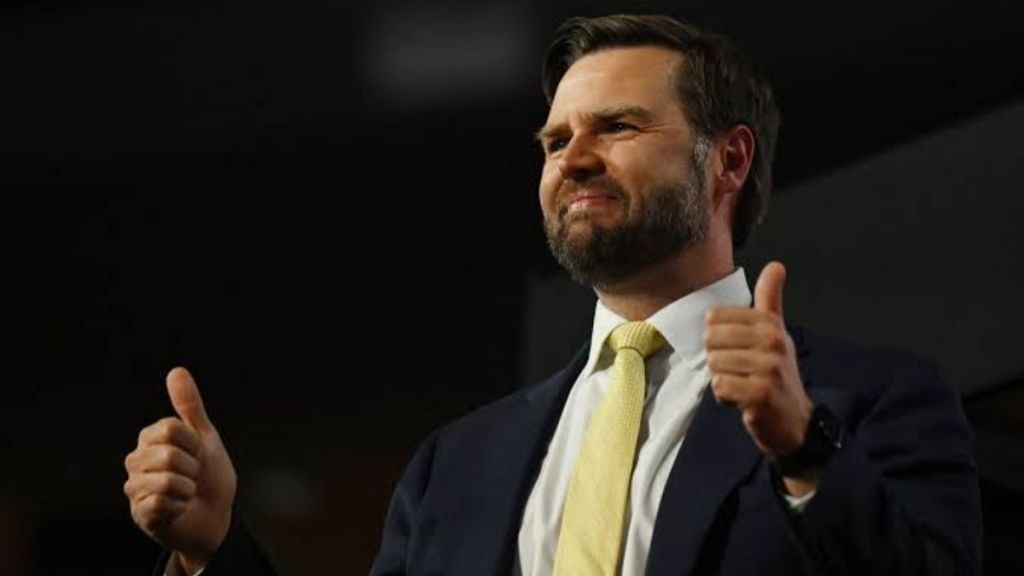

US Vice President JD Vance said the H-1B visa programme should be used to bring “actual geniuses” to the US, rather than foreign workers who replace American employees at lower wages.
Speaking on the “All-In Podcast”, Vance said companies seeking H-1B workers should look for people who can “significantly enrich the tech ecosystem or the American economy”. “You’re not just replacing one accountant who makes $60,000 with a lower-wage foreign accountant who makes $45,000 a year,” Vance said.
His comments come as the Trump administration has introduced changes to the H-1B selection process and proposed new fees and employment rules. The administration’s formal policies also do not use “actual genius” as a legal category. Instead, official documents refer to concepts such as high-skilled and high-paid workers.
What does Vance’s H-1B vision mean in practice?
The administration’s stated goal goes back to President Donald Trump’s September 19, 2025 proclamation on H-1B workers. The White House had earlier said at the time that the programme had been created to bring temporary workers to the US for “additive, high-skilled functions”. It accused some employers of using the system to replace American workers with lower-paid foreign labour.
The proclamation said the administration wanted to address what it described as abuse of the system while still allowing US companies to hire “the best of the best temporary foreign workers.”
Trump’s proclamation also directed the Labor Department to begin rulemaking on prevailing wage levels. It directed the Department of Homeland Security to initiate rulemaking to prioritise the admission of “high-skilled and high-paid” foreign workers.
That approach is now visible in the H-1B selection process. A DHS rule published in December 2025 created a weighted selection system for cap-subject H-1B registrations. The system gives greater weight to higher-skilled and higher-paid workers while retaining opportunities for employers seeking workers across different wage levels.
The US Government Accountability Office said in January 2026 that the system was designed to “generally favor” the allocation of H-1B visas to higher-skilled and higher-paid workers. The rule took effect on February 27, 2026.
However, the administration has not created a visa category only for “geniuses”. Workers at different wage levels can still enter the selection process. The new system changes the weight given to registrations rather than eliminating all lower-wage categories.
The administration has also pursued higher costs for H-1B hiring. On August 25, 2026, DHS published a proposed rule in the Federal Register that would establish a $103,265 fee for all H-1B cap-subject petitions, including petitions eligible for the advanced-degree exemption.
The proposed fee would be paid at the time of filing and would come in addition to other applicable fees or payments. DHS said the money would help recover part of the federal government’s costs of administering the lawful immigration system, including work carried out by DHS, the Department of Justice, the Department of State and the Department of Labor.
The $103,265 amount is therefore a proposal, not a fee that every H-1B employer must currently pay. DHS set September 24, 2026 as the deadline for public comments on the proposal.
The proposal also needs to be separated from another H-1B measure introduced by Trump in September 2025.
On September 19, 2025, Trump issued a proclamation restricting the entry of certain H-1B workers unless their petitions were accompanied or supplemented by a $100,000 payment. The restriction was due to take effect on September 21, 2025 and was set to expire after 12 months unless extended.
The proclamation applied to certain H-1B workers seeking entry from outside the United States. It also allowed the DHS secretary to make exceptions when the hiring of such workers served the national interest and did not threaten US security or welfare.
The White House said the measure was necessary to address what it described as widespread abuse of the programme. It also said higher costs could help prevent companies from using H-1B workers as a cheaper substitute for American employees.
But the legal position of that $100,000 measure later changed. A federal judge vacated the agency guidance implementing the payment on June 8, 2026. DHS acknowledged the ruling in its August 25 Federal Register proposal and said the government had appealed the decision to the US Court of Appeals for the First Circuit.
That means the $100,000 payment and the proposed $103,265 fee are two different measures. The first came from Trump’s 2025 presidential proclamation and became the subject of litigation. The second is a new DHS proposal published in August 2026.
As of September 16, 2026, the proposed $103,265 fee had not become a final rule.
What happens if an H-1B worker loses a job?
The administration has also proposed a change that could affect H-1B workers already in the United States. On September 10, DHS had proposed eliminating the existing 60-day grace period for certain H-1B workers who lose their jobs.
The grace period has existed since 2017. It allows eligible workers to remain in the US for up to 60 days after employment ends, or until the end of their authorised validity period, whichever comes first, while they look for another employer or take other permitted steps.
Under the proposal, that grace period would be removed for affected workers. The change would also cover certain other temporary worker categories. DHS said employers could instead offer the same job to an equally qualified US worker or go through the H-1B petition process again, depending on their workforce requirements.
The proposal is not yet final. It would go through a public comment process before DHS could issue a final rule.
The government wants to give greater importance to highly skilled and highly paid workers, increase the cost of some H-1B hiring and make it harder for some workers to remain in the US after losing their jobs.
But each measure remains at a different stage. The weighted selection system is already in effect. The $103,265 fee remains a proposal. The removal of the 60-day grace period also remains a proposal. The earlier $100,000 payment remains tied to litigation after a federal judge vacated the implementing guidance.
What about Indian H-1B workers?
India becomes relevant because of the scale of Indian participation in the H-1B programme, rather than because the Trump administration has announced an India-specific H-1B policy.
USCIS data for fiscal year 2024 shows that 71% of approved H-1B petitions involved beneficiaries born in India. China was the second-largest group at about 12%. USCIS reported 283,397 approved petitions involving India-born beneficiaries out of 399,395 total approved H-1B petitions that year.
The USCIS figures are based on the beneficiary’s country of birth, rather than nationality.
This makes India an important part of any discussion about broad changes to the H-1B system. But the rules themselves apply to H-1B workers and employers generally. They do not create a separate set of H-1B rules for Indian nationals.
The available USCIS data shows that Indian-born workers form the largest group among approved H-1B beneficiaries. It does not, by itself, show how many Indian workers would qualify or fail to qualify under the new weighted selection system, nor does it establish how many would be affected by the proposed fees or the proposed change to the grace period.