


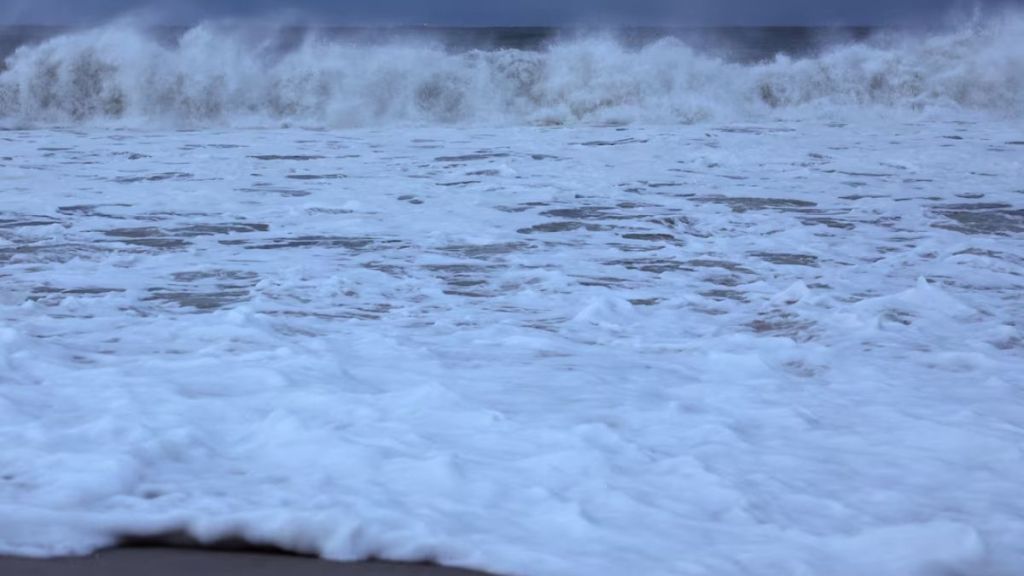

A powerful nor’easter along the US East Coast disrupted electricity, air travel, roads and coastal communities. The storm stretched from Washington DC to Maine on Saturday. More than 100,000 homes and businesses lost power at one point, while airlines cancelled more than 400 flights, reported Reuters.
By Saturday night, more than 73,000 customers were still without electricity across Connecticut, New York, Massachusetts, New Jersey, Rhode Island and Pennsylvania. Flight tracker FlightAware recorded 445 cancellations and 3,016 delays involving US airports.
Heavy rain, strong winds and coastal flooding also affected communities along the Atlantic coast. New York and New Jersey declared states of emergency in areas facing the worst conditions, while Connecticut activated its Emergency Operations Center.
The impact was felt across four key areas – power, coastal infrastructure, businesses and transport.
Power outages
Electricity was one of the first major casualties of the storm. More than 100,000 homes and businesses lost power at one point on Saturday.
Four states – Connecticut, New York, Pennsylvania and New Jersey – recorded more than 100,000 combined outages earlier in the day, Reuters reported.
Fallen trees, branches and power lines were among the main causes of the outages. Emergency crews were deployed across the Mid-Atlantic and New England to restore electricity.
Trees in the Northeast still have leaves because it is early in the autumn season. Matthew Belk, a National Weather Service meteorologist, told CBS News that leaves can increase the resistance of trees to strong winds, potentially making them more vulnerable to falling.
Restoring electricity was also difficult because crews had to work around flooded roads, fallen trees and strong winds.
New Jersey utility PSE&G said it had mobilised about 2,500 workers, including line workers, tree trimmers and surveyors.
FEMA also increased its readiness and said emergency generators and technical assessment teams were prepared to be deployed if widespread outages occurred.
Coastal infrastructure
The storm also brought heavy rain, high tides and strong waves to communities along the Atlantic coast. The National Weather Service warned of coastal flooding across parts of the Mid-Atlantic and New England.
In New Jersey, flooding affected communities from Bergen County to Cape May County, Reuters reported. Some Jersey Shore communities issued voluntary evacuation orders.
In Surf City, New Jersey, water entered a marina despite workers moving equipment and vehicles to higher ground before the storm. Marina owner Kenny Formica told CBS News that the last time he remembered water entering the building was during Hurricane Sandy in 2012.
Coastal infrastructure was also affected elsewhere. In Ocean City, Maryland, heavy surf caused beach erosion and damaged fencing near the dunes, CBS News reported.
On Hatteras Island in North Carolina, flooding closed a major highway and disrupted ferry services, AP reported.
Businesses face power, water and transport disruptions
The storm created problems for businesses in several ways. Coastal businesses faced the risk of damage to buildings, boats, vehicles and equipment. At the same time, power outages could interrupt operations at stores, restaurants, warehouses, offices and factories.
Transport disruptions created another problem. Even if a business still had electricity, it could struggle to receive supplies or deliver products if roads, airports or ferry services were disrupted.
Some businesses also had to deal with cancellations and postponements.
MetLife Stadium in East Rutherford, New Jersey, postponed an AC/DC concert from September 25 to October 2 because of the storm, Reuters reported.
Over 3,000 flight delays
Airlines cancelled more than 400 flights on Saturday, while FlightAware recorded 445 cancellations and 3,016 delays involving US airports.
Boston Logan International Airport saw hundreds of cancellations, while most flights at Martha’s Vineyard and Nantucket airports were also cancelled, reported AP.
The impact can spread beyond the airports directly hit by the storm. When flights are delayed or cancelled, aircraft and crews may not reach their next destinations on time, creating a chain reaction across the airline network.
Strong winds, heavy rain and flooding can also make airport operations more difficult.
The Northeast is home to several major US airports, making disruptions in the region capable of affecting passengers and flights well beyond the areas directly hit by the storm.
Any economic impact?
Utility crews have to restore electricity, authorities need to clear roads and assess flooding, while airports and airlines must work through cancellations and delays.
FEMA said its regional response coordination centres in New England, New York, New Jersey and the Mid-Atlantic had been activated to track the storm and coordinate federal support. Incident management teams were also placed on standby.
FEMA Administrator Cameron Hamilton said, “Our priority is ensuring that our state, local and tribal partners have the resources and coordination necessary to keep communities safe.”
The National Weather Service warned that the effects could continue for several days. Bob Oravec, lead forecaster with the agency, said there would be “a lot of high winds, a lot of high tides and heavy rain possibility over the next few days for the northeastern US.”
Hence, the full economic cost is still unclear. A final estimate would need to account for property damage, power restoration, business losses, transport disruption and insurance claims.