


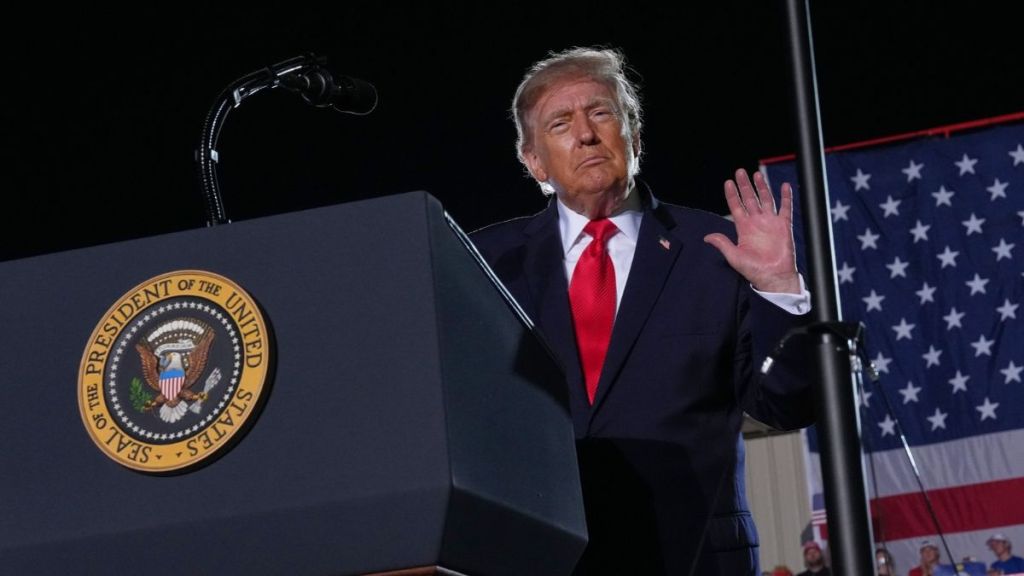

Democrats have won control of both the US House of Representatives and the Senate in the 2026 midterm elections, dealing a major blow to President Donald Trump and his Republican Party. The results mark a massive shift in the balance of power in Washington, with Democrats making gains even in states that have traditionally voted Republican.
The party’s victories came amid growing anger over rising living costs, Trump’s tariffs and the ongoing war with Iran. The results mean Republicans will lose control of Congress from January, leaving Trump with a divided government for the remaining two years of his term.
Democrats will now have the power to block parts of Trump’s legislative agenda, investigate his administration and hold up his judicial and senior government appointments.
According to projections by CNN, NBC News, CBS News, ABC News and AFP, Democrats have secured enough seats to take control of both chambers. However, counting is still underway in some constituencies, and the final numbers could change.
Blue wave sweeps US Congress
Republicans entered election night with a 53-47 majority in the Senate and were expected to hold an advantage in several key races. Democrats, however, turned the tide by winning seats in states where Republicans had been confident of victory. Adam Hamilton became the first Democrat elected to the US Senate from Kansas in 94 years.
Earlier, CNN projected that Democrats had secured at least 51 Senate seats, enough to take control of the chamber. CBS News said Democrats had won the four additional seats needed to flip the Senate, with major victories in Texas, South Carolina and Kansas, along with gains in Ohio and North Carolina.
In Texas, Democrat James Talarico defeated Republican Ken Paxton. The result marked an important win for Democrats in a state that has long been considered Republican territory.
In Ohio, former Senator Sherrod Brown made a comeback, defeating his Republican opponent. Democrat Josh Turek also pulled off a major victory in Iowa, defeating Republican Ashley Hinson.
Kansas saw another major upset, with Democrat Adam Hamilton defeating Senator Roger Marshall. It was the first time in nearly a century that Kansas elected a Democrat to the US Senate.
In North Carolina, former governor Roy Cooper defeated Republican Michael Whatley. Democrats also secured victories in Minnesota, where Peggy Flanagan won her Senate race.
Democrats also held on to their seats in Georgia and New Hampshire, helping the party strengthen its position in the Senate.
Republicans, meanwhile, managed some victories, including Julia Letlow in Louisiana. ABC News projections showed Democrats heading towards around 52 Senate seats, although some races were yet to be called.
Democrats win control of the House of Representatives
The House of Representatives also went to Democrats, with the party being projected to win control shortly before 10 pm ET on Tuesday.
MS NOW first called the House for Democrats, followed by CNN, NBC News and CBS News.
Republicans had entered the election with a narrow majority of 218-212 seats. However, Democrats managed to win enough competitive races to take control of the chamber. The final seat count was still being worked out early Wednesday.
House Democratic Leader Hakeem Jeffries welcomed the results, saying the MAGA movement was “on the run from sea to shining sea”.
Jeffries is now in line to become the next Speaker of the House. If elected by fellow Democrats when the new Congress meets in January, he will make history as the first Black person to hold the position.
Rising prices, tariffs and Iran war hurt Republicans
The election results came as voters expressed growing frustration over the state of the US economy and Trump’s policies.
AFP described the outcome as a major rebuke to the president, with the cost of living, tariffs and the war with Iran emerging as important issues during the campaign.
The war, which began in February, has continued for much longer than Trump had initially suggested. The conflict has also pushed fuel prices higher, adding to the financial pressure on American households.
An AP-NORC poll conducted in July found that around two-thirds of US adults believed the war with Iran was not worth fighting.
The conflict also exposed divisions within the Republican Party. In September, the House passed an Iran war powers resolution by 220 votes to 204, with seven Republicans joining Democrats in supporting the measure.
The Democratic gains were not limited to Congress. In Wisconsin, Democrat David Crowley won the governor’s race, adding to the party’s victories across several states.
Together, the results showed that voter dissatisfaction had affected Republicans in several parts of the country, including states that had traditionally supported the party.
Trump congratulates Democrats but warns of veto power
Trump responded to the election results with a more accepting tone than he has often taken after electoral defeats.
In an interview with The New York Times, the president said he was “absolutely willing” to accept the results and would work with Democrats.
During a call with CBS News, Trump also congratulated the Democratic Party on its victories and said he looked forward to working with its leaders.
However, he made it clear that Democrats would still face limits when it came to passing legislation.
Trump pointed out that he holds “total veto power” and suggested that Democrats would have to work with him if they wanted their proposals to become law. Otherwise, he warned, he could veto everything.
The president also blamed his party’s losses partly on his absence from the ballot.
Speaking to CBS News, Trump said Republicans would have won easily if he had been a candidate in the midterm elections. He added that some of the Republican candidates who lost were not his supporters and claimed that his own voter base had stayed home.
In an interview with Fox News, Trump said he was “a little bit surprised” by the results and had expected Republicans to have a better night.
He also defended his decision to go to war with Iran, calling it a “very wise decision”. Trump further said he had no plans to make changes to his Cabinet following the election defeat.
Trump avoids backing Mike Johnson for House Republican leader
The election results have also raised questions about the future of Republican leadership in the House.
Trump praised Speaker Mike Johnson’s work during an interview with Politico. However, he did not clearly say whether Johnson should continue as the Republican leader once Democrats take control of the chamber.
When asked whether Johnson should remain in the leadership position, Trump said, “He’s going to have to make that decision.”
What Democrats can do after taking control of Congress
Winning both chambers gives Democrats greater power to challenge Trump’s policies during the remaining two years of his presidency.
They can block or delay legislation introduced by the Republican administration and launch investigations into issues involving the White House.
Democrats are expected to focus on allegations of corruption, the administration’s handling of the Iran war and its immigration enforcement policies.
Control of the Senate will also allow Democrats to block or delay Trump’s judicial nominees and other senior government appointments.
However, the election results do not mean Democrats will have complete control over the government’s decisions.
Trump will continue to hold presidential veto power. Democrats are unlikely to have the two-thirds majority required in both chambers to override a presidential veto.
This means the president can still prevent legislation from becoming law if Democrats and Republicans fail to reach an agreement.
Some election results are still awaited
Although Democrats have been projected to win control of both the House and Senate, counting is still underway in several races.
The final results could change the size of the Democratic majority and determine how much room the party will have to push its agenda.
Before the elections, analysts had warned that the smaller number of competitive districts and Republicans’ fundraising advantage could make it difficult for Democrats to secure major gains.
However, the results have gone beyond those expectations, with Democrats winning several closely watched races and making gains in traditionally Republican states.