


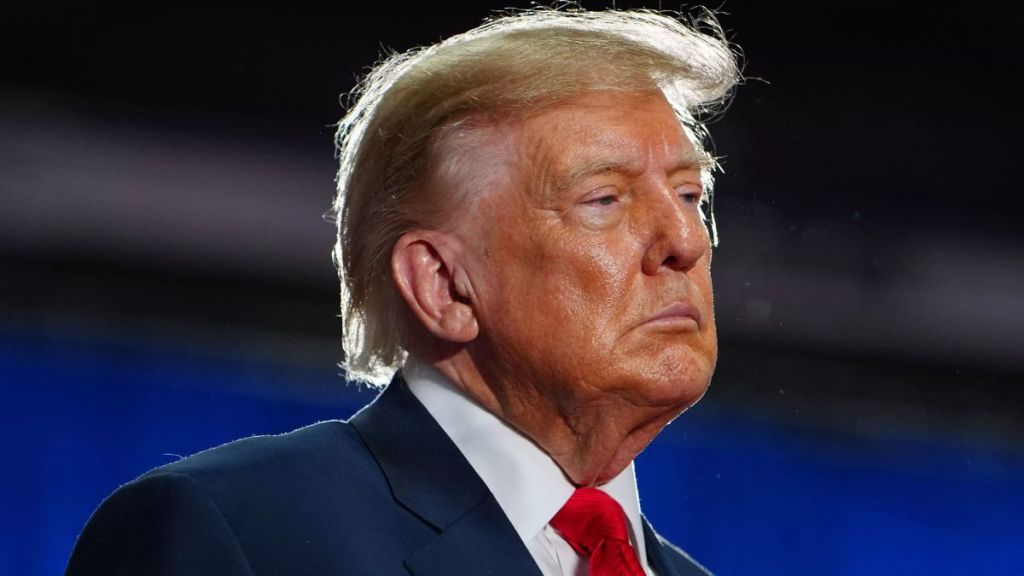

US President Donald Trump and his family’s cryptocurrency company, World Liberty Financial, have been sued by a shareholder of rival crypto firm Circle Internet Group. The lawsuit alleges that Trump illegally benefited from more than $2 billion in cryptocurrency deals linked to the United Arab Emirates (UAE), violating the US Constitution. According to the court filing, J. Benjamin Greenberg, a Circle shareholder and former employee, filed the complaint in a federal court in Washington on October 22. He claims the transactions benefited Trump while harming Circle and its investors. The allegations have not been proven in court. The White House and World Liberty Financial have rejected the claims.
What is the lawsuit about?
The lawsuit alleges that Trump violated the Foreign Emoluments Clause of the US Constitution. This provision restricts federal officeholders from accepting payments, gifts or other benefits from foreign governments without Congress’s approval. Greenberg claims two cryptocurrency transactions involving World Liberty Financial and UAE-linked entities amounted to prohibited foreign payments that benefited Trump. The complaint says Congress did not consent to these payments.
The complaint names Trump, World Liberty Financial, US Middle East Special Envoy Steve Witkoff and four affiliated limited liability companies as defendants. “This action is about the President of the United States corruptly profiting from more than $2 billion in payments from a foreign government in direct violation of the Constitution,” the complaint stated, adding, “No president in American history has profited from his office so brazenly.”
What are the two UAE-linked crypto deals?
The lawsuit focuses on two transactions involving World Liberty Financial and entities linked to Sheikh Tahnoon bin Zayed Al Nahyan, the UAE’s national security adviser. Days before Trump took office in January 2025, an entity backed by Tahnoon agreed to buy a 49% stake in World Liberty Financial for $500 million.
According to CNBC, the company told The Wall Street Journal that Trump had no involvement in the deal. However, the lawsuit claims Trump benefited financially from the transaction after becoming president. The second transaction involved MGX, an Abu Dhabi-based investment company chaired by Tahnoon, purchasing $2 billion of USD1, World Liberty Financial’s stablecoin, to complete its investment in cryptocurrency exchange Binance, according to the complaint.
A stablecoin is a type of cryptocurrency designed to maintain a relatively stable value, often by being linked to a currency such as the US dollar. The lawsuit alleges that the purchase helped increase the value of Trump’s cryptocurrency holdings and provided him with financial benefits through income generated by the reserves backing USD1.
How could the deals benefit Trump?
According to the complaint, World Liberty Financial was launched in 2024 with members of the Trump and Witkoff families. The company operates the USD1 stablecoin, while an entity affiliated with Trump and his family owns about 38% of the business through a holding company. The lawsuit argues that payments linked to the UAE transactions benefited Trump through his family’s financial interests in the company. The complaint also raises concerns about possible conflicts of interest, as Trump continued to hold financial interests in cryptocurrency businesses while serving as president.
The lawsuit comes amid scrutiny of the Trump family’s crypto ventures. According to the complaint, Trump disclosed more than $1 billion in cryptocurrency income in his financial disclosure for 2025, including nearly $800 million linked to World Liberty Financial through token sales, equity-related proceeds and stablecoin operating income.
Why has Circle’s shareholder filed the case?
Greenberg claims World Liberty Financial’s activities have harmed Circle and its investors financially. Circle operates USDC, a stablecoin that competes with World Liberty Financial’s USD1. The lawsuit alleged that the transactions diverted business and reserve income from Circle, harming the company and its shareholders.
Greenberg has filed the case on Circle’s behalf as an individual shareholder through a shareholder derivative action. Circle has clarified that it did not initiate or participate in the legal action. “This lawsuit was filed by an individual shareholder, not by Circle,” a company spokesperson told CNBC. “Circle did not initiate, direct, authorise, or participate in the filing.” The case is therefore not a lawsuit filed directly by Circle against Trump or World Liberty Financial.
What have Trump and World Liberty Financial said?
The White House has rejected the allegations, describing the lawsuit as politically motivated. “This is yet another frivolous lawsuit that echoes the same, tired narrative that Democrats have pushed against President Trump, his family, and his administration for a decade,” White House spokesperson Anna Kelly told CNBC.
She added that “there are no conflicts of interest”. World Liberty Financial has also denied the allegations. “World Liberty Financial is compliant with all US laws and regulations,” spokesperson David Wachsman told CNBC. “No one at World Liberty Financial works for the US government.” The company’s legal representative, Bill Burck of Quinn Emanuel, also criticised the complaint. “This sounds more like a partisan press release than a lawsuit,” Burck said in a statement, according to CNBC. “All we know about it is from media reports. Anyone can file a lawsuit in America, even a frivolous one.”
What is Greenberg seeking from the court?
Greenberg has asked the court to declare that Trump’s acceptance of the alleged foreign payments and benefits without congressional consent violated the Constitution. He is also seeking an order to prevent further violations, the return of any unlawful profits by the company defendants to the US Treasury or as the court directs, unspecified compensatory and punitive damages for Circle and disclosure of all payments, income and other benefits received from foreign states or their instrumentalities in connection with the cryptocurrency businesses identified in the complaint. Matt Pelikan, an attorney at Evergreen Legal Strategies LLP representing Greenberg, said the lawsuit was intended to stop what he described as corruption.
“We’re suing to stop the corruption and to force President Trump to return the profits to American taxpayers,” Pelikan told CNBC. The court has yet to establish whether the transactions violated the Constitution. The lawsuit raises questions about potential conflicts of interest when a sitting US president has financial interests in private businesses that receive investments linked to foreign governments. The UAE connections have drawn additional attention because, according to the complaint, the Trump administration expanded the UAE’s access to advanced US artificial intelligence chips after Tahnoon’s investment in World Liberty Financial. Tahnoon also chairs G42, a UAE-based, state-backed artificial intelligence company.
The lawsuit does not establish that the cryptocurrency deals influenced US government decisions. Its allegations will need to be examined through the legal process. The case also follows earlier legal challenges during Trump’s first presidential term that alleged violations of the Emoluments Clause. According to CNBC, those cases did not result in the recovery of money from Trump or force him to stop the business practices under challenge. The outcome of the new lawsuit could have implications for how the constitutional restrictions on foreign payments apply to the business interests of a sitting president.