



Several US embassies across West Asia issued major security alerts to all Americans abroad as new attacks on Saudi Arabia signalled escalation of fighting in the Middle East. So far, the US State Department has issued security advisories in 9 countries: Oman, Lebanon, Jordan, Iraq, Bahrain, Kuwait, and Saudi Arabia, urging US citizens there to exercise caution.
Embassies in Israel, Iraq, Lebanon and Oman also sent Smart Traveller Enrollment Program (STEP) notices to citizens on Saturday (US time). This service sends email updates and alerts from US embassies and consulates abroad. The latest alerts sent over the weekend again warned Americans in the Middle East to watch for potential flight cancellations, airspace closures, and travel disruptions.
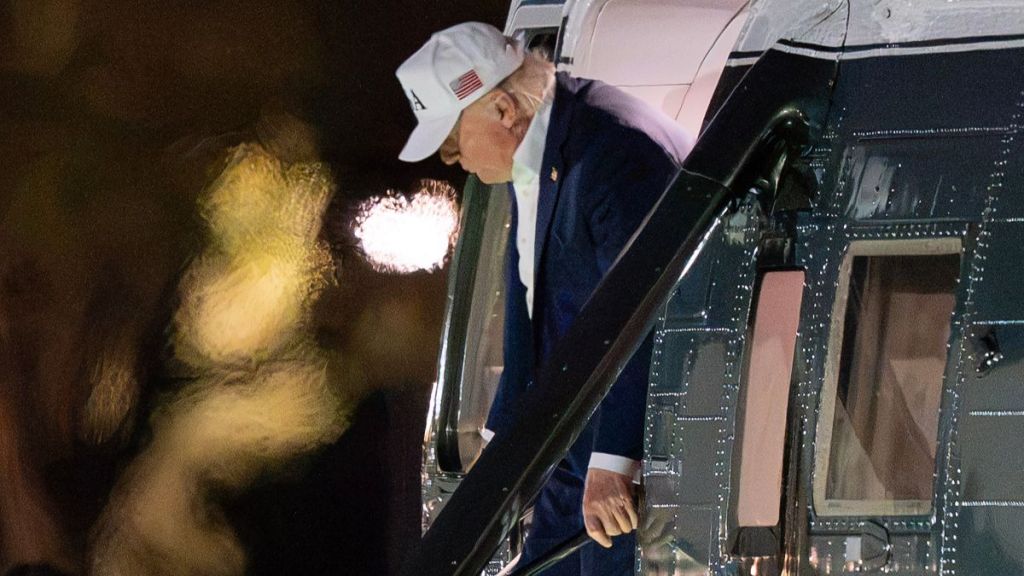
Meanwhile, US President Donald Trump appears to have abruptly changed his schedule for the weekend, which involved a trip to the presidential retreat in Camp David. According to Axios and a White House pool report by USA Today, the White House has since updated the president’s schedule, showing his return to the US capital on Monday. The MAGA leader is expected to arrive in the United States late Saturday evening (US time).
What did the US embassies’ security alert say?
“Due to tensions in the Middle East, the security environment remains complex with the potential for unforeseen escalation,” read the security alerts published across several countries.
US Virtual Embassy Iran’s website, which already flashes a ‘Do Not Travel’ advisory for the country, said border-crossing procedures at Iran’s land borders may change without much notice.
“Iranian-supported Houthis have engaged in hostilities against Saudi Arabia, including civilian airports. This military conflict has the potential to escalate rapidly,” the alerts sent across countries in the Middle East added. “Americans travelling to or from the region should monitor information about airport and airline operations.”
The US Embassy in Iran also pointed out that American diplomatic facilities, including those outside the Middle East, have repeatedly been targeted amid the ongoing conflict, which broke out in late February following the US and Israel’s joint military campaign against Tehran.
Events leading up to major security warnings
The development made for concerning headlines after Yemen’s Houthis claimed attacks on “sensitive” sites in the Saudi capital Riyadh and energy sites on the country’s Red Sea coast with missiles and drones, hours after flames and a large plume of smoke were seen near the city’s main airport, King Khalid.
Flight-tracking website FlightRadar24 listed the airport ‘Level 5’ on its disruption index, indicating high chances of delays or cancellations.
Saudi authorities have since declared that they intercepted and destroyed a ballistic missile fired on Riyadh on Saturday. No further strikes or casualties were confirmed, according to Reuters.
Saudi civil defence sent alerts to citizens by phone overnight, signalling potential danger of aerial attacks in the capital and the city of Al-Kharj east of the capital. Although an all-clear was issued subsequently, it marked the first time air alerts were sounded in Riyadh since the Houthis ramped up their aggressive campaign against Saudi Arabia in July.
Why was Trump’s Camp David visit cancelled?
Although the change in Trump’s schedule was not officially attributed to a specific reason, earlier Saturday, a NORAD (North American Aerospace Defence Command) F-16 fighter jet intercepted a general aviation aircraft flying over Camp David’s restricted airspace. Having flown to the retreat in Maryland’s Catoctin Mountains on Friday night, Trump was originally meant to stay there through the weekend.
Announcing the unprecedented development on X, the First Air Force, which is part of the US Northern Command, said, “Pilots! @NORADCommand fighter aircraft intercepted an aircraft violating restricted airspace over Thurmont, MD, resulting in flares being deployed.”
“Make sure to check NOTAMs before takeoff to ensure you have current information about TFRs in your area,” the post added, alluding to updates called ‘Notices to Airmen.’
NORAD has since confirmed the pilot was safely escorted. Explaining the use of flares for the incident, it said they sought to “draw attention from our communication with the pilot.” The statement further noted, “Flares are employed with the highest regard for safety, burn out quickly and completely, and pose no danger to people on the ground.”
Elsewhere, Mohsen Rezaei, secretary of Iran’s Supreme National Security Council, spoke with Al Jazeera and reiterated readiness for diplomatic engagement, but also another round of confrontation if needed. Outlining three conditions for a potential long-lasting peace deal, he emphasised the removal of the naval blockade, unfreezing of Iranian assets and a halt to the war across the Middle East, particularly on the Yemeni front.
In his recent interview with Al Jazeera, Rezaei also indicated that the conditions had already been conveyed to the United States via mediators Qatar and Pakistan.