



Despite predictions of relief from high gasoline prices, US consumers were forced to confront the highest gas rate ever on an Election Day on November 3 (US time). The national average price was around $4.15 per gallon on Tuesday, according to the AAA Fuel Prices tracker. In comparison, the previous record was set on Election Day 2022 when gas prices averaged $3.75 per gallon, according to US government data.
As of Monday, the national average for regular gas was $4.29 a gallon. In comparison, this figure was $2.98 a gallon before the Iran war. In late September, diesel also crossed $6.5, the highest recorded average price, significantly up from $3.76 in February.
Trump blames high gas prices for Republican loss
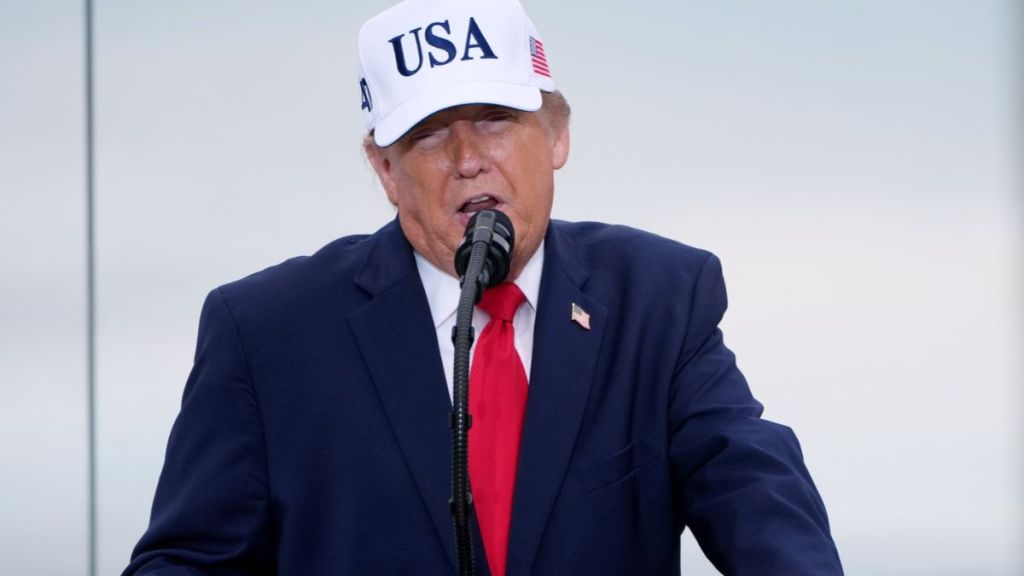
Even as the global conflict stretched beyond the eight-month mark, American President Donald Trump said on Tuesday that the ongoing war was not to blame for the Republican Party’s major loss in the midterm congressional elections.
“I don’t think it was the war (with Iran),” Trump said in an interview with Fox News. “I think it was the gas prices. … Bottom line, they were not able … to get the votes. Democrats did a good job … they’ve been fighting me a long time. … I feel badly for a lot of very good Republicans.”
Earlier this week, Patrick De Haan, head of petroleum research at GasBuddy, wrote on X, “The national average could fall under $4 a gallon in the next week” if the West Asia conflict doesn’t escalate further and oil prices continue to decrease.
On Tuesday, the Democratic Party took control of the US Congress, winning both chambers (the House of Representatives and Senate) by flipping states that voted Republican for decades and that Donald Trump won by double digits just two years ago. The dramatic shift comes as the general American public increasingly expressed frustrations with rising inflation, high gasoline and oil prices, the Iran war, and the overall handling of the economy under the second Trump administration.
Gas prices rise over 40% in last 9 months
According to NBC News’ tracker, gas prices in the United States have risen by more than 40% since the US and Israel launched a joint military campaign against Iran in late February. Additionally, a Brown University analysis shows that the jump in gas prices since the war started has cost Americans more than $80 billion.
But even this rate surge has, in a way, been prompted by the relative closure of critical maritime waterways, including the Strait of Hormuz, amid the Iran crisis. Trump has repeatedly insisted that expensive fuel was a small price to pay for the war, ensuring Iran never possesses a nuclear weapon.
In August, Trump also openly blamed two of the biggest US oil companies, Chevron and ExxonMobil, for “making too much money” from rising oil prices. At the time, Brent crude futures, the international benchmark, had dropped to $83.77 a barrel after crossing the $100 mark. At a late October rally in Georgia, however, he stressed that oil and gas prices were only “temporarily high,” and the US oil-gas business was “making hundreds of billions of dollars” amid the ongoing conflict.
As opposed to the American public’s woes about rising prices, a Q2 report from Oil & Gas Journal previously stated that “surging crude prices tied to ongoing Strait of Hormuz disruptions” have brought good fortune to North American oil companies. The trade publication reported that year over year a sample of 38 American producers and refiners saw their collective revenues grow by about $140 billion.
Meanwhile, Brent again rose 76 cents, 0.7%, to $104.36 a barrel at 0730 GMT, while US West Texas Intermediate crude futures jumped 63 cents, or 0.7%, to $96.72, flipping previous declines.
The price jump followed the Republican Party’s resounding loss in the US midterm elections, as investors were already waiting for the Trump administration’s next move in the war. On the eve of the November 3 congressional contest, a Wall Street Journal report citing unnamed US officials also indicated that America had launched a strike on Iran’s Qeshm Island as part of a covert series of limited attacks Washington had been conducting against Tehran in recent weeks.