


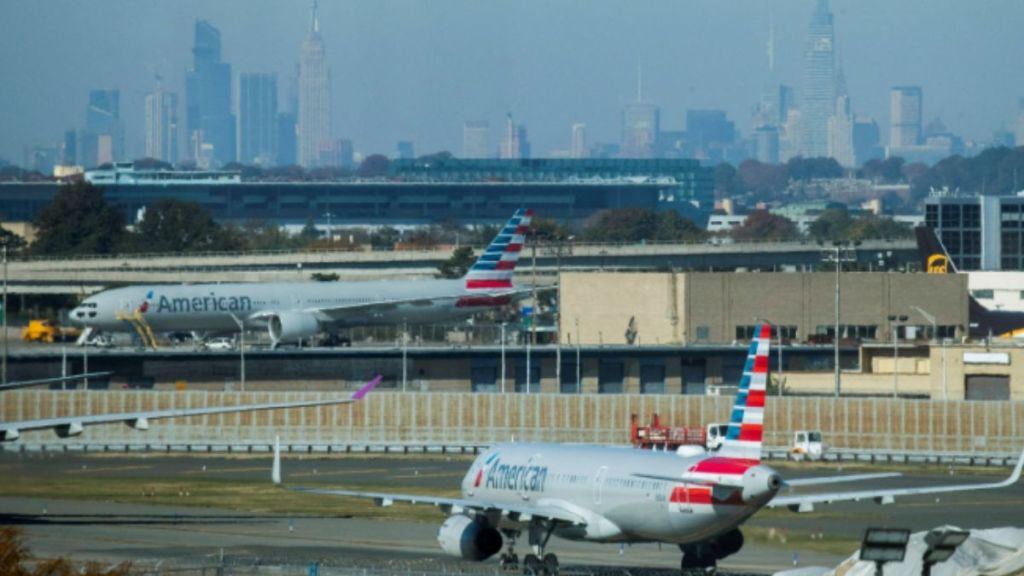

Several factors have contributed to US air travel disruptions across the country over the year, including staff shortages and the ongoing US-Israel war on Iran. This weekend, however, weather conditions outweighed other concerns, as nearly 4,000 flights were delayed across the United States by Sunday mid-afternoon.
According to a Forbes report, heavy rainfall and potential flash flooding were to blame, as some areas saw up to 4 inches of rain in less than 3 hours. Parts of New England, including Boston, Rhode Island and eastern Connecticut, were under a flood watch until at least 6 pm EDT on September 13 (US time). Meanwhile, other parts of the Northeast were already under flood watch earlier that day before the storm moved east, including the New York City metro area.
The US air travel chaos comes days after reportedly hundreds of thousands of people were hit with flight cancellations and delays due to a technical issue that caused an air traffic outage at airports in the United Kingdom.
Airports impacted by US storms
According to online flight tracking website FlightAware, Boston Logan International Airport saw about 250 inbound flight delays as of 3:15 pm EDT, accounting for 40% of those scheduled.
Similarly, 150 flights were impacted at New York City’s John F. Kennedy International Airport (JFK) and more than 100 at NYC’s LaGuardia Airport, FlightAware reported. The flight tracker’s data even disclosed that JFK’s departure delays averaged about 25 minutes just before 4 pm.
The Federal Aviation Administration (FAA) issued a ground stop for both of NYC’s popular air hubs, Kennedy and LaGuardia, on Sunday morning. They were ultimately lifted, but as of 3:30 pm, JFK was still seeing average delays of 15 minutes, according to the FAA website.
What do weather predictions say?
In an official statement issued this weekend, the New York City Emergency Management (NYEM) advised the city’s agencies and citizens to prepare for heavy rain and possible flash flooding early Sunday morning. It also cited the National Weather Service (NWS) issuing a “Flood Watch for New York City from 4 a.m. to 12 p.m. on Sunday, September 13.”
Alerting New Yorkers to stay vigilant and informed on current updates, NYCEM Commissioner Christina Farrell added in a statement, “The strongest storms on Sunday morning could drop 2 to 2.5 inches of rain in a single hour. Do not wait until you see water rising to make a plan. If you live in a basement, below-grade space, or a home that has flooded before, know where you will go if you need to move to higher ground. Keep emergency alerts enabled and your phone volume on overnight.”
Ahead of the weekend, Hartsfield-Jackson Atlanta International Airport was also facing an FAA-issued ground stop on Friday. While it was subsequently lifted, the airport continued to face significant delays amid thunderstorms. The longest delay reached 271 minutes at one point, CBS News reported.
The National Weather Service’s ‘Weather Story for the Tri-State Area,’ which generally refers to the region encompassing New York, New Jersey and Connecticut, predicted, “A cold frontal passage may spark a few showers in the morning,” for Monday, September 14.
Air traffic controller shortages and their impact over the decade
In addition to severe weather events and the Iran war, the US has had severe staff shortages at many airports over the past decade.
According to a blog post by the US Government Accountability Office (GAO) released in January 2026, even with about 200,000 applicants over the last several years, the FAA continues to remain short-staffed. GAO alluded to its own December 2025 report shedding light on how the number of air traffic controllers in the United States has declined by about 6% in the last decade. However, simultaneously, there has been a 10% surge in the number of flights relying on the ATC system, resulting in staffing snags at critical facilities.
The government shutdown in November 2025 further exacerbated issues linked to ATC workers’ shortages, leaving employees to work without pay for over a month. Many ended up deciding to leave the industry in light of the arising harsh conditions.
“The failure to pay air traffic controllers for 44 days created uncertainty, drove many experienced controllers out of the profession and harmed the recruitment pipeline,” a spokesperson from the Department of Transportation told CBS News in November.