


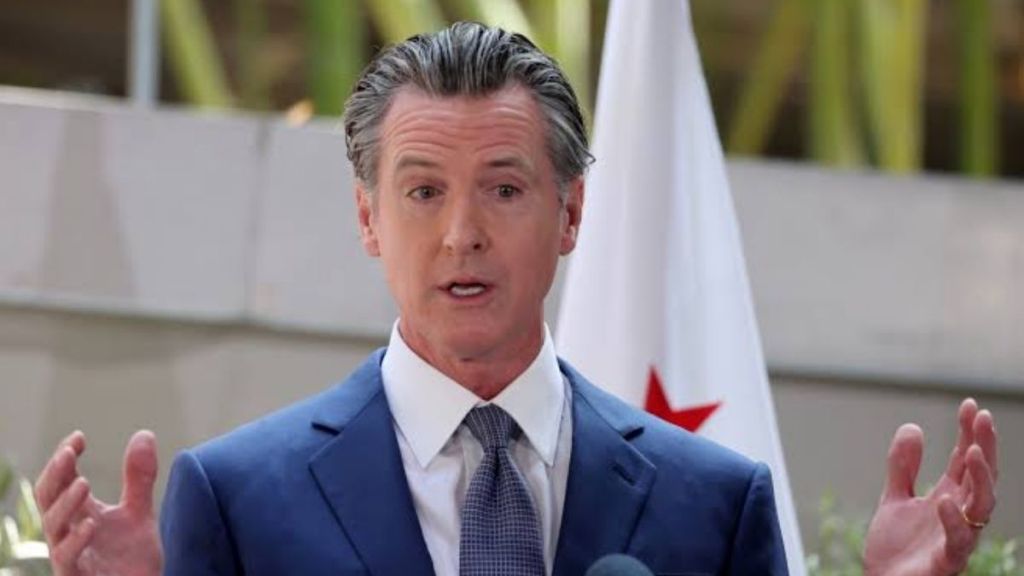

Gavin Newsom has not announced a campaign for the 2028 US presidential election. But the California governor is already spending significant time and political capital in South Carolina, the state that will host the first Democratic presidential primary contest in 2028.
Newsom returned to South Carolina in September 2026 for his third visit to the state during the current midterm cycle. He travelled through Aiken, West Columbia, Dorchester, Lancaster and other areas as part of his “Take It Back” tour.
The visits have combined campaign-style appearances with fundraising. Newsom has helped raise hundreds of thousands of dollars for South Carolina Democrats, while his wider fundraising operation has collected more than $1.7 million for 14 state Democratic parties and their legislative committees during the current two-year election cycle, reported US-based media outlet Axios.
Newsom has previously teased the possibility of a 2028 presidential run and has used his political platform to needle President Donald Trump, but he has stopped short of announcing a campaign.
For now, his growing presence in an early primary state and his nationwide fundraising network are giving him something a potential 2028 candidate needs: relationships with donors, party organisations and voters beyond California.
Why is South Carolina so important for Newsom?
South Carolina is not simply another stop on Newsom’s political travel schedule. As the first state on the Democratic presidential primary calendar in 2028, it offers potential candidates an early opportunity to build relationships with party leaders, activists and voters.
Newsom’s recent visit looked much like a presidential campaign, even though he has not formally declared one, reported AP.
He held eight public events across the state during the week, along with private engagements. “Gavin 2028” buttons appeared outside his events, while his allies, the state party chair, college presidents and pro-Newsom activists openly discussed his national ambitions.
People close to Newsom privately referred to a possible White House campaign as “the next thing”, AP reported.
Newsom himself has acknowledged that the question is no longer distant.
“I think this thing’s happening,” Newsom told AP. “There are folks out here. They’re saying they’re already starting to interview state directors. So this thing is going to happen very, very quickly.”
He also said he could announce his decision before the end of 2026, although he did not commit to a date.
South Carolina Public Radio reported on September 4 that this was Newsom’s third trip to the state during the current midterm season. His events included stops in rural and Republican-leaning parts of the state.
Christale Spain, chair of the South Carolina Democratic Party, said Newsom had helped raise $370,000 for Democrats over the previous year. But she said the visits were useful for another reason: Newsom was going into parts of the state where Democrats want to increase turnout.
“He is talking to Democrats all across the state,” Spain said, according to South Carolina Public Radio. “We want the Democratic Party, the Democrats in those counties, to know that we are alive and well.”
That gives Newsom exposure beyond South Carolina’s larger Democratic centres and allows him to test his message with voters far removed from California.
But California could be his biggest problem
South Carolina may be an important early state for a Democratic candidate, but winning support there would not resolve Newsom’s bigger national challenge: convincing voters outside California that his political record translates beyond his home state.
Voters in South Carolina repeatedly raised Newsom’s home state as a possible obstacle, reported AP. Vera DeVito, a 78-year-old Democrat from Summerville, told AP that Newsom could find it difficult to appeal to voters across the country because of his California connection.
Republican activists made the issue central to their protests. Signs outside Newsom’s events included “Wrong Coast” and “Clean Up Your State First”.
Newsom’s team has acknowledged the problem. The governor has described California both as a political liability and “the greatest opportunity”, saying the state’s story has often been presented nationally by people with what he called “California Derangement Syndrome”, AP reported.
California under Newsom has expanded healthcare coverage regardless of immigration status, expanded paid sick leave and introduced universal free school meals. The state has also raised the minimum wage for fast-food workers to $20 and adopted policies on abortion access, climate change and gun control, AP reported.
California remains the most populous US state and the world’s fourth-largest economy, according to AP. But critics point to high taxes and policies they say have encouraged some businesses and residents to move elsewhere.
For Newsom, therefore, the challenge is not simply defending his record in California. It is convincing voters elsewhere that his record can translate into a national political message.
Is his fundraising network the bigger advantage?
This is where Newsom’s political operation outside California becomes important.
Axios reported on August 2 that Newsom had raised more than $1.7 million for state Democratic parties and their legislative committees during the current two-year cycle.
The money went to 14 state parties and came from more than 74,000 donors. South Carolina was one of the biggest beneficiaries.
Newsom had raised more than $300,000 for the South Carolina Democratic Party through grassroots fundraising, Axios reported. Jay Parmley, the party’s executive director, said Newsom had raised more than other prominent Democratic figures who had helped the party.
“He’s raised the most,” Parmley told Axios.
Newsom’s fundraising also reached states that could matter in future presidential politics or the 2026 midterms. He raised $158,063 for New Jersey Democrats, $154,000 for Michigan, $117,455 for Nevada, $121,971 for North Carolina, $113,615 for Louisiana and $99,808 for Florida, Axios reported.
He also raised money for Democrats in key 2026 races, including Georgia Senator Jon Ossoff, former Atlanta Mayor Keisha Lance Bottoms, who is running for Georgia governor, and former Alaska Representative Mary Peltola, who is running for Senate.
Newsom’s Campaign for Democracy and affiliated committees had more than $14 million in cash on hand at the end of June, according to Federal Election Commission data cited by Axios.
The fundraising system was built over several years. Newsom and his team developed an online small-dollar fundraising operation following his 2021 recall election, Axios reported.
Sydney Hibbs and Tim Tagaris have been among the key people behind the operation. Tagaris previously helped build Senator Bernie Sanders’ small-dollar fundraising operation during his 2020 presidential campaign.
The system relies heavily on Newsom’s email list. South Carolina Democratic Party executive director Parmley described it as “platinum”.
“There’s no one in politics raising money like Gavin Newsom,” Parmley told Axios.
The importance of the network is not just the amount of money raised. It gives Newsom direct contact with Democratic donors and organisations across multiple states. More than 74,000 donors contributed through his fundraising efforts for state parties during the current cycle, Axios reported.
Newsom is not the only potential 2028 contender building such a network. Former Transportation Secretary Pete Buttigieg donated $5,000 to each state party through his outside group Win the Era, according to Axios. Illinois Governor JB Pritzker has also spent millions of his personal wealth on progressive ballot initiatives and candidates, while Arizona Senator Mark Kelly has raised money for Democrats in key races.
What distinguishes Newsom, according to Axios, is the scale of the fundraising he has already done for state parties and the reach of his small-dollar donor base.
Why South Carolina could be an early test
Newsom’s activity in South Carolina combines the two elements of his broader political strategy: money and geography.
He has already helped the state Democratic Party raise hundreds of thousands of dollars. He has also repeatedly travelled through the state, including rural and Republican-leaning areas, speaking directly to voters.
His message during the latest visit was focused heavily on the November midterms and President Donald Trump.
Newsom told supporters that Democrats had 60 days before the midterms. “We have 60 days to bring it home,” he said in West Columbia on Friday.
At a Lexington event, Newsom said Democrats could not follow a normal political strategy.
“We cannot do business as usual. We need to fight fire with fire,” he said, according to AP.
He also attacked Trump’s policies and actions on immigration, the National Guard, elections and his business dealings.
Some voters saw potential in Newsom but remained unsure about his national appeal. Kirk Bovill, a South Carolina voter, told AP that Newsom had “strong potential” but questioned how he would be perceived outside California.
Another voter, Monty Fetterolf, said Newsom’s fame stood out in Aiken.
“We don’t get that many famous people here in Aiken. He’s pretty famous,” he told AP.
Newsom has not declared a presidential campaign, and the 2028 Democratic field remains open. But his activities in South Carolina and his fundraising across state parties show that he is already building relationships beyond his home state.
That may ultimately be the point of his early 2028 strategy.
California gives Newsom a large political platform. His fundraising network gives him something different: a base of donors and relationships across the country.
South Carolina now gives him a place to test whether that national political appeal can extend beyond California.