


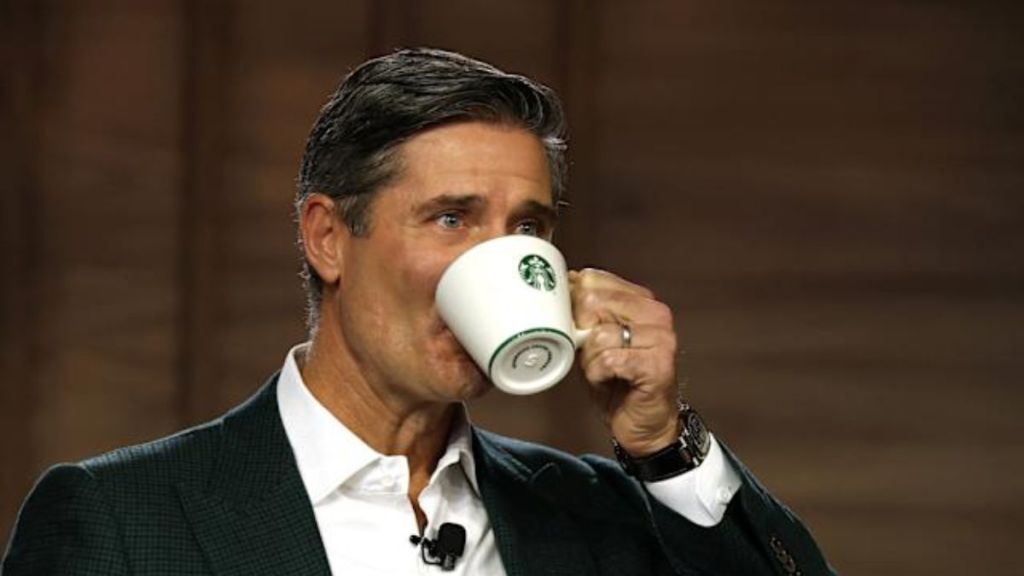

Two years ago, Starbucks appointed Brian Niccol as its new chairman and chief executive. Under his leadership, the USA’s largest coffee chain adopted the “Back to Starbucks” strategy to revitalise coffeehouses and enhance customer experience. As part of the years-long restructuring drive, approved in September 2025, the company continued to implement big-picture cost-cutting efforts, including layoffs and store closures in the United States.
The restructuring plan announced last year suggested Starbucks expected to complete the majority of its store closures by the end of fiscal year 2025. With 90% of expenses tied to the North American business, the iconic coffeehouse brand estimated it would incur approximately $1 billion related to store closures. In a similar move, the company’s Chief Operating Officer, Mike Grams, announced that as they accelerate toward completing 1,500 coffeehouse uplifts by September 30, their ongoing ‘Back to Starbucks’ strategy now necessitates closing an additional 250 coffeehouses later this week.
In a letter to the company’s “Partners,” Grams said these closures would account for approximately 1% of Starbucks’ more than 18,000 North American coffeehouses.
This week’s store closures follow Starbucks filing an official Worker Adjustment and Retraining Notification (WARN) notice with the Washington Employment Security Department in August, confirming plans to lay off 224 corporate and remote employees next month. The formal notice revealed that the job cuts are set to begin on October 19, 2026, with “all separations completed by November 1, 2026.”
These layoff plans were, in turn, laid out after the company announced 300 job cuts in the US in May, while also saying it would shut down underused offices in Atlanta, Dallas, Chicago and other American cities. Last year, the Seattle-based company laid off 2,000 corporate employees and closed hundreds of stores in the US, Canada and Europe, according to The Associated Press.
Why has Starbucks announced another round of store closures?
A year after the ‘Back to Starbucks’ strategy was greenlit, the Board of Directors of Starbucks Corporation approved further actions under the same approach.
“The Company further assessed its existing North America store portfolio and will close approximately 1% of its more than 18,000 North America coffeehouses that do not deliver the coffeehouse experience and financial performance expected of the brand,” the coffeehouse stated in its latest US Securities and Exchange Commission (SEC) filing dated September 22, 2026.
Meanwhile, COO Mike Grams said in the letter to ‘Partners’ that the decision followed a careful review of the company’s North America coffeehouse portfolio, which led officials to identify locations where they don’t believe they “can consistently deliver the experience” they want “for customers and partners or where we don’t see a path to acceptable financial performance.”
He added that those affected by these closures are expected to be transferred “wherever possible” or offered severance if a position is unavailable in another coffeehouse.
Given the development, the largest coffeehouse chain has now lowered its projected net new cafe openings from 600-650 to 440 locations for fiscal year 2026. Starbucks maintained that as it sees longer-term growth opportunity in North America, it is actively developing a “strong pipeline of new coffeehouses.”
As highlighted in the company’s official filing, Starbucks is expected to incur approximately $300 million of restructuring charges. Of these costs, the coffee chain anticipates approximately $200 million will be cash charges mostly related to lease exit costs and employee separation benefits. Meanwhile, the remaining $100 million will be non-cash charges linked to disposal and impairment of company-operated coffeehouse assets.
Alluding to the company’s most recent earnings calls, Grams underscored that Starbucks’ North America business has returned to “strong growth.”
Starbucks’ restructuring efforts boost numbers
Back in July, CEO Brian Niccol similarly told CNBC in an interview that their combined efforts to renovate cafes, improve menus and more have boosted the company’s image and won back customer loyalty. His remarks came after the coffee giant reported Q3 2026 earnings and revenue, which surpassed analysts’ expectations. Niccol hailed the growth in the July earnings report, saying it “was the quarter our momentum became truly measurable.”
For the quarter ending June 28, the company reported earnings per share of 85 cents as opposed to the 66 cents Wall Street had expected, according to a survey of analysts by LSEG cited by CNBC. Moreover, the company posted revenue of $9.32 billion, although prior expectations set the bar slightly lower at $9.16 billion.
The quarter also saw Starbucks’ North American same-store sales increasing 8.1%, while traffic to those outlets surged 4.5%. The company’s report additionally noted that customers spent more on their orders as they paid to have their lattes modified and added food options with their drinks.
In other news, over a week ago, a Reuters report citing people with knowledge of the matter suggested that Starbucks is considering selling a majority stake in its Japan business. The potential deal could value the coffee chain’s biggest overseas company-operated market at about $3 billion. As of September 2025, Starbucks’ Japan operation spanned 1,883 stores, accounting for nearly 9% of its global footprint.