


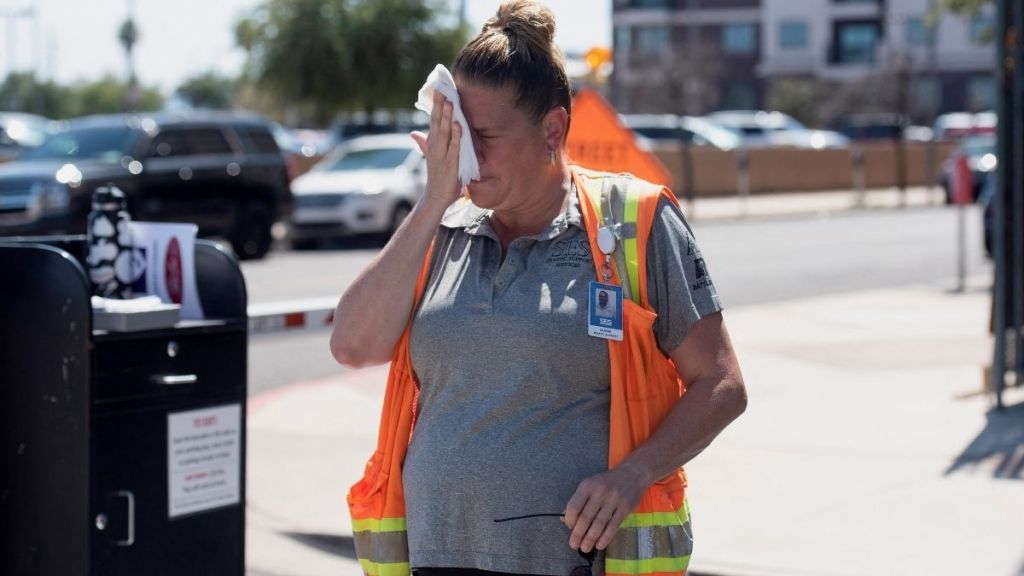

America’s historic 250th Independence Day celebrations began on Saturday under the shadow of brutal heatwave and widespread power outages. Millions of homes were left without electricity and several major public events were cancelled because of extreme weather, reported ABC News.
The 4th of July, which marks 250 years since the adoption of the Declaration of Independence in 1776, was expected to draw millions of people to parades, fireworks displays and community gatherings across the country. Instead, many Americans woke up to power cuts, excessive heat warnings and weather alerts as large parts of the Midwest and Northeast dealt with the impact of severe storms and soaring temperatures.
According to power tracking website PowerOutage, over 842,000 households across several states experienced power outages on Saturday morning after severe weather swept through parts of the country. Since the figure counts households rather than individuals, the actual number of people affected is much higher. Utility crews worked to restore electricity throughout the day, but the total changed as new outages emerged and repairs continued.
The power cuts arrived at a difficult time as millions of Americans prepared for holiday travel and outdoor celebrations. Many families faced high temperatures without air conditioning, while businesses, restaurants and local services also dealt with disruptions.
The heatwave spread across much of the central and eastern United States. Over 185 million Americans remained under heat advisories or warnings as a powerful heat dome covered large parts of the country, reported ABC News. Heat index values climbed as high as 115 degree Fahrenheit, or about 46 degree Celsius, in some areas. Washington DC recorded temperatures above 101 degree Fahrenheit.
Heatwave disrupts America’s 250th anniversary celebrations
Extreme heat forced organisers to cancel or change several Independence Day events, including some of the country’s most prominent celebrations. In Philadelphia, the Salute to Independence Semiquincentennial Parade, which was scheduled for Friday, was cancelled due to the dangerous heat. Local broadcaster WPVI reported that organisers decided to call off the event to protect participants and spectators.
Washington DC also witnessed major changes to its Independence Day programme. Organisers cancelled America’s National Independence Day Parade, which had been scheduled for Saturday morning in downtown Washington. The decision came late on Friday after local weather forecasts warned that heat index values could reach between 110 and 115 degree Fahrenheit.
In a statement, organisers said they took the decision after consulting the National Park Service, the District of Columbia government and Freedom 250. They said public safety remained their highest priority because of the National Weather Service’s “extreme heat warning” for the region.
Several other July 4 parades, outdoor fairs and community events across Pennsylvania, New Jersey, New York and Massachusetts were either cancelled, shortened or modified as local authorities urged residents to avoid prolonged exposure to the heat, reported Reuters.
The extreme weather also affected one of the busiest travel weekends of the year. Outdoor tourism slowed in many cities as visitors chose to stay indoors during the hottest part of the day. Restaurants, shops and businesses that depend on holiday crowds also faced lower footfall in some locations.
Is extreme heat becoming an economic challenge for America?
The Independence Day heatwave also exposed the growing economic cost of extreme weather across the United States. Electricity demand surged as millions of households relied heavily on air conditioners to cope with the high temperatures.
PJM Interconnection, the country’s largest regional electricity grid operator, urged consumers to reduce electricity use during peak hours as demand rose sharply. The grid supplies electricity to about 67 million people across multiple states and reported generator outages while demand remained unusually high, reported Reuters.
Higher electricity demand also increases wholesale power prices, raising operating costs for factories, offices, retailers, warehouses and data centres. Utilities often rely on more expensive backup power generation to maintain reliable supplies during periods of exceptional demand.
Economists also warn that extreme heat reduces worker productivity across several industries. Construction workers, delivery staff, factory employees, warehouse workers and farm labourers face greater health risks and slower work rates when temperatures remain dangerously high.
Research cited by Fortune found that worker productivity performs best at around 22 degree Celsius and falls by roughly two per cent for every degree above 25 degree Celsius. A working paper by the European Central Bank also estimated that one day of extreme heat can reduce economic growth by 0.2 to 0.3 percentage points over the following year in some economies.
The economic impact extends beyond workplaces. Transport services, tourism, agriculture, retail activity and healthcare systems all face additional pressure during prolonged periods of extreme heat. Insurance claims also tend to rise after severe storms that often accompany summer heat events.
Climate scientists say the current US heatwave forms part of a broader pattern of rising global temperatures linked to climate change. Reuters reported that global temperatures remain about one degree Celsius above the historical average for early July, while studies found that similar heatwaves affecting Europe would have been nearly impossible without human-driven climate change.