


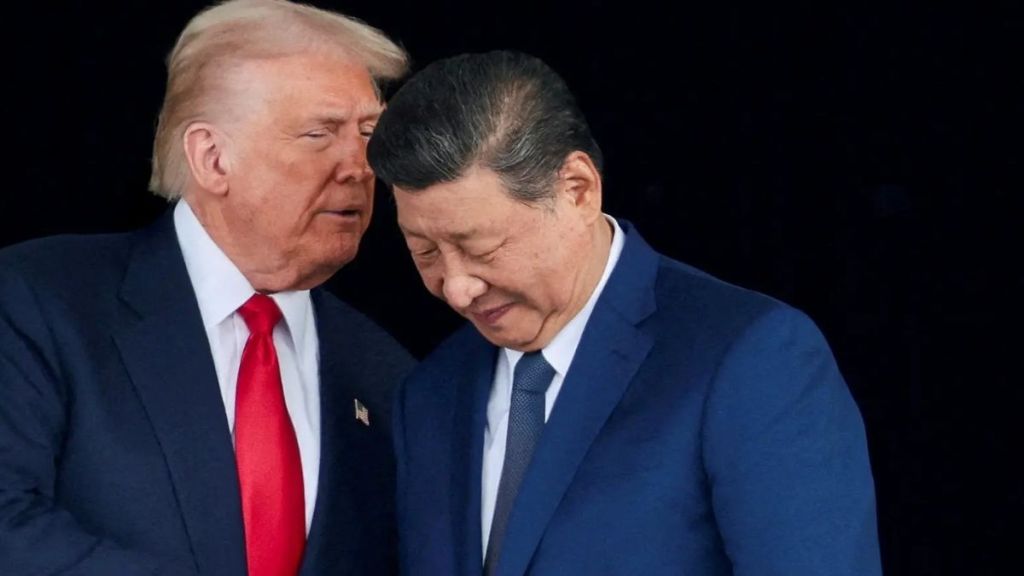

Tech’s biggest names to join Xi Jinping’s White House dinner as AI, chips and trade talks take centre stage
Microsoft CEO Satya Nadella is expected to attend the White House state dinner for Chinese President Xi Jinping this week, according to a Bloomberg report. The dinner will bring together some of the biggest names in the US technology industry at a time when artificial intelligence, computer chips and US-China trade relations are major issues between Washington and Beijing.
Apple Executive Chairman Tim Cook, Nvidia CEO Jensen Huang, OpenAI CEO Sam Altman and Qualcomm CEO Cristiano Amon are also expected to attend, Bloomberg reported.
Microsoft declined to comment on Nadella’s attendance. His name was also not included in the list of guests publicly released by the White House last week.
Washington has placed restrictions on exports of some advanced processors to China, limiting Beijing’s access to the chips needed for the most powerful AI systems. China, meanwhile, is putting more money into developing its own chips and AI models so that it can rely less on US technology.
Who will be at the White House dinner?
The dinner is scheduled for Thursday, September 24, a day after Xi arrives in the US.
President Donald Trump is expected to welcome Xi at Joint Base Andrews on Wednesday before holding an arrival ceremony at the White House.
The decision to greet Xi at the military base is unusual. US presidents generally receive visiting foreign leaders at the White House rather than at the airport. The guest list for Thursday’s dinner already includes several of the biggest names in technology and business.
At a press call on Friday, White House principal deputy press secretary Anna Kelly confirmed that Elon Musk, Jeff Bezos, Jensen Huang, Sam Altman, Google CEO Sundar Pichai, Michael Dell, Citigroup CEO Jane Fraser and Tim Cook would attend.
However, the final guest list could still change. The White House does not have room for a large gathering this time. Trump has said the new 1,000-person ballroom being built at the East Wing will not be ready for the dinner.
As a result, the event will be held on a much smaller scale in the East Room. Reports have differed on the exact number of seats and on which guests are fully confirmed.
This will not be Nadella’s first appearance at a White House dinner for Xi.
In 2015, during Barack Obama’s presidency, Nadella sat at the head table with Tim Cook and Facebook co-founder Mark Zuckerberg during a state dinner held for the Chinese president.
This time, however, the technology industry has a much bigger role in US-China relations, especially because of the growing competition over AI and advanced chips.
Why AI is a major issue
The dinner comes as Washington and Beijing compete over artificial intelligence and the technology needed to build powerful AI systems.
The discussions are expected to include AI safety, US restrictions on chip exports to China and the wider technology competition between the two countries. The debate over AI safety has also become more intense in recent days.
Anthropic CEO Dario Amodei recently called for a slowdown in AI development across the industry. He warned about risks that could include large-scale cyberattacks.
The Trump administration pushed back against the idea, arguing that any slowdown by the US could give China an advantage. China has also criticised Amodei’s comments, describing them as “fearmongering.”
Microsoft, Nvidia and OpenAI are closely linked
The presence of Nadella, Huang and Altman also shows how closely connected some of the biggest companies in the AI industry have become.
Nvidia makes the advanced chips needed to train and run powerful AI systems. OpenAI uses those chips to develop its AI models, while Microsoft has invested heavily in the data centres and cloud infrastructure needed to run them.
An Ainvest analysis estimated that Microsoft’s capital spending reached about $145 billion in fiscal 2026. Microsoft also has an OpenAI stake valued at around $135 billion and has a commitment from OpenAI to buy $250 billion worth of Azure cloud capacity.
The same analysis estimated that Microsoft’s revenue in the fourth quarter of its fiscal year reached about $90 billion, while Azure and other cloud services grew 43%.
China remains a bigger issue for Nvidia
The impact of China is different for each of these companies.
Nvidia has the most direct exposure. China once accounted for as much as one-fifth of the company’s data-centre revenue.
US export restrictions have made it harder for Nvidia to sell its most advanced chips in China. The restrictions are estimated to cost the company as much as $15 billion a year in sales.
Microsoft has much less direct exposure to China. The company has said that only around 1.5% of its revenue comes from the country. For OpenAI, China is mainly a competitor rather than a major market.
Tighter US restrictions on advanced chips could push China to invest more heavily in its own processors and AI models, including systems such as DeepSeek.
That could increase competition in the global AI race while keeping pressure on companies such as Microsoft and Nvidia to spend more.
A White House dinner does not necessarily mean a deal
The dinner itself may be a sign that Washington and Beijing want to keep communication open, but analysts warn against treating the event as evidence of a major business breakthrough.
There have been mixed signals in recent months. In December, Washington approved Nvidia’s sale of its advanced H200 chips to China, with the US government set to receive 25% of the related revenue.
Nvidia later said it had recorded no data-centre revenue from H200 sales to China as Beijing encouraged companies to use chips made domestically.
Trump’s meeting with Xi in May also did not produce major agreements. Chip export controls were reportedly not discussed during that meeting.
A Chinese commitment to buy American soybeans at prices seen before the trade war has also not been fully carried out.
US-China trade truce remains another key issue
There are also mixed signals over tariffs and export controls.
Senior US officials have said Washington and Beijing could ease some tariffs on goods that are not considered strategically important. However, they have not provided many details.
The Trump administration is also not expected to relax restrictions on advanced technology in return for increased Chinese supplies of rare-earth minerals.
That makes the upcoming dinner important mainly for what could follow it, rather than for the event itself.
For investors, the dinner is more about the future of US-China ties than immediate business gains. Any easing of chip export rules or extension of the trade truce could help companies, especially Nvidia. But if tensions continue, China could push harder to build its own chips and AI systems, increasing competition for Nvidia, Microsoft and OpenAI.