


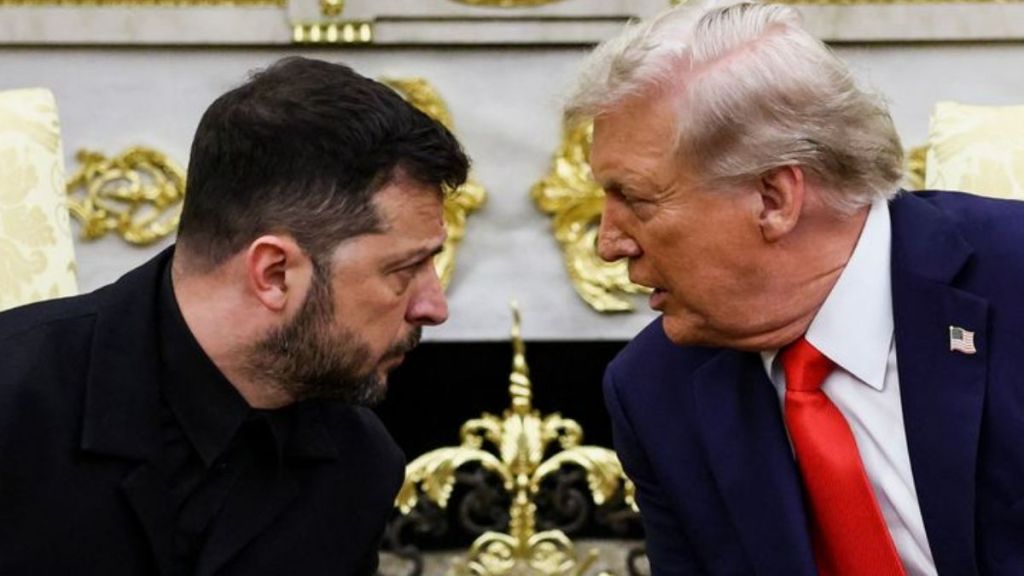

Ukrainian President Volodymyr Zelenskyy has said Russia is heavily dependent on countries such as India, China and Turkey for its economy, as he called for an end to their energy trade with Moscow.
In an interview with The Wall Street Journal (WSJ), Zelenskyy said Russia’s economy depends on its oil and energy trade with these countries. He argued that cutting off this trade could put pressure on Moscow to stop the war in Ukraine.
“Russia is basing its economy on India, sometimes Turkey and China. And it is obvious if these guys stop their energy trade with Russia, then it (Russia) will have to stop fighting the war,” Zelenskyy said.
Zelenskyy wants India, China and Turkey to stop buying Russian energy
Zelenskyy’s comments came days after US President Donald Trump signed the Lindsey O. Graham Sanctioning Russia and Iran Act into law.
The law gives Trump the power to impose tariffs of up to 100% on countries that continue buying Russian oil. India, China, Slovakia, Hungary and Azerbaijan are among the countries that could face such tariffs.
Turkey is also a major buyer of Russian energy. However, it has reportedly reduced some imports after Ukrainian drone attacks disrupted supplies.
Turkey is also among the major buyers of CPC Blend and Kazakh KEBCO crude, as well as Russia’s Urals oil.
Zelenskyy hopes Trump will use tariff powers against Russia
Zelenskyy has said he hopes the new sanctions law will help put pressure on Russia to end the war.
Speaking to the media on the sidelines of the UN General Assembly in New York, he said he wanted the Russia-Ukraine war to end as soon as possible.
“I hope that we will end this (Russia-Ukraine war) and President Trump will help us to end this war. We need to do this as soon as possible, before winter, better before winter,” he said.
According to Reuters, Zelenskyy also said he hoped Trump would use the powers given to him under the sanctions law if Russian President Vladimir Putin refused to de-escalate the war.
Where does India stand on Russian oil?
India has become one of the biggest buyers of Russian crude in recent years. Russian oil has at times made up roughly one-third to nearly half of India’s total crude oil imports.
The issue has repeatedly created tensions between India and the Trump administration. One major example came last year when the US doubled tariffs on Indian imports to 50%, before later reducing them.
India has consistently maintained that its decisions on energy imports are based on market offers and the country’s energy security needs. New Delhi has also defended its right to buy oil based on its own requirements.
Russia, meanwhile, has continued to support India’s purchase of its crude.
Zelensky expects Trump to push for energy ceasefire
Zelenskyy said he knows that energy is a major concern for Trump, especially as attacks on energy facilities have also affected fuel markets.
“I think he will try to negotiate some energy ceasefire,” Zelenskyy said.
However, Zelenskyy does not expect Russian President Vladimir Putin to agree to such a move without additional pressure from Washington. He said stronger sanctions could be needed to push Moscow to change its approach.
According to Zelenskyy, Putin is under less political pressure to change course now that elections in Russia are behind him. He said the Russian leader has little reason to change the campaign even though Russia has made only limited gains on the battlefield.
Ukraine’s attacks on Russian oil refineries add to fuel worries
Zelenskyy also spoke about Ukraine’s attacks on Russian oil refineries deep inside Russia. He said Ukrainian forces have destroyed around 45% of Russia’s refining capacity.
The attacks have added to pressure in global energy markets, which are already dealing with disruptions linked to conflicts in the Middle East. Oil, gas and petroleum product supplies have all faced increased pressure.
Russia was one of the world’s major diesel producers and accounted for about 6% of global diesel supplies before Ukrainian attacks sharply reduced its production this year.
Moscow has responded by banning most diesel exports in an effort to keep enough fuel inside Russia. The move has added to concerns that other major fuel producers, including the US and China, could also restrict exports to protect their own domestic supplies.
Zelensky said Trump has pressured Ukraine to stop attacking Russian oil refineries as fuel prices rise, creating tensions between Washington and Kyiv. However, he said energy prices were not discussed in their latest meeting. Zelensky defended the attacks, saying Russia’s strikes on Ukraine’s energy infrastructure cannot go unanswered. “Our lives are more important than the price of energy,” he said, pointing to the Strait of Hormuz as another factor behind higher energy prices.
Diesel prices hit record levels in US
High energy prices, especially diesel prices, have been a major issue at the UN this week.
French President Emmanuel Macron has called for Ukraine and Russia to agree to stop attacks on oil infrastructure. He has also called for an arrangement that would allow grain shipments to move freely through the Black Sea.
In the US, diesel prices have reached new records. The national average price for a gallon of diesel climbed to $6.53 on Tuesday, according to the Oil Price Information Service. That was almost $1 higher than the level a month earlier.
The rise comes as global fuel markets deal with supply disruptions and growing concerns about further export restrictions.