


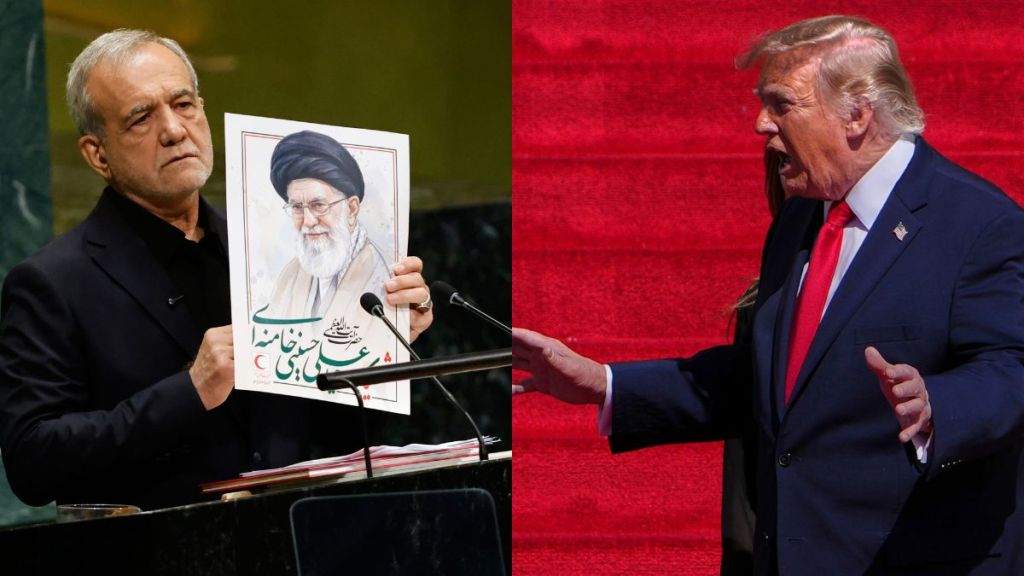

US President Donald Trump has rejected Iran’s proposal to end hostilities within seven days and reopen the Strait of Hormuz, according to a report by The Wall Street Journal. The proposal entailed that the United States lift its naval blockade on Iranian ports, unfreeze some Iranian assets, and lift sanctions on Iranian oil so that negotiations for lasting peace could resume.
Citing unnamed US officials, the WSJ report published on Friday evening (US time) has once again renewed fears of military action escalation in West Asia as the whole world desperately prays for the fighting that began in late February to end. Instead of agreeing with the Iranian side to resolve the ongoing conflict, the new report suggests that the MAGA leader has voiced intentions of resuming bombing after the forthcoming US mid-term elections in November.
In the meantime, an unnamed senior Iranian official told Reuters that the West Asian country is not willing to make any concessions when it comes to its nuclear program, including enriching uranium or shipping its highly enriched uranium out of the country, even if the US accepts the proposal.
The major development comes after Chinese leader Xi Jinping urged the POTUS to return to the 14-point Memorandum of Understanding (MoU) the United States and Iran signed in June. As the two countries continued disagreeing over the Strait of Hormuz, naval blockades and other issues, the interim agreement ultimately faltered, leading to continued attacks from both sides.
Iran wanted to make a deal before midterms
Amid Xi’s three-day visit to the US, Iranian Foreign Minister Abbas Araghchi told reporters in New York City that his country had shared a seven-day plan with the US through mediators this week. He stressed that if certain conditions are met, the critical waterway responsible for transporting 20% of the world’s oil and LNG would be opened at the end of those days, and talks to reach lasting peace would begin again.
In an interview with CBS News, Iranian President Masoud Pezeshkian has since said that Iran was willing to grant United Nations nuclear inspectors entry into the country as part of a potential peace deal.
“If they wish to come in and have inspections, we can reach accords and agreements vis-à-vis that specific topic within the negotiations,” he stated, reiterating that Iran was not trying to develop a nuclear weapon.
Pezeshkian also told reporters in New York on the sidelines of the United Nations General Assembly that Iran wanted to seal a deal with the US before November’s mid-term elections.
“We wish Americans to return to the MoU before the midterms,” he added.
However, Trump appears to have different plans in mind, according to the new WSJ report.
Trump expects Iran bombing to resume after midterms
Trump has repeatedly and publicly said Iran is “begging” for a deal amid mounting economic pressure and soaring inflation. But US officials cited by the WSJ report indicated that the US president privately doubts Iran would meet his demands. Consequently, he has reportedly told his staff that another bombing campaign against Iran could be on the cards after the forthcoming elections.
The report further suggests that Trump, who continues to alternate between a diplomatic stance and an aggressive one, could change his mind as the seven-month war continues over the next few weeks, potentially depending on the outcome of the congressional elections.
Earlier this week, Trump distanced himself from the midterm elections, adding that political contest doesn’t enter his mind while he finds ways to prevent Iran from acquiring nuclear power.
“The Republican Party is running, and I’ll be helping them, but I am not running,” he said at the UN General Assembly. “I have absolutely no credence and will not give credence through the election when it comes to Iran. The only thing that does is that Iran will never have a nuclear weapon.”
A US official told WSJ that both sides are still negotiating behind the scenes through mediators. The nuclear issue is also believed to have been included in these interactions. The official reportedly added that as the US is prioritising oil traffic’s passage through the Hormuz Strait in spite of Iranian threats, urgent focus has shifted away from an agreement.
According to US Central Command’s latest update, the US blockade on the waterway has redirected seven commercial vessels since Wednesday. As of Friday, the blockade, reinstated in mid-July, reached 122 in total, rising from 115 mentioned in CENTCOM’s Wednesday statement.
US believes China helped Iran keep Hormuz closed
Meanwhile, US Ambassador to China David Perdue said that Trump made it clear to China that any aiding Iran was “totally unacceptable.”
“We made it very clear to them weeks ago that any help that they would give Iran, whether it be direct or indirect, whether it be intelligence or parts or military equipment, was totally unacceptable,” the envoy told CNBC on Friday. “President Trump made that very clear again yesterday.”
He also stressed that the US believes China, as Iran’s largest trade partner, has offered Tehran some “indirect support” in keeping the Strait of Hormuz closed.