


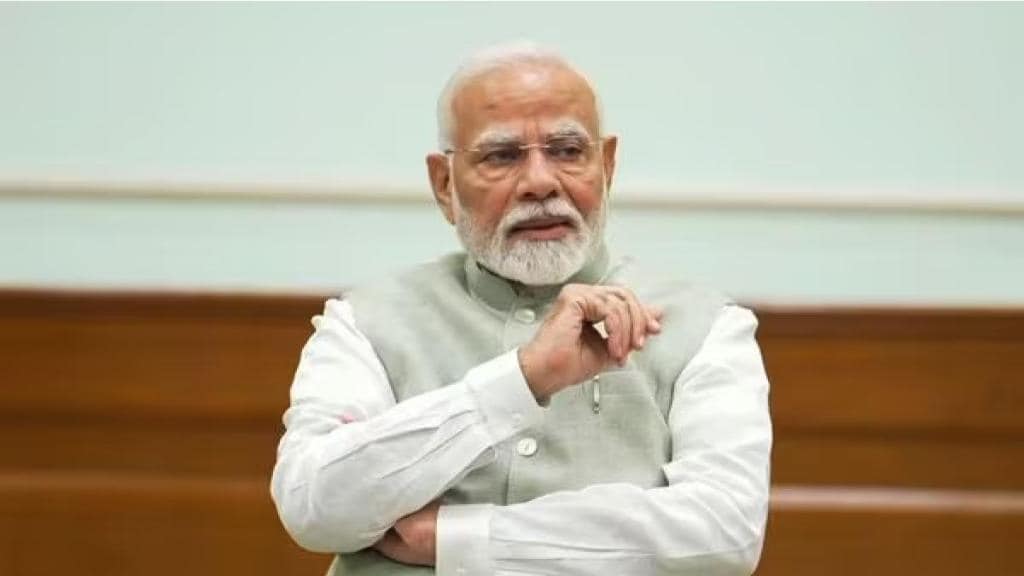

Prime Minister Narendra Modi’s upcoming visit to Nigeria from November 16-17 is a significant diplomatic event, marking the first such visit in 17 years. This visit, at the invitation of Nigerian President Bola Ahmed Tinubu, is expected to deepen bilateral ties and foster greater collaboration between two of the world’s largest democracies: India and Nigeria. The two countries have a long-standing relationship that spans over six decades, built on shared values of democracy, pluralism, and economic cooperation.
Historical Background: A Relationship Rooted in Shared Values
India-Nigeria relations have flourished since Nigeria gained independence in 1960. India established its diplomatic mission in Lagos in 1958, two years before Nigeria’s independence, signifying the early foundation of their strong ties. Over the decades, this relationship has grown beyond political exchanges into areas such as education, healthcare, defence, and trade.
As Dammu Ravi, Secretary of Economic Relations, noted in a special media briefing on Wednesday, “Nigeria is a very large economy within Africa…second or third in terms of GDP, with a population of about 220 million.” He highlighted that both countries, which are multi-ethnic and multi-lingual, share similar democratic values. “Both the countries are multi-religious, multi-ethnic, and multi-linguistic countries,” he said, highlighting that their social and political landscapes make them natural allies.
The two countries elevated their relationship to a “Strategic Partnership” during Prime Minister Manmohan Singh’s visit in 2007, which marked a key moment in the bilateral relationship. Over time, the diplomatic ties have expanded across various sectors, particularly in defence and trade.
The Agenda of Prime Minister Modi’s Visit
Prime Minister Modi’s visit will focus on expanding cooperation in key areas such as trade, defence, culture, and education. Dammu Ravi stated that the visit would include a “ceremonial welcome” at the Nigerian Presidential Villa on November 17, followed by a one-on-one meeting between the Prime Minister and President Tinubu. Following the private discussions, the two leaders will hold delegation-level talks to review the entire range of bilateral relations.
During these talks, both leaders are expected to sign several Memoranda of Understanding (MoUs). There will be exchange of memorandums of understandings, about five covering areas of culture, geological survey, the digital public infrastructure, customs, traditional medicine, audiovisual cooperation, so on and so forth.
These agreements will lay the groundwork for deeper cooperation in these vital sectors, particularly in the context of Nigeria’s growing need for technological and infrastructure advancements.
A key component of the visit will be Prime Minister Modi’s interaction with the Indian diaspora in Nigeria, which is one of the largest in West Africa, numbering around 60,000 people. Dammu Ravi added, “People-to-people contacts have been very strong and enduring,” underlining the significant role of the Indian community in Nigeria’s economy and culture. Modi will attend a community event later in the day to engage with the diaspora, further strengthening these ties.
Economic and Trade Relations
Economic cooperation between India and Nigeria has been robust, with bilateral trade approaching USD 15 billion. A significant portion of this trade is centered around oil, with India being one of the largest importers of Nigerian oil. Ravi noted, “A significant part of [the trade] is oil imports from Nigeria into India,” reflecting the importance of this sector in their economic partnership.
Beyond energy, Indian companies have made substantial investments in Nigeria, particularly in manufacturing and infrastructure. “About USD 27 billion in cumulative terms has been invested by Indian companies in Nigeria, 200 Indian companies involved in a variety of sectors,” he said. These companies are also among the largest employers in Nigeria, second only to the federal government. As both countries continue to explore new opportunities for collaboration, Modi’s visit is expected to focus on ways to boost trade, diversify economic exchanges, and increase investments in non-oil sectors.
India has also extended developmental assistance to Nigeria, including USD 400 million in concessional loans. However, as he pointed out, “Nigeria has used only USD 100 million assistance so far. USD 290 million of dollars is being repurposed for their own initiatives and their own areas of interest.” This flexibility demonstrates the evolving nature of their developmental partnership, as Nigeria seeks to apply funds where they are most needed.
Education and Capacity Building
Education remains a cornerstone of India-Nigeria cooperation. India has long been a preferred destination for Nigerian students, with thousands trained in Indian institutions over the years. The Indian government annually offers 500 scholarships under the Indian Technical and Economic Cooperation (ITEC) program. The Secretary ER highlighted, “India offers about 500 scholarships a year — 250 for civilian experts, and 250 for defence experts who come to India for training.” This has created a large pool of Nigerian professionals who have contributed significantly to the country’s development.
Additionally, India has supported Nigeria’s human capital development through its assistance programs, particularly in technical and vocational training. Over 27,500 Nigerians have benefited from ITEC training since the program’s inception. This focus on capacity building will continue to play a key role in the strengthening of bilateral ties.
Defence Cooperation
Security cooperation is another major area of collaboration. As Nigeria grapples with security challenges, particularly terrorism and insurgency, India has provided valuable support. He mentioned that the two countries have engaged in “ongoing dialogue at the NSA [National Security Advisor] level” to strategize on counter-terrorism measures, especially in relation to Boko Haram. This collaboration also includes military training, with Indian officers assisting in the establishment of key defence institutions in Nigeria, including the National Defence Academy and the Naval War College. Ravi also noted that “about 250 defence experts [from Nigeria] come to India for training” annually under ITEC scholarships.
India and Nigeria are exploring ways to enhance defence cooperation further, including the possibility of providing defence equipment and lines of credit for military purchases.