


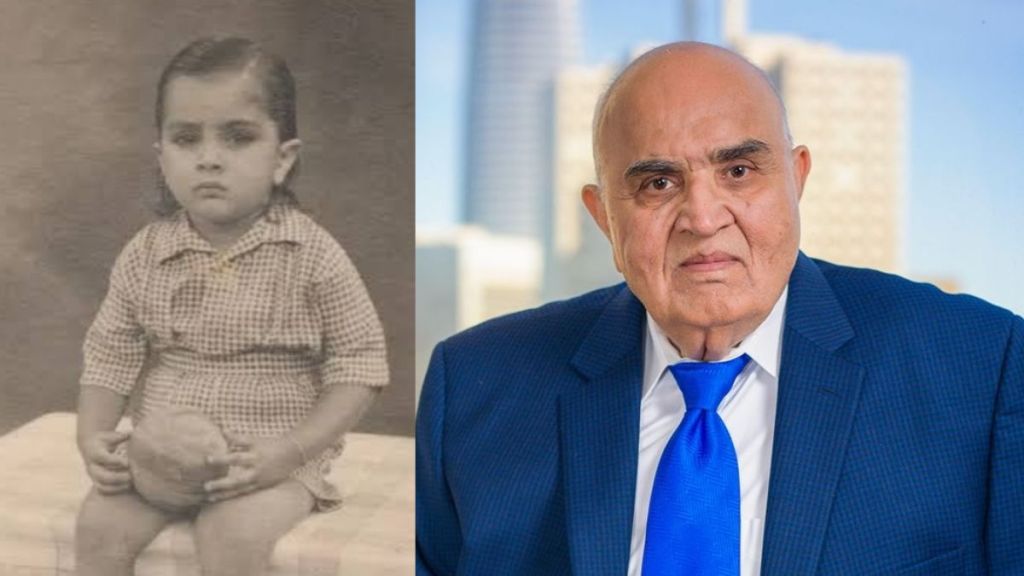

Before he was anybody, Kanwal Rekhi was his mother’s accountant. He was twelve. His father was posted away with the army, as he usually was, and once a month an allowance arrived in Kanpur for a household of thirteen, including grandparents, aunts, eight children, one salary. His mother, who had a fifth-grade education and no English, handed the money to the one child she trusted with arithmetic.
So the boy did the maths that the family lived on. “Atta, Dal, Chini, Subzi,” In that order, or whatever order the month demanded.
“You prioritise things that must be done,” he says, sixty-nine years later in an exclusive interaction with Financial Express (Digital). “I became very good at that.”
It was a compliment and a verdict at the same time. The eldest brother was an officer material and went to the National Defence Academy. The second followed him to the Indian Military Academy. Kanwal stammered, was physically slight, and had been written off, not cruelly, just as a matter of household fact.
His father, a Major who had fought in North Africa as a sepoy and come home a Subhedar, looked at his third son and could not picture a future. “My father didn’t think I would amount to much,” Rekhi says today, with no detectable grievance. What the boy had was a head for numbers. So they gave him the numbers, and very little else.
Keep that ledger in mind. It is the same skill, applied at every scale that follows, to a household, to a company, to a network of strangers who would eventually call him mentor.
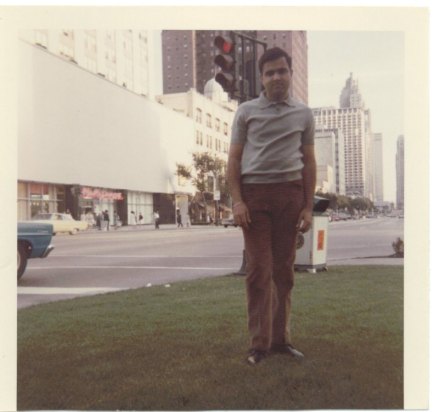
This was not an accident of poverty but a matter of policy: an India worried about the haemorrhage of its best-trained minds permitted those leaving to carry only $8 in foreign currency out of the country. The men who went anyway were known, half in mockery and half in legend, as the $8 Men. On a night in 1967, Rekhi became one of them, stepping off a bus at Michigan Technological University, a mining town on the edge of Lake Superior where the snow does not clear until May, with a master’s admission, a fresh IIT Bombay degree, and the eight dollars. However, the ledger starts earlier than that, and further west. It starts in a village called Sukho, in Rawalpindi district, in what is now Pakistan.
From Kanpur ledger to Silicon Valley
Kanwal Rekhi was born on 29 August 1945, two years before Partition tore his family’s world in half. He was two when they crossed the border. His father, Major Bhagat Singh Rekhi, looms over the first act of this story. In a note his son once wrote to mark what would have been his hundredth birthday, he laid out a life that reads like a compressed history of the Indian century. “He was the first one in the family to matriculate from High School. He joined the army as a Jawan and went to the war in the North African theater. He returned from war as a Subhedar, the highest NCO rank. He eventually got commission as Second Lieutenant on the eve of Independence.”
At Independence he was 31, and his own father had been paralysed by a stroke. “Dad had to step up and take over as the head of the family. He had three unmarried sisters, and two unmarried brothers at the time, four children of his own. He had to take care of 13 people, including his parents, on his single salary. I never saw him complain about this once.”
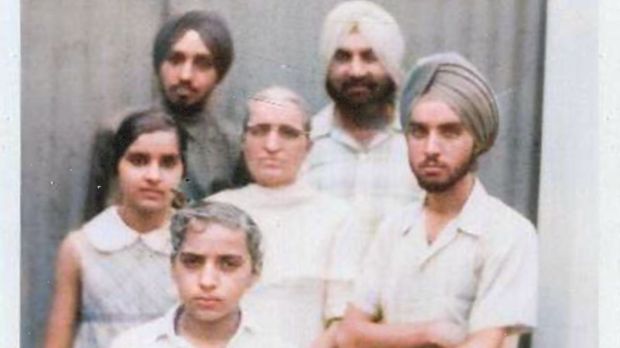
“We were a refugee family,” Rekhi says. “But we also were a very large family. My father had his parents, and my grandfather had a couple of strokes and was bedridden. We had a couple of aunts, and there were eight kids.” Money was permanently tight; his father took postings away from home, often in Kashmir, because they came with extra allowance.
Formal schooling came late. Until the family reached Agra there was no school stable enough to put the children in; his bedridden grandfather taught him at home. When a school finally tested him, “they placed me in third or fourth grade. I was only seven.” He had skipped the beginning entirely, and would be the youngest boy in every class for the rest of his education.
It was into that improvised household that the family ledger was handed to him, and he kept it until he left for IIT at seventeen. What he did not have was anyone’s expectation. “I had a speech impediment. I was physically very weak and awkward. Definitely not army material,” he says of his father’s assessment. In an India where the only secure path was a government job and competition was brutal, that assessment had consequences. “As a result, I got deprioritised as an individual. So I was on my own. Right from the start.”
In 1963, entirely on his own initiative, he sat the IIT entrance examination and got into IIT Bombay. The IITs did not then carry the aura they carry now, but the whole system admitted only a few thousand students a year, out of millions. “Joining IIT Bombay was his own decision, and his father was surprised when he got in. His attitude towards me changed from that day.”
The change had a specific trigger. The sons of his father’s senior officers, English-medium public school boys his father openly admired, had sat the same exam. “One of them appeared in the same year that I did and he didn’t make it. My father saw him as the ideal person. He didn’t make it, and I made it. So he started to see things a little differently.”
His mother had never needed the evidence. “My mother, on the other hand, was always confident I would do well, as she thought I was smart.”
The three women who shaped Rekhi
His mother, Raj Kaur Rekhi, who never learned English and had perhaps a fifth-grade education, ran a household of thirteen on a soldier’s salary and handed her twelve-year-old the purse because she trusted his arithmetic. She spent the last seventeen or eighteen years of her life in the United States, after the anti-Sikh violence of 1984 left her feeling unsafe in Kanpur. She had big hopes on his potential.
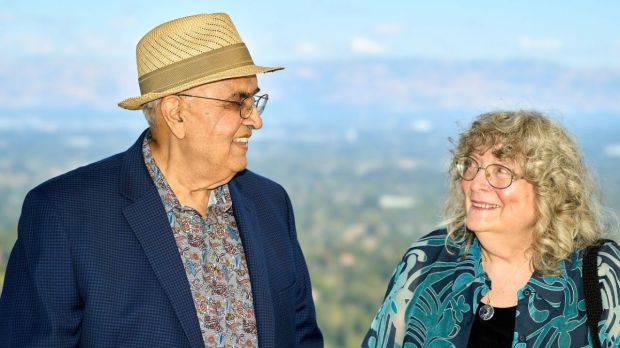
Then there is Ann. They met as pen pals, “the social media of back then,” as he puts it. Ann, an American girl with a difficult family, wrote back every single time. “Long, detailed letters about life in America, life at home. There’s no thought of ever meeting people like that. They’re ten, twelve thousand miles away. So you’re pouring your heart out.” By the time they met in person, they already knew each other completely. They married in early 1971 when he was 25, she was 24, freshly out of the US Air Force and trained as a nurse. Interracial marriage had been illegal in parts of the United States until the Supreme Court struck those laws down, and the disapproval outlasted the statute.
His own father had not approved either, until he met her. “My dad had not approved of me getting married to an American in 1971, but he fell in love with my Ann the first time he met her.”
The marriage lasted 53 years, until her death. Ann chose to be a full-time mother, and Rekhi is direct about how conventional the arrangement was and how completely it worked. And then, the line that explains most of what follows: “Her faith in me, her love for me, was very much a pillar in my life because that was the first time I had somebody besides my mother who had unconditional love and faith in me.” Ann also became the family’s matriarch in the most practical sense.
From 1976 onwards Rekhi sponsored every one of his siblings for US immigration, “for no good reason,” he says. “It was cheap to apply, and just in case they want to come.” One brother arrived in 1976, another in 1980, the rest after 1984, the last in 1991. Ann taught the arriving sisters-in-law to drive, to shop, to navigate. The extended family in the Bay Area now runs to nearly forty people.
His daughter, Raj-Ann Gill, watched this from inside. “I am always in awe that my mom supported his desire to help our family from India move to the US and settle, even as they were personally in flux and things with Excelan were far from certain,” she tells Financial Express (Digital).
Raj-Ann is the third generation of women in this story, and the one who now works beside him: a BA in journalism and economics, an internship in Senator Barbara Boxer’s office, a master’s at the London School of Economics, years at the Asia Society and the American India Foundation. Six or seven years ago her father asked whether she would like to come into the investment business. She said yes immediately.
“She’s very good,” he says. “Looking back, I should have thought of that earlier. But the thought had not even occurred to me that Raj-Ann might want to do what I’m doing, because she was so focused on the nonprofit sector.” She is now a partner at his angel fund, mentoring founders herself.
Education was his primary target of giving, Raj-Ann says, “because it was transformative for his own life’s trajectory,” and beyond IIT Bombay he backed the Foundation for Excellence, funding scholarships for brilliant students from very poor backgrounds, with his money directed at female students. “If you educate a girl, you’ll educate her whole family, because she’ll share that knowledge with her future kids.”
From engineer to CEO
Rekhi finished his master’s and applied for a green card in 1969. “I applied in May, June, and I had a green card in my hand in September.” He and Ann moved to California in November 1971, to a valley not yet called Silicon Valley, at the exact moment it was converting from analogue to digital. He designed flight simulators for the US Air Force and Navy, and was well enough regarded that when he resigned, a general called to ask what it would take to keep him.
Racism, he insists, was not the obstacle people assume. “Silicon Valley had a very technical, meritocratic culture. It didn’t care whether you’re Indian, Chinese, or anybody else. Either you’re a competent engineer making stuff work, or you’re not.”
The obstacle was the ceiling. Through the 1970s the raises came and the promotions did not. “By 1980 I was 35, and all of a sudden I started to realise I’m going to be stuck here as an engineer for the rest of my life.”
Then he watched engineers he had personally trained leave to become entrepreneurs. “And then the seed was planted in my head. Why can’t I become an entrepreneur? Why not me? I am better than these people. I trained them. They worked under me as engineers.”
1981 was the year the IBM PC arrived, the first personal business computer, as distinct from hobbyist machines. Rekhi had spent his career wrestling with the absurdity of moving data between machines: write a tape, carry it across the room, load it on the other end, five or six hours to move a single file.
“All of a sudden it hit me that these computers will have to network with each other. And somebody’s going to have to do it. Maybe it’s my turn, my chance.”
In April 1982 he left his job with two other Indian co-founders, Dr. Inder Singh and Navindra Jain, and started Excelan. Rekhi at one point took over as interim CEO, and in 1985 completed what he still describes as the defining transformation of his working life: engineer to chief executive. “That transition was fairly abrupt, but I was able to transition very quickly.” He brought an engineer’s instinct into sales — Excelan offered customers a money-back guarantee. “Take the objections, take the risk away from the customer. At least he will try. And I knew the stuff would work.”
Asked what the challenges were, setting up a company in America as an Indian, he gives an answer that has become slightly famous among the people who have heard it. “There were no challenges. You see, the beauty of a technology business is that what you’re selling to the customer is a technology product with specifications. He doesn’t know whether it’s coming from an Indian or a Chinese. It’s all about what you deliver.”
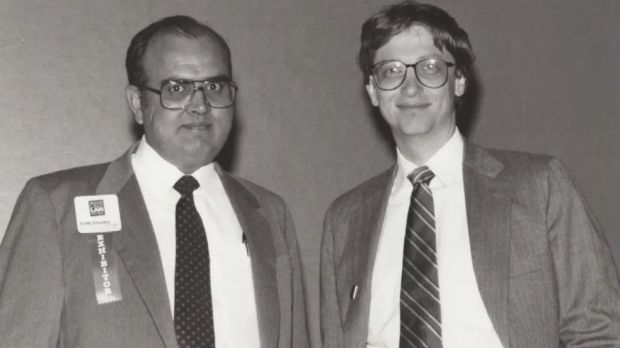
Excelan went public on NASDAQ in 1987, the first venture-backed company with an Indian-American founder and chief executive to do so and later merged with Novell, where Rekhi became the combined company’s Chief Technology Officer, among the first Indian-born executives in the senior ranks of a major American technology company. He left in 1995.
For Raj-Ann, the success announced itself in small domestic increments: the first real family holiday, to Hawaii; a sports car; a better house; a trip to Florida to collect an Entrepreneur of the Year award. The scale landed later. “It was probably several years later, after college in the late 1990s, when I started attending TiECon events that I saw how many people looked up to him and sought his advice. He would practically be mobbed.”
What it had cost, she learned later still. “He was a good risktaker, but he took great care not to infuse that sense of risk into our home life, so as not to worry my Mom. It’s only now that I work with him in early stage investing that I really realise how much he rolled the dice.”
The birth of TiE
By 1991, Rekhi and the handful of Indians who had made it in the Valley had, by his own blunt account, given up on the country they came from. “We had written India off. India was stuck in the mud. Socialist, going nowhere. We are here in America. We are thriving.”
Then liberalisation happened, the licence-permit raj was dismantled, and people began arriving from Delhi to say that India had changed.
One of them was a senior bureaucrat, then head of the Department of Electronics, for whom the Indian consulate in San Francisco arranged a lunch. Seven or eight successful Indian technologists came. They listened politely to the pitch about a new India. And then — this is the part that matters — they looked around the table and noticed each other, several of them for the first time. “We were all heads down, minding our own companies’ business. Now we’ve done well, and we’re looking around. Oh, he has done really well.”
They agreed to have dinner once a month, the third Wednesday. Seven or eight became thirteen or fourteen. The format was simple: eat, and tell your story. What surfaced at that table — no believers, no mentors, everyone fighting alone — became the founding premise of everything that followed: they would become, for the next generation, what nobody had been for them.
In 1993 they booked a hotel room for something they called, with no great imagination, a Workshop for Entrepreneurs, advertised it in the local Indian newspapers, and expected fifty to a hundred people.
Five hundred signed up.
“We said, oh my God. We’d better get a better room. We’d better prepare. We had been taking it very lightly.” The workshop worked, which created a new problem: they had lit a fire and now had to feed it. The monthly dinners became open networking meetings in steadily bigger halls. The second year’s workshop, on marketing, drew six or seven hundred.
The name arrived out of the same room: The IndUS Entrepreneurs. Red, white and blue, the colours of both flags. “IndUS” also read as Indus Valley. And it turned out to be more capacious than intended. “We didn’t check who was Indian and who was not Indian. It turns out, in those five hundred people, many were Pakistanis and Bangladeshis. You can’t tell them apart. So IndUS played very well for them too.”
In 1995, having left Novell and intending to take a year off, Rekhi did something that accidentally converted TiE from an event series into an institution: he showed up. “I set up an office at the TiE office. I’d go there in the morning just like I’m going to the office. Open the doors, read my papers, read my magazines. And word started to spread.” People began dropping in. Then queuing. “Before I knew it, people were lining up outside my office like a doctor’s office. I’m busy from eight in the morning till eight in the evening.”
Was it a sense of giving back to society? “No,” he says. “It was just having fun.”
It was also, by accident, the year Indian founders broke through in the Valley. Hotmail and a cohort of Indian-founded startups came out of that period, many having sat in that queue.
As it scaled, Rekhi pulled in intellectual firepower, the late C.K. Prahalad, then at the peak of his fame, and the marketing scholar Jagdish Sheth at Emory. Prahalad got deeply engaged and gave TiE its framing. “He started to develop this notion of paying forward, and that this is a new freedom movement, an economic freedom movement.” He wrote what became known as the House of TiE paper, the organisation’s conceptual underpinning.
Then the chapters started, unasked: Boston, Los Angeles, New York. “Before we know it, there are twelve chapters in both the US and India.” In 1997 they ran the first TiE Yatra across India, met with interest but limited comprehension. In 1998 they brought twelve people over and held formal events in Bombay, Delhi and Bangalore on entrepreneurship and wealth creation, Silicon Valley style. Five or six hundred came in Bombay; four hundred in Delhi, of whom, Rekhi later discovered, a hundred were senior civil servants.
TiE Global was formally constituted in 2000, with a deliberately light structure and one absolutely rigid rule. “We do nothing but fostering entrepreneurship. No culture, no politics, no religion, nothing. You do that elsewhere.” And: “It’s a bottoms-up organisation. The chapters are where stuff happens. We provide the formula and the recipe, but you get the local ingredients and you do the local cooking.”
No paperwork, just a cheque: Kanwal Rekhi’s seed for Exodus
If TiE was the system, mentorship was the thing itself, and two stories explain it better than any organisational chart.
B.V. Jagadeesh, co-founder and former Chief Technology Officer of Exodus Communications, first encountered Rekhi in 1992 as a Novell engineer in a group run by the company’s CTO. “I don’t think he will even remember me at that time.”
By late 1993 Jagadeesh and his partner K.B. Chandrasekhar had started their own company. Eighteen months of struggle later they bumped into Rekhi at the first TiE conference in Silicon Valley, and he began mentoring them, regularly, for months, hammering one message. “We were in the software consulting business, internet consulting business, internet services business — there were like four or five things that we were doing. He just kept saying, ‘Hey, focus on one thing that has the biggest opportunity,'” BV tells Financial Express (Digital).
Around late November 1995, Rekhi said he would put in $200,000 of seed money. Then he vanished for ten days.
“There were massive rains in this area, and there was no mobile phone, no internet. In his house, he had a power loss.” He was without electricity, and without a working phone, for eight to ten days. Jagadeesh and Chandrasekhar had recently been ghosted by a US venture capitalist after months of diligence. “So we thought, oh, maybe this is the way investors actually work. Little did we know that he had no power in his house and the man was working hard with the local PG&E to get the power back.” They had a payroll to make, and a few days later, the phone rang. “He calls up my partner and says, ‘Hey, you guys still need the cheque from me or what?’ And we said, ‘Of course we want the cheque! We’ve been trying to reach you for the last ten days.'”
What happened next is the part Jagadeesh still marvels at. “The greatness of him was he wrote the cheque of $200,000 — which was big money at that time — with no paperwork. There was no note, there was no agreement, there was no nothing. He said, ‘Come collect the money and go cash it, and that way you can make the paycheck for December 15th.'”
The company was Exodus Communications. That $200,000 anchored a $3.5 million round closed in February 1996, with Rekhi on the board alongside John Doerr Sr. The money built the world’s first internet data centre, the infrastructure that hosted Hotmail, Match.com and much of the early web. Rekhi, an investor in Match.com, brought it in as a customer himself.
Jagadeesh is clear about why the rest of the money followed. “Neither of us had a US degree — both of us were not from IITs either. The only reason why everybody else was interested was because Kanwal was excited about us.” His one word for Rekhi: “Straight shooter.”
Raju Reddy’s story begins with a smaller number. A BITS Pilani graduate who came to the US in the early eighties, he chose Virginia Tech “partly because they had a $10 application fee and my entire budget was $30. Sometimes your life choices are determined by things like that.” Ten years at Intel, and then, in 1993, a company of his own. What made it thinkable was proximity.
“Living in Silicon Valley, you would see people like Kanwal and I thought, ‘If they can do it, maybe I can do it too.’ I’m a big believer in the power of relatable role models. There were many other people I was inspired by, whether Bill Gates or Larry Ellison. You hear their stories, but they don’t necessarily make you believe that what they achieved is achievable for you. Whereas Kanwal came from a background similar to mine, similar food, culture and so on,” he tells Financial Express (Digital) exclusively.
“When someone like Kanwal then comes and says, ‘I think you’ve got something good here. I’ll back you,’ that gives you confidence no amount of money can buy.”
Rekhi made the VC introductions Reddy could not get on his own. They ended up with several firms competing, raised $17.5 million in 1993, and never went back to the well. Sierra Atlantic grew to around 2,500 employees, acquired four companies, and was bought by Hitachi in 2010 — seventeen years, which Reddy calls being “a slow entrepreneur.”
Rekhi’s counsel was compressed to the point of aphorism. When early traction and an Oracle licensing deal tempted Reddy to stay bootstrapped: “Typical Kanwal — he told me, ‘You can’t launch a rocket unless you burn enough fuel.'” When Hitachi wanted to slow a deal both sides had agreed to close by 31 December, and pleaded process: “Kanwal’s response was brilliant. He said, ‘They’re a Japanese company and their process is slow? That’s their problem, not our problem.'” Hitachi wired the money on 30 December, at considerably more than its opening offer.
‘The dharma of an entrepreneur’: What Kanwal told founders facing layoffs
The counsel Reddy returns to is not about money. It is about the worst thing he ever had to do.Sierra Atlantic lived through two brutal cycles, the dot-com bust and the Lehman collapse in 2008. Both meant layoffs.
“Those were probably the most difficult periods for me as a founder. The most difficult aspect was having to let people go. You build a caring organisation, and then you have to make those decisions,” Reddy tells Financial Express (Digital).
What Rekhi offered was not reassurance. “Kanwal didn’t simply say, ‘I’m here to back you.’ He gave me a perspective on why certain difficult decisions had to be made.”
“It was a little like Krishna in the Bhagavad Gita — the idea of duty or dharma. Kanwal talked about the ‘dharma of an entrepreneur.’ You have a responsibility to your stakeholders. Suppose you have 1,000 employees and need to let 100 go. If you don’t make that decision, you may be depriving the other 900 people of their chance to succeed. You also have investors and customers you need to serve,” he tells Financial Express (Digital).
“That perspective,” Reddy says, “was much more valuable than simply saying, ‘I’m here to back you.'”
The second half of the lesson was about how. “At the same time, you should make those decisions with grace. Be very clear and communicate. People don’t expect miracles from leaders, but they expect leaders to be transparent. They expect you to explain why you’re doing what you’re doing. Communicate, communicate, communicate.”
The day Kanwal Rekhi told Vajpayee India’s telecom was not ready
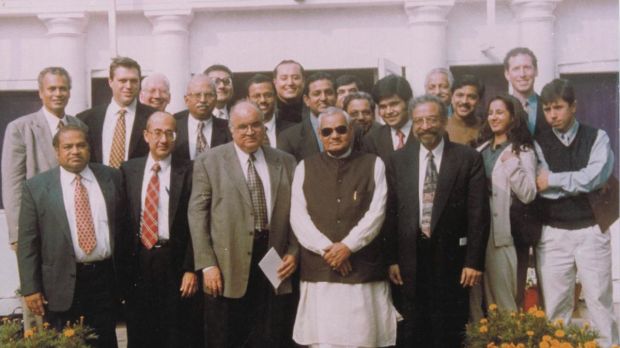
Somewhere in the late 1990s, Rekhi watched Atal Behari Vajpayee give a speech in which the Prime Minister said India was emerging as an IT hub. IT is India’s tomorrow, Vajpayee said. Rekhi requested a meeting.
“I met Vajpayee and told him that if IT is indeed India’s tomorrow, then he would have to do something about the telecom infrastructure in India, which was poor at the time,” Rekhi tells Financial Express (Digital).
Vajpayee asked him to help fix it. Rekhi spent time at Stanford developing a policy framework for what India needed to do. “Our recommendations were adopted by India and the revolution was underway quickly.”
Ben Rekhi first grasped the scale of his father’s influence on that side of the world when he came to India with him at nineteen. “I saw the crowds lined up to speak to him, going from seminar to seminar, and what he was saying was pretty profound. He was saying all this stuff 25 years ago, when India was only in the top 15 economies. He even has quotes from back then that, ‘I think in my lifetime, I’m going to see India become the fifth largest economy.’ He saw it as a system,” Ben tells Financial Express (Digital).
For Ben, that systems view is the legacy. “It wasn’t just companies that he built; he built an engine that transformed the ecosystem here. He really talks about entrepreneurship as a freedom movement. There was a political freedom movement during independence, but this is an economic freedom movement. How do you free people up to go after their full potential? How do you cut the bureaucratic red tape? It’s not just up to the government.”
KREST: betting on ten million rural founders
The number Rekhi now repeats is ten million entrepreneurs by 2047, the year India turns 100, with a milestone of one million by 2030. The place he has chosen to test it is not Bengaluru. It is Nizamabad, about three hours north of Hyderabad.
The model was already proven elsewhere: the Deshpande Foundation’s rural incubator in Hubli, Karnataka, which Raju Reddy and RedBus co-founder Phanindra Sama — both from Nizamabad — went looking for and then replicated in North Telangana as the Kakatiya Sandbox. Rekhi had visited three or four times over the years, an inspiration but not directly involved, before the offer came unprompted. “He said, ‘I really like this. I want to support you.’ I hadn’t asked him for anything,” Reddy remembers, of a car ride back from Nizamabad to Hyderabad.
That gift — ₹20 crore — became the Kanwal Rekhi Rural Entrepreneurship and Startup Center, KREST, which launched this January under Manish Kumar Jaiswal, CEO of both Deshpande Startups and KREST. Its logic is contrarian. “42% of the startups around the world eventually shut down because they are solving the wrong problem,” Manish tells Financial Express (Digital). “We want to cut that loss much earlier.” The flagship programme, Validate, runs small batches of founders through five weeks of customer testing before they are allowed to commit further. The first cohort — fifteen startups — has just graduated, and Manish’s measure of success is deliberately inverted: the startups that walked away from a bad idea count as much as the ones that didn’t. The targets he is chasing are 500 startups by 2030 and 10,000 by 2047 — a model, he hopes, “that can be replicated across the rest of India.”
Rupal Dandia, Vice President of Development at the Deshpande Foundation, has supported Rekhi’s philanthropy since 2007 and watched this gift arrive at the end of a long arc. “Kanwal truly believes in the power of philanthropy and entrepreneurship to transform institutions and nations, and contributes his time, treasure and talent to enable the change,” she says. “Kanwal has always been a kind, humble, caring and immensely generous person. He is clear and direct in his communication, and is vision and impact driven.”
The book, the film, and the son he didn’t push
Neither of the two accounts of Kanwal Rekhi’s life now in existence was his idea. Both came from his children, and both required him to be more exposed than he would have chosen.
The Groundbreaker, the autobiography, began with Ben pushing. “He built a big dossier of stuff from the internet and said one day, ‘Dad, there’s so much stuff out there about you. We need to capture that into a book, because otherwise it’ll be all lost,'” says Rekhi.
Start to finish it took three years, and the final book is roughly half the size of the draft. “I didn’t want the book to be burdensome. I wanted it to have a flow, have a theme, and also inspire people.” The theme became the question he had asked himself in 1981. Why not me?
The documentary, Breaking the Code, is Ben’s. “The challenge sometimes with Dad is that he’s done so much that it’s hard to know the full picture. People are like, ‘What will he be known for?’ For inventing the internet, for being the first Indian CEO in America, for starting TiE, for working with Vajpayee on changing telecom policy? It’s hard to put your finger on the biggest impact. I knew, witnessing it up close, that I had a front-row view to how he singularly changed the world. And if I didn’t tell the story, then the story would never get told in the way that I knew its significance,” Ben tells Financial Express (Digital).
Then came the harder discovery. “When I started the documentary, I said, let me make sure that I get all of these things he did in his professional life. But then when I sat back and looked at it, I was like, oh no. This is only half of him. The personal story is the real insight into the man.”
He was nervous to ask. “But he was like, ‘Listen, this is your project, you tell me what you need. I’m not afraid to hide anything.’ So then the project became about his relationship to my mom, mental health challenges in the family, loss, grief. It became so much bigger, and that’s what makes the movie.”
That a filmmaker exists in this family at all is the proof of a promise Rekhi made to himself decades earlier. “My experience with my dad was not very good,” he says. “So I didn’t want to be telling Ben that his intent is bad.”
Ben had been obsessed since he was ten, when the family Sony video camera fell into his hands and never left them. He shot, and then — because there were computers in the house — he edited. When it came time to choose a life, his father set exactly one condition. “The only requirement I will have is that you don’t rush in unprepared. Go to college, go to film school, pick up the trade.”
Ben went to NYU. “That’s the only requirement I had.” There was no engineer-or-doctor speech. “I think he was concerned, because he knows how difficult the creative path is. It’s not a stable career. So he was definitely double-checking, ‘Are you sure? Is this what you really want?’ And at times he was like, ‘Do you want to just go get a different degree first and then pursue this later?'”
“But he wasn’t going to make the decision for me. As someone who had forged his own path against whatever everyone else thought or desired or believed, he also understood that one has to follow their own path. He never forced me into a different decision. He was very honest about the challenges, but supportive of the choice.”
Raj-Ann says the same of her own upbringing. “My dad focused sharply on education when we were growing up, but he never nudged us strongly towards any particular life path or profession. There was none of that ‘you will be a doctor’ pressure.” What there was instead was a catechism, repeated so often the children can still recite it: What’s the number one thing in life? Education. Number two? Health. Number three? Family.
Rekhi’s advice to Ben was the same advice he gives every founder. “Don’t dabble. Anything worth doing is worth doing well. Anything you get involved with, you need to become master of it very quickly. Look at my involvement with TiE. You pour your heart into it. Otherwise, why bother?”
The moment Ben remembers most sharply is not about art at all. In his early twenties, on his first film, he had to fire someone unprofessional, and was terrified to tell his father, certain it would look like the production was falling apart.
“He was like, ‘That’s great!’ And I was like, ‘What do you mean?’ And he was like, ‘Well, it shows that you’re not putting up with any bad behaviour, and it sends a message to everyone, we demand your best, nothing less will be tolerated.’ From then on, I knew I could open up to him about the challenges I was facing. That taught me I could be vulnerable with him.”
Still mentoring at 81
The Partition story, which sits at the origin of everything, was never told at home. “He never spoke about Partition during our childhood,” Raj-Ann says. “The actual migration story was never told. I only learned about that part of our family’s experience maybe in my mid-20s.”
Rekhi is 81 now, and lives alone. “Being fit is required to do what I do,” he says. “Not many 81-year-olds are driving and living alone. I live alone, on my own. I’m totally self-reliant.”
Raj-Ann traces the discipline back decades. “What really amazes me is how much he took command of his health in his mid-50s. It was not typical back then. Up until about ten years ago, he would join me on really long and challenging hikes in the Bay Area. We took trips to the Galapagos and Antarctica about 25 years ago, both of which required fitness to keep up on guided hikes, and he was able to do it even though he was one of the older people there.”
There is a softer memory too: her father, not conventionally devout, singing Sikh kirtans in the car.
He still mentors at the same intensity. “I still mentor entrepreneurs like every entrepreneur is the first entrepreneur I’m mentoring.” He insists this is not charity but self-interest, what Prahalad taught TiE to call paying forward.
“You get more than you pay. When you mentor a young entrepreneur, you think you’re giving to him. But you get more than you gave — because a person like me would very quickly start to go stale. It’s near impossible to keep up with technology and markets unless you’re in the market and playing all the time. So you do that through the younger entrepreneurs. When you talk to ten or fifteen of them, you start to get a very complete picture of what’s happening in the marketplace,” Rekhi explains.
Ben, asked what drove his father through all of it, does not say ambition. “He was always underestimated. His father underestimated him. His batchmates underestimated him. When he got to the US, his American co-workers dismissed him. So he had this intense desire to prove everyone wrong. From a very young age, it gave him a chip on his shoulder that I need to prove myself in the world. If I’m going to do it, no one’s going to help me. I have to do it myself.”
The boy who was written off by his own father, who was placed in fourth grade at seven because there had been no school before that, who balanced a household ledger at twelve and left for America with eight dollars, went on to take a company public on NASDAQ, run a major technology company’s engineering, and build a network that now spans continents. But ask the people he backed what he actually gave them, and none of them start with the money. “We all had a very lonely journey,” he said of that first TiE dinner table. “There were no mentors.” There are now.