


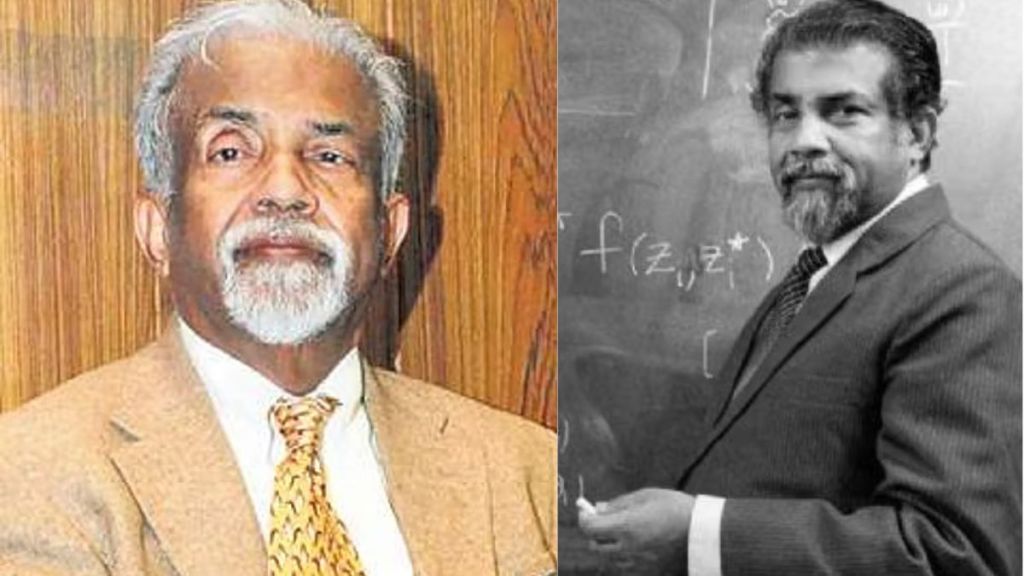

In a small town in Travancore, in a household where the local library was treated almost like a second school, a boy went through nearly 200 books a year – mathematics and logic one week, Malayalam poetry and philosophy the next. Nobody in Pallam near Kottayam could have guessed that this restless reading would eventually reshape how physicists understand light itself, or that the boy’s equations would underpin theories that later won other men Nobel Prizes.
This is the story of a boy from Kottayam who went on to make some of modern physics’ most important contributions — Prof. E.C.G. Sudarshan, whose work stretched from particle physics and quantum optics to open quantum systems, and who taught generations of students, built institutions, and spent nearly five decades in American universities without ever leaving home at heart.
Born in 1931 into a Syrian Christian family, Sudarshan was the son of a school teacher and a revenue inspector in the old Travancore state. It was an unremarkable start for a career that would take him from a small-town Kerala college to the frontiers of theoretical physics, first to CMS College Kottayam, then Madras Christian College, and finally to Mumbai’s Tata Institute of Fundamental Research (TIFR), where he came under the wing of Homi Bhabha himself. He would go on to spend nearly five decades at the University of Texas at Austin, becoming one of the most prolific theoretical physicists of his generation.
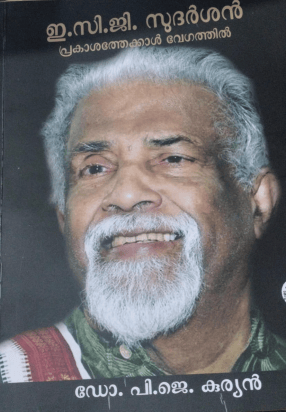
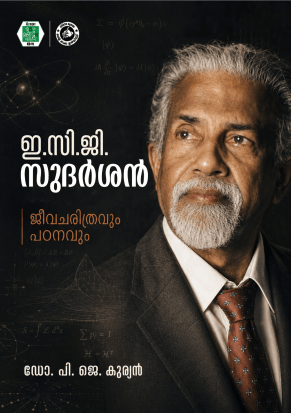
America never fully claimed him. He never gave up his Indian passport, and every year he returned for months at a stretch to teach and research at IISc Bangalore, IMSc Chennai and TIFR. “Even while he was an international scientist in America, his Indian connection remained strong until his death,” says Dr P.J. Kurian, who wrote Sudarshan’s Malayalam biography, ‘E.C.G. Sudarshan Prakashathekkal Vegathil,’ in a conversation with Financial Express (Digital).
What Sudarshan never got, regardless of a career that touched some of the biggest breakthroughs in twentieth-century physics, was a Nobel Prize. He was said to have been nominated multiple times over the decades. Meanwhile, ideas he had a hand in shaping went on to win the prize for others, including Richard Feynman, Steven Weinberg, Roy Glauber among them, while Sudarshan’s own name slipped out of the story most people know.
A boy who read eight books a week
Long before physics became his life’s work, Sudarshan was simply a boy who could not stop reading. His curiosity went far beyond the classroom.
K. Babu Joseph, former Vice Chancellor of Cochin University of Science and Technology, who studied at the same college as Sudarshan, later came across the old library records at CMS College Kottayam. They showed that a teenage Sudarshan had borrowed nearly 200 books. The subjects ranged from advanced mathematics and logic to history, philosophy, and Malayalam and English literature.
“His voracious reading went on at the rate of about 8 or 9 books per week,” Babu Joseph tells Financial Express (Digital) in a note. “He had already become a legend, when I joined the college for my B.Sc. degree course in physics, in 1958.” This appetite for knowledge took him from CMS College Kottayam to Madras Christian College, where he completed his BSc Honours in Physics.
The invitation from Homi Bhabha
After finishing his BSc Honours and a year as a tutor at Madras Christian College, Sudarshan received an invitation that would set the course of his career: an offer from Homi Bhabha, founding director of TIFR, to join the institute as a research assistant.
P.J. Kurian explains how it came about, “Homi Bhabha invited Sudarshan after he finished his BSc Honours and one year as a tutor at Madras Christian College, to work as a research assistant at TIFR. So he was a direct student of Homi Bhabha, but couldn’t get registered for a PhD due to certain reasons. But he did serious experimental work and along with it, theoretical studies there. Later, a background for all his achievements was prepared while he was sitting there.”
The teachers who shaped a scientist
At TIFR, two visitors would change the direction of Sudarshan’s life. In 1954, physicist Paul Dirac visited the institute to lecture on quantum mechanics. Sudarshan helped prepare the lecture notes, beginning a close and lasting relationship. According to P.J. Kurian, Dirac became one of Sudarshan’s greatest influences. “Similarly, Sudarshan’s greatest teacher was Paul Dirac, the Nobel laureate. He was a teacher whom he respected immensely. He met him there,” Kurian tells Financial Express (Digital).
Another turning point came in August 1953, when American theoretical physicist Robert Marshak visited TIFR. Marshak was impressed by the young Sudarshan and invited him to the University of Rochester in the US for his PhD. “Marshak made all arrangements for Sudarshan to go to the US,” Kurian says.
Crossing the ocean and building a career
Sudarshan arrived in Rochester in September 1955, at a time when elementary particle physics was rapidly developing. He completed his PhD under Marshak in 1958. He then spent two years at Harvard as a Research Fellow, working with Nobel laureate Julian Schwinger. He returned to Rochester as a faculty member and rose from Assistant Professor to Associate Professor. In 1964, he moved to Syracuse University as a full Professor and built an active research group in particle physics.
Five years later, he joined the University of Texas at Austin, where he would remain for nearly five decades as a Professor and Co-Director of the Centre for Particle Theory. For him, America never completely replaced India. Despite his long career in the US, Sudarshan continued to spend months in India every year, teaching students and working with researchers at IISc Bangalore, IMSc Chennai, TIFR and Delhi University. “Not only that, he used to visit India for a minimum of 2-3 months every year. When he came here, he used to teach students and do collaborative research work in leading physics research institutions in India,” Kurian tells Financial Express (Digital).
A foundation for electroweak theory
At Rochester, Sudarshan and Robert Marshak were working on one of the biggest questions in particle physics: how weak nuclear interactions work. Weak interactions are involved in processes such as radioactive decay. Enrico Fermi had proposed an earlier theory in 1934, but it needed further development.
Sudarshan and Marshak developed what became known as the V-A, or Vector minus Axial Vector, theory. Their work would go on to become an important foundation for electroweak theory, the framework that unifies two of nature’s fundamental forces.
In 1979, the Nobel Prize in Physics was awarded to Sheldon Glashow, Abdus Salam and Steven Weinberg for their work on electroweak theory. Sudarshan and Marshak’s earlier contribution went unrecognised by the Nobel Committee.
According to P.J. Kurian, one reason was that their work was not published quickly enough in a major journal. He describes how Marshak asked Sudarshan to present the completed work before Murray Gell-Mann.
“So what Gell-Mann did was, along with Richard Feynman, he used a slightly different mathematical procedure to arrive at the same result. Then, they quickly published it in a top journal called Physical Review. But Sudarshan’s work remained confined to a conference proceeding. That was the carelessness shown by the guide. They should have published it earlier.”
Kurian says the question of credit later became more complicated: “So what the Nobel Committee did was, they decided that neither party should get it.”
Sudarshan was only 26 at the time. Kurian says Sudarshan believed that later developments had been built on the foundation created by his earlier work. “That is the issue. Meaning, Sudarshan also believed that he was someone who could claim credit for that theory, because it was a continuation of that work.”
Anil Shaji, who completed his PhD under Sudarshan at University of Texas, Austin between 1998 and 2003-04, later saw how carefully Sudarshan had preserved the history of that work. Sudarshan once gave him an old copy of the Padua conference proceedings paper in which he and Marshak had proposed the Universal Four-Fermi interaction.
Shaji later wrote that Sudarshan had shown remarkable confidence in his conclusions even as a graduate student. “As a graduate student, just as I was then Sudarshan had written in no uncertain terms that four experiments had to be re-done since they contradicted his formulation of the theory. Indeed they were re-done and proven to be incorrect, while simultaneously proving Sudarshan right,” he explained this in a note shared with Financial Express (Digital).
Around the same time, Physical Review was digitising its archives. The paper by Feynman and Gell-Mann became available online, while Sudarshan’s earlier Padua paper did not. “I felt this was unfair,” Shaji writes. He retyped the paper in LaTeX from the original hard copy, hoping to upload it to the arXiv pre-print server. “but Sudarshan felt that would not be appropriate.”
Shaji argues that Sudarshan’s contribution went far beyond one paper. “None other than Steven Weinberg has stated categorically that the V-A theory of weak interactions developed by Sudarshan and Marshak, and later elaborated upon by Gell-Mann and Feynman, was key to developing the theory of electroweak interactions” for which Glashow, Salam and Weinberg won the 1979 Nobel.
Shaji further added, “The Universal Four-Fermi interaction proposed by Sudarshan was, without question, an addition of the most fundamental nature to our understanding of the workings of the physical universe.”
Chasing the mystery of light
After PhD, Sudarshan turned to another question that had fascinated him for years: the nature of light, which behaves both like a particle and a wave.
His interest in the subject went back to his college years, when he studied optics under professor M.A. Thangaraj at Madras Christian College. According to P.J. Kurian, the larger question that interested Sudarshan was “why light has quantum effects and how it evolves mathematically.”
In 1963, Sudarshan published what would become one of his best-known papers, the Diagonal Coherent State Representation. The work offered a mathematical framework for describing different states of light, including classical and quantum states. Babu Joseph describes it as an example of Sudarshan’s search for “perfection or beauty in nature.”
The same interest also led Sudarshan and his student V.K. Deshpande to propose tachyons, hypothetical particles that would always travel faster than light.
P.J. Kurian explains the importance of the work: “It is also called the Sudarshan Representation, P-Representation, etc. That work, it was in its continuation that lasers and all were created. Many, many new developments occurred following that. But the fact that Sudarshan was in the background of lasers and all is something many people don’t think about today, which is a matter of sadness.”
Shaji also believes Sudarshan’s approach was ahead of its time: “Sudarshan’s way of describing the electromagnetic field (light) quantum mechanically was without question the correct one, and it also made a clear connection with the well-developed theory of traditional classical optics.”
Snubbed a second time
The work on quantum optics would bring Sudarshan back to the same painful question: who gets remembered, and who gets the credit? According to Kurian, physicist Roy Glauber initially dismissed Sudarshan’s representation before later building on the work. “He himself later studied it further, took Sudarshan’s work, and made slight refinements to it. Then he named it the Sudarshan-Glauber Representation or Glauber-Sudarshan Representation. For that work, the Nobel Prize was given to Glauber in 2005. Actually, that was a cheating — it was a cheating. The entire leading scientific community submitted complaints against the Nobel Committee. But they didn’t consider it, because the Nobel Committee never washes its hands in controversies like that; they don’t try to find solutions. So actually, the 2005 Nobel Prize was a prize that Sudarshan 100% deserved,” Kurian explained.
By then, Sudarshan had reportedly been nominated for the Nobel Prize nine times across different areas of physics. He was never selected.
Kurian places this in a wider context, noting that other important scientists also missed out. He also points to Anil Shaji’s assessment of Sudarshan’s career: “What Shaji said was that E.C.G. Sudarshan was deserving of the Nobel Prize a minimum of five times meaning, in five different situations.”
Shaji is equally clear about his view: “There has been quite a bit of discussion, especially in India, about whether Sudarshan was denied a much deserved Nobel Prize. In my opinion there is no question that he deserved the Prize. In fact, he should have been given due recognition for each of the seminal works mentioned earlier.”
Shaji believes Sudarshan’s wide-ranging interests may also have worked against him. Sudarshan was also willing to raise uncomfortable questions about recognition and credit in science. He questioned whether Albert Einstein had properly credited S.N. Bose for Bose-Einstein statistics, and asked why Mileva Einstein’s name, which appeared on an early draft of Einstein’s 1905 special relativity paper, was missing from the published version. “Such questions,” Shaji writes, “indirectly belied the fact that Sudarshan did harbour a sense of being cheated out of due credit at several occasions for work he had done.”
Breakthroughs the world barely noticed
The Nobel controversies were only one part of Sudarshan’s scientific life. He continued to produce important ideas across different areas of physics.
Working with Baidyanath Misra in the 1970s, Sudarshan predicted what is now known as the quantum Zeno effect — the idea that closely observing an unstable quantum system can affect or even prevent its decay. Babu Joseph notes that the prediction “has since been verified by studious experimentalists.”
Shaji says the idea attracted attention because of its scientific and philosophical implications: it “captured the imagination of many people due to its philosophical implications.” He adds, “the real beauty of it is that the effect could be demonstrated in the lab and now it is something that is actively pursued so as to reach the goal of controlling individual atoms and other quantum systems.”
Twenty-one papers and a rule about authorship
Anil Shaji’s years as Sudarshan’s student at UT Austin offer a closer look at the man behind the theories. Shaji had originally gone to Austin hoping to work with Nobel laureate Ilya Prigogine, but found himself disagreeing with Prigogine’s postdoctoral researchers over their approach to the irreversible nature of time.
“I decided after discussing my disagreements with Prigogine that I should speak directly to Sudarshan, who shared similar reservations about their approach,” Shaji tells Financial Express (Digital).
Sudarshan was recovering from major surgery when Shaji first arrived. Once he returned, the two discussed the problem in detail. Sudarshan pointed out where Shaji’s reasoning worked and where his calculations needed correction. “That interaction convinced me to switch research groups and work with him instead,” Shaji says.
What followed, Shaji says, was “a fantastic experience.” Sudarshan “possessed vast knowledge across almost every domain in physics, making it easy to bring up any topic and immediately start working on it.”
By the end of his PhD, Shaji had co-authored around 21 papers with Sudarshan. Part of this came from the way they worked together. As online archives such as arXiv became popular around 2000, Shaji would find interesting papers and bring them to Sudarshan. “One idea would lead to another, sometimes producing valuable results,” he says.
Sudarshan maintained a disciplined routine. He arrived around half an hour before class, usually dressed in a coat and tie, and worked from a corner office on the ninth floor of the Physics and Astronomy building.
But he had a strict rule about authorship. “If we discussed an idea and he ended up doing all the calculations because the student couldn’t keep pace, he would write out the entire paper by hand on a notepad and hand it to the student solely to type up,” Shaji recalls. “In those cases, the student’s name would not appear on the paper. However, if you kept up with his pace and actively contributed to the steps, he would include you as a co-author.”
Asked whether Sudarshan pushed his students or gave them freedom to work independently, Shaji says the answer was somewhere in between. “He wouldn’t push you directly; he would simply do the work himself out of sheer curiosity and an impatience to find the answer. Because he maintained the enthusiasm of a 16-year-old, you either had to keep up or stay ahead of him which was incredibly challenging.”
People sometimes mistook him for a philosopher, Shaji says, “because he spoke in broad analogies, but at heart, he was strictly a scientist using abstract analogies to explain physical theories.”
Late at night, when Shaji stayed at Sudarshan’s home while his wife travelled, he would sometimes find his mentor in a recliner, with the television on and a notepad in his hand — “the TV on and running probably a tele-shopping channel, notepad in hand, calculating away.” He was often working on a problem the two had discussed earlier that day.
“Typically the professor would expect the graduate student to attack the problem and find a way forward and report about it the next day,” Shaji writes. “Here the professor was happily working away on it while the PhD student was scrounging for snacks in the kitchen.”
When Sudarshan found a solution, Shaji says, his excitement was immediate — “he would become all animated and excited. Just like a little boy getting hold of a new toy.” He would explain the solution even if it was two in the morning and Shaji was barely awake.
Shaji admits he did not always understand everything immediately. But Sudarshan’s enthusiasm stayed with him. His mentor’s “joy and excitement were contagious,” he writes. Without directly saying it, Sudarshan showed him “the rewards that lay at the end of the 99% donkey work” — his own phrase for what theoretical physics largely involved.
A scientist rooted in Kerala, wherever he lived
For all his decades in the United States, Sudarshan remained closely connected to his Indian identity. Asked how well he had adapted to American life, Shaji did not hesitate. “He was Indian through and through. He never truly acclimated to the US lifestyle. The moment he returned home from the university, off went the coat and tie, and on went his mundu.”
Shaji also came to know Sudarshan’s home life closely. When Sudarshan’s wife, Dr Bhamathi, travelled to Chennai every December and January for the music season, Shaji would stay with him, drive him to work, cook his meals and look after him. It was during these periods that Shaji saw another side of his mentor.
Sudarshan enjoyed having the Home Shopping Network playing in the background while working through physics problems. He also occasionally ordered gadgets he saw on television. “His house had an entire room filled with unopened boxes of chopping boards, knives, and kitchen tools that nobody ever used,” Shaji says.
But one of Shaji’s strongest memories came from a disagreement over physics. During his third or fourth year, the two argued over a calculation. Shaji believed he was right and refused to change his position. They spent more than three hours at the blackboard, going through the problem line by line. “Finally, after nearly three and a half hours, he looked at the board and admitted that his initial assumption was wrong and my solution was correct,” Shaji says.
“From that day on, his attitude toward me shifted, he treated me less like a student and more like an equal peer. That taught me a fundamental lesson, respect for scientific truth supersedes seniority, age, or status.”
A scientist who never stopped being a philosopher
Babu Joseph, who knew Sudarshan for more than five decades, described him as “a noted philosopher among scientists and a great scientist among philosophers.” However, Joseph felt that neither mainstream scientists nor philosophers in India fully embraced both sides of his work. “The scientists ignored his philosophy, and the philosophers his science,” Babu Joseph writes.
Sudarshan quoted the Rig Veda during physics lectures and practised Vedanta. He also spoke openly about his move away from the Christianity of his childhood towards Hindu philosophy. When Babu Joseph asked him directly about it, Sudarshan explained, “Christianity didn’t have a comprehensive worldview to offer. It has a limited scope of enabling people to lead a good life and go to heaven. But Hinduism goes beyond that in proposing a philosophy of unification of the self with the universe.”
That interest, Babu Joseph says, “stayed with him throughout his life.” Babu Joseph also recalls Sudarshan’s visit to Maharishi Mahesh Yogi’s ashram in Switzerland to study Transcendental Meditation. But Sudarshan remained careful not to make claims that went beyond scientific evidence. “He didn’t, however, say that he saw them levitate, and stood by the side of physics. He had only nice words to say about TM.”
Love, marriage and a name that bridged two faiths
Sudarshan’s personal life showed the different cultural influences that shaped him. He fell in love with Lalitha Sreenivasa Rao, a fellow student at TIFR from a Kannada Brahmin family.
At the time, inter-community marriages often involved difficult negotiations between families. Kurian says Lalitha’s family was influential — she was the granddaughter of a former Mysore Governor, while her father was an Advocate General and a Gandhian. The family accepted the young physicist but set a condition. “Lalitha’s family — they were very powerful… they were ready to give their daughter in marriage, but the condition they set was that Sudarshan had to convert to their community,” says Kurian.
Around the time of their marriage in 1954, George added the name “Sudarshan” to his own. The name became part of the identity by which he would later be known worldwide: E.C.G. Sudarshan. The couple had three sons, although one died before Sudarshan himself. The marriage later ended in divorce when Sudarshan was around 58 or 59.
Sudarshan later married Dr Bhamathi, a theoretical physicist who had taught at Madras University. They married around his sixtieth year and did not have children together.
Building bridges back home
Sudarshan’s relationship with India was not limited to visits and teaching. He also helped build institutions. Invited by Satish Dhawan and D.S. Kothari, Sudarshan set up and directed the Centre for Theoretical Studies at IISc Bangalore in the early 1970s. The founding faculty brought together researchers from different fields, including physics, ecology, genetics and meteorology. Sudarshan did this while continuing his full-time position at the University of Texas. In 1985, he became Director of the Institute of Mathematical Sciences in Chennai, a role he held until 1990. During this period, the institute expanded its research activities. He also wanted to create a lasting centre at his alma mater, CMS College Kottayam.
The legacy that deserved louder applause
Sudarshan received several major honours during his lifetime, even if the Nobel Prize remained out of reach. He was awarded the Padma Bhushan in 1976 and the Padma Vibhushan in 2007, India’s third and second highest civilian honours.
His other recognitions included the C.V. Raman Award, the Bose Medal of the Indian National Science Academy, the first TWAS Prize in 1985, the first Majorana Prize in 2006 and the Dirac Medal of the ICTP in 2010. He was elected a Fellow of the Indian Academy of Sciences in 1963 and the Indian National Science Academy in 1972.
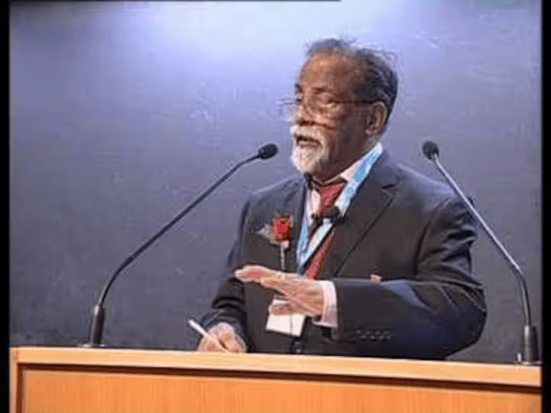
At a memorial gathering after Sudarshan’s death in 2018, Joseph described him as a scientist who refused to separate science from larger questions about philosophy and existence. In that sense, Sudarshan belonged to an older tradition: the natural philosopher.
By some counts, Sudarshan was nominated for the Nobel Prize nine times. He never won it. But perhaps that is not where his story ends, because awards can decide who stands on a stage and receives a medal. They cannot always decide whose ideas changed the world.
Sudarshan’s work shaped major areas of modern physics, from particle physics and quantum optics to open quantum systems and quantum technologies. He taught generations of students, helped build institutions in India, and continued asking questions across science, philosophy and culture.
The Nobel may never have carried his name. But the history of twentieth-century physics cannot be fully told without E.C.G. Sudarshan, even if the world did not always give him the recognition he deserved.