


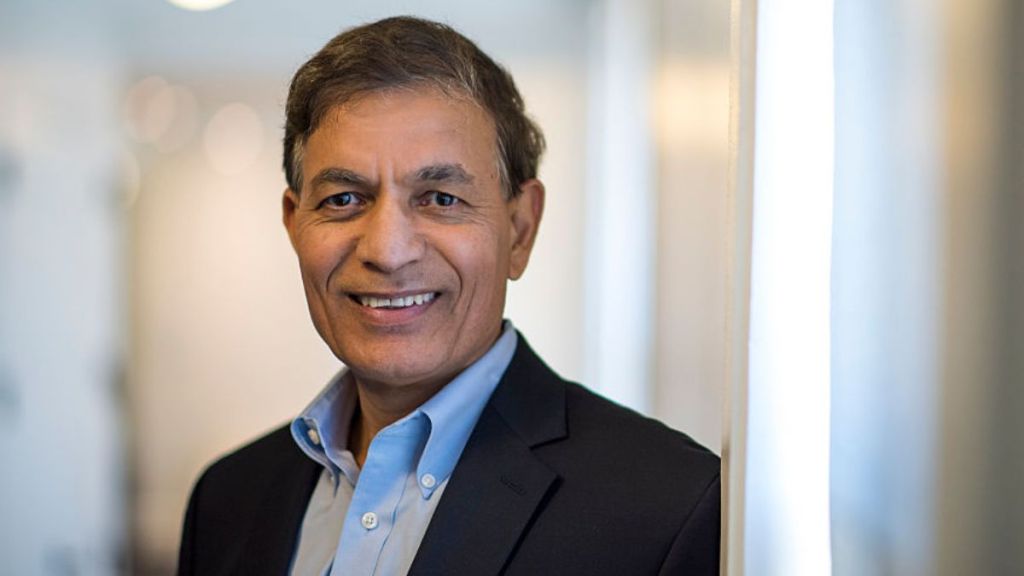

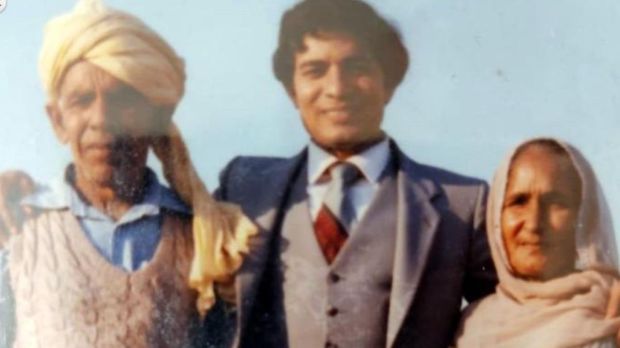
Hundreds of miles from the Indian capital, small-scale farmers, Bhagat and Surjeet Chaudhry, welcomed their youngest son in Panoh, a tiny village in the foothills of the Himalayas, in the late 1950s. Jagtar Singh Chaudhry’s formative years were spent growing up in a village that had no running water or electricity. Its less-than-1,000 population had no choice but to self-sustain as a community. Leading a simple life, they would grow their own cotton and make their own clothes.
At a time when his farming family only had access to the bare minimum and touching the skies seemed far out of his reach, the young boy still swore by the power of education, even if it meant walking 4 kilometres from his home to attend school in the nearby village and studying under a tree to save himself from the scorching sun’s heat.
When one could’ve chosen to give up and accept the meagre resources at his disposal, the young Jagtar Singh saw a sea of lessons about hard work and honesty. The same boy, who once barely had access to the English language and wondered if he’d ever sit in an aeroplane, did what his family might have deemed unthinkable. At the age of 22, he boarded a flight with a one-way ticket to the United States and just $200 in his pocket, and the rest is history. The Panoh village native has now undergone a complete identity revamp, as is common in India-to-America journeys.
His parents may have known him by a certain name, but the whole world now recognises him as Jay Chaudhry, the billionaire founder and chief executive of cybersecurity company Zscaler, which currently has a market capitalization of $26.6 billion, according to Yahoo Finance’s compiled data on the firm.
While Jagtar Singh’s childhood may have been defined by deprivation, Jay Chaudhry’s name now doesn’t just shine brightly as a trendsetting “serial entrepreneur” icon in the US tech industry, but also as one of the richest immigrants in the country and the second-richest Indian American, with a net worth of $9.3 billion (Forbes). Being a member of the billionaire club himself, a single decision he once made as a first-time entrepreneur turned most of his staff into instant millionaires at the time.
This is the life and success story of Indian-born Zscaler CEO Jay Chaudhry.
From Village School to IIT: How Education Changed Everything
“The change I saw going from my village to the university was bigger for me than coming from India to the US,” he said in 2013, having completed his primary school education in his small village school and his high school a few villages away. The latter barely had just three bookcases of books, but Chaudhry’s intent to study drove him to engross himself with each one during his summer vacations, hoping to learn more.
Years later, Jay Chaudhry’s own struggles served as an inspiration behind a school building construction project in his native Panoh village, where he studied under a tree. “I used to walk nearly 4 km every day to attend my high school at Dhusara, the neighbouring village. The school building would be donated to the government, and people of my village no longer would have to walk several kilometres to study,” he told The Tribune over two decades ago.
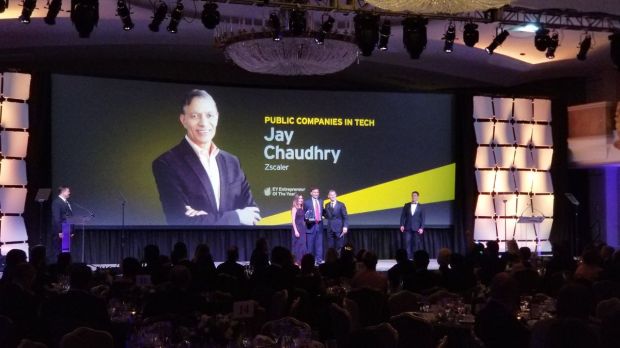
Back then, he humbly attributed being good at studies to hard work. His focused drive and motivation earned him the No. 1 rank in the state of Himachal, based on which he secured admission to IIT (BHU) Varanasi and subsequently got his B.Tech in Electrical Engineering.
Jay Chaudhry’s tricky relationship with English
He managed to pull it off despite having a teacher who barely spoke English. And so, it wasn’t all smooth sailing during his IIT years. Surrounded by convent-educated peers, Chaudhry felt out of place.
However, instead of slipping through the cracks while some students made fun of how each of his English sentences would have three mispronounced words, he negotiated his way out of trouble. Despite lacking any entrepreneurial background, Chaudhry already appeared to have the makings of a businessman.
In a rather innocent act of wanting to embrace the wind of change, he struck a “good deal” with a classmate who was behind in math and science. As Jay chose to teach him math, he helped him fix his pronunciation, something that would eventually assist him in his unprecedented journey ahead.
The IIT chapter introduced a turning point in Chaudhry’s life. With students with good schooling coming to the top institute from all over, he realised there was an even bigger world out there that he hadn’t explored yet. Interactions with other students opened more curiosity doors, as they raised the possibility of going to the United States to get a master’s degree.
Life-changing 3-minute JRD Tata interview that opened America’s door
While Lady Luck helped him secure a research assistance internship and a scholarship, clearing a path for him to attend the University of Cincinnati to do his master’s, lack of funds on his parents’ end hindered the chance of it becoming a reality.
There was just no way Jay Chaudhry could’ve been rescued financially in that situation, especially with no banks in his villages. However, the fears soon subsided, as he chanced upon the Tata loan scholarship. With 25 awarded annually, the IIT alum took his chance and applied for it, landing himself an interview that changed everything.
According to a conversation with The Australian, the philanthropist recalled that his decision led to him being directly interrogated by the late legendary Indian industrialist JRD Tata. While the conversation lasted just three minutes, it ended with the late chairman of Tata Sons and Tata Group wishing him “Good Luck,” and telling him to “Go and do well.”
That three-minute interaction ultimately helped him bag a one-way ticket to the US and “paid for some of the early stuff” in America, he told the ‘One Million by One Million’ blog over a decade ago.
Early days in the US
The ambitious Indian man’s early days abroad revolved around getting his master’s in electrical and computer engineering from the University of Cincinnati, and a summer job with a small startup firm doing software development. Post-graduation, the company wanted him to join them full time while they wrote software packages for nursing homes in the financial management and accounting area.
Those initial experiences also inculcated in him an interest in learning management skills. Acknowledging that engineers are often blamed for not being good managers, he returned to school in the evening on the side and got a second master’s degree in industrial engineering management. But he was far from done.
How Jay Chaudhry entered the world of sales
As his interest in sales and marketing peaked, he also earned his MBA from the University of Cincinnati, through their part-time evening program. The triple master’s, though, added vast pools of knowledge; it was the small Cincinnati start-up that landed him in a customer-facing role for the first time.
Circumstantial developments one day resulted in the sales engineer calling in sick, which pushed his boss to suggest Chaudhry do the demo since he was the one who had written the software. That one switch lit a fuse. As Jay practised his part, having never spoken to a customer before, the demo succeeded with flying colours.
The whole experience left him with the biggest epiphany of all: this part of the job had been “more fun than writing code all day long.” It paved the way for his future well-paid roles at companies like Unisys, NCR, and not to forget, IBM, which ended up being “one of the best sales training grounds” to take him to “the next level.”
Biggest risk of his life: Quitting well-paid jobs
As Chaudhry earned years of expertise on the job at tech giants like IBM and Unisys, he developed the obsessive desire of wanting to start his own startup. And yet, he understood that as time passed by, his risk-taking window would severely decline. The endless conversations around the same topic drove his wife, Jyoti, to tell him to “do it or…shut up,” according to the ‘One Million by One Million’ blog interview.
Once he finally took the leap, the small-farmers’ son went from being a serial degree holder to a serial entrepreneur. But easier said than done. The high-stakes call demanded major sacrifice from him and his wife.
Congratulations to Jay Chaudhry (@JayZscaler) and the @zscaler team for your successful IPO – first tech unicorn IPO of 2018 – a phenomenal accomplishment! It’s an honor to have been your first institutional investor and we wish you continued success. https://t.co/Sh58KAmTRT— Dell Technologies Capital (@DellTechCapital) March 19, 2018
To start his first cybersecurity startup, SecureIT, in 1997, Jay had to leave behind the safety net of well-paying jobs as a tech executive. Jyoti quit her job at BellSouth to lead finance and operations. Together, they took the plunge to invest their life savings, which were worth $500,000 at the time, after they failed to secure VC funding in Atlanta, simply due to his prior entrepreneurial inexperience.
The risk paid off. Within one-and-a-half-year’s time their firewall was deployed in nearly half of the Fortune 500 companies. Soon enough, offers to buy his company started tailing him. Chaudhry only sealed the deal with VeriSign in 1998. Nearly two years after it closed, more than 70 of SecureIT’s 80 employees had become millionaires “on paper,” as VeriSign’s stock price jumped dramatically, he told CNBC in 2024. And to think, it all started with Jay and Jyoti quitting their own jobs, with nothing but ambitious hopes for the future.
Years down the line, the couple became driving forces for several other tech companies, which were ultimately sold off in subsequently profitable deals. The list includes CoreHarbor, CipherTrust and AirDefense, which then laid the groundwork for Jay Chaudhry’s actual signature business, Zscaler, in 2007.
Building Zscaler: Zero Trust and Cloud Security
Given the success the serial entrepreneur had earned with all these startups, Chaudhry was keen on building something significant that would have a lasting impact on the market. Zscaler was established on those very grounds at a time when Jay had only seen email security companies working towards cloud-based security.
His cloud-native security platform delivers protection and access control from the cloud instead of traditional firewalls and VPNs. While “security-as-a-service” was just a novel concept, the firm based its security architecture on the groundbreaking principle of “Zero Trust,” which enforced “never trust, always verify” by consistently verifying each user, device and connection before granting access, irrespective of location.
Chaudhry attributes his success to his “little attachment for money.” In 2019, he stressed, “My obsession is really to make sure that the internet and cloud are a safe place for everyone to do business,” according to The Business of Business.
$26.6 billion company fuels $9.3 billion net worth
Zscaler especially thrived during the Covid-19 pandemic as businesses drastically shifted to the ‘work-from-home’ paradigm, in turn, elevating Chaudhry’s fortune exponentially at the time. The Hurun Global Rich List List released in 2021 showed his net worth grow by 271% the previous year to $13 billion, making him one of the top ten richest Indian-origin people in the world.
We’re proud to share that our CEO, Jay Chaudhry (@JayZscaler), has been named to the 2020 Hall of Fame: Asian American Top 100 List by @theboardIQ 👏
Congratulations, Jay! https://t.co/YB3ZXD4LPP pic.twitter.com/fOTrysynYP— Zscaler (@zscaler) November 11, 2020
Currently, the Indian-origin billionaire and his family own around 35% of the firm, according to Forbes.
The company recently reported annual recurring revenue of $3.77 billion, up 25% year-over-year, beating a $3.75 billion estimate from StreetAccount. Its fourth-quarter revenue also jumped 25% as AI risks and the surge of agent-led attacks have prompted businesses to adopt new cyber security tools.
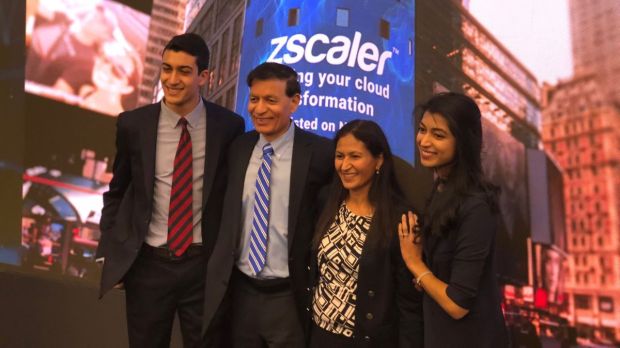
Since its founding nearly two decades ago, the company has amassed more than 11,000 customers, including 40% of the Forbes Global 2000, and secured over 750 billion daily transactions. Making its debut on the Nasdaq in 2018, the cybersecurity company is used by more than 5,000 businesses, including more than 45% of the Fortune 500 in the US.
Returning to the ‘homeland’
Recounting his return to India for the first time, a few years after the move to America, the tech veteran was nudged to draw parallels between his life in the country he was born in and the nation that ultimately made him a successful billionaire.
As he went back to his high school as a grown man, his headmaster urged him to speak to the students, who forced him to essentially compare the two countries and his experiences, and declare a superior among the two. “How happier is an average American than an average Indian?” a pupil asked him at the time. Although in his response he admitted that the “average American is many, many times wealthier than the average Indian,” he couldn’t bring himself to equate the same measure with happiness. “I don’t believe that happiness has very much to do with money,” he added in an interview with The Australian in 2025.
Lessons from humble beginnings
Currently in his late 60s, the veteran entrepreneur continues to reject using money as a measure of success across interviews, just as his parents did, despite reaching such heights. But what he still embraces and continues to learn from are his humble beginnings.
The taste of success may change one’s view of the past, but Chaudhry made sure that his current life in the US never manipulated the memories of his parents’ simple village life in India.
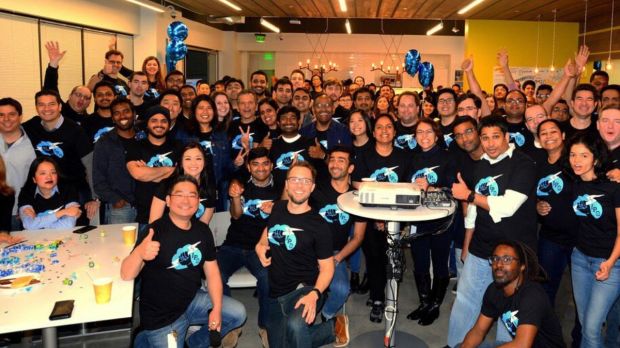
They eventually joined him in America over three decades ago and lived with him for the next three decades, while helping him raise his three children. Both his parents were in their 90s when they passed away a few years ago. Even as his mother came to learn to read and write after her move to the US, the Zscaler CEO couldn’t bring himself to speak ill of their homeland’s offerings. “They came from a simple village life where you ate simple, clean good food, had clean air, no chemicals, none of the crazy stuff that we eat today,” he said in the same interview.
If there’s one thing that the veteran entrepreneur has best understood over the years, just as his story teaches us all, it’s that adversity makes people strong, as long as one accepts that pressure makes diamonds. “My parents worked hard,” he proudly proclaimed during the year-old media interaction. “So the biggest thing I learned from my parents, by watching them, was honesty, integrity and hard work. It is just part of life.”
Disclaimer: This is an independent profile. The profile was reported using publicly available records, sources and news reports where applicable. While Zscaler’s representatives were contacted before this article’s publication, we did not receive a response. This content was produced in accordance with FinancialExpress.com’s editorial guidelines.