


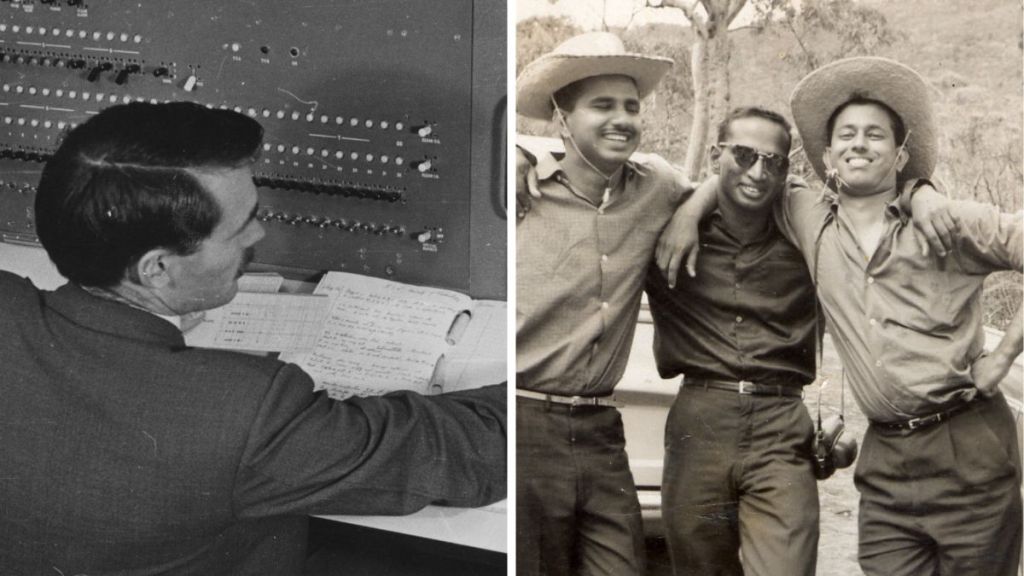

Growing up in Katur, a tiny farming village in Andhra Pradesh, a young boy traced letters in the sand at his one-room school because paper and pencils were too expensive. There was no electricity, no running water, and he went barefoot until he was about sixteen.
Decades later, the same boy would become the first person of Asian origin to win the ACM Turing Award, the highest honour in computing and the pioneering force behind the continuous speech recognition systems that made modern voice
assistants like Siri and Alexa possible. That boy was Dabbala Rajagopal “Raj” Reddy.
How Raj Reddy’s early work shaped today’s voice AI
While big technology companies do not often link their flagship products to decades-old academic research in their corporate statements, the people who built modern speech technology have repeatedly credited Dr. Reddy with laying the groundwork for the field.
At an industry symposium, Dr Alex Acero, Senior Director and Chief Scientist for Siri at Apple, pointed to Reddy’s early work as a key reason voice technology has reached where it is today.
“A lot of these technologies that we take for granted are something that Raj had the foresight decades ago to get started,” Acero said.
In a LinkedIn post later, Acero said, “The millions of people that dictate to their smartphones today owe thanks to Carnegie Mellon University Professor and Turing Award winner Raj Reddy’s pioneering work on continuous speech recognition in the 1970s. His groundbreaking work laid the foundation for modern voice interfaces.
Reddy’s influence can also be seen through the work of his former doctoral students, several of whom went on to build some of the speech technologies used by major technology companies.
Dr. Kai-Fu Lee, an AI pioneer who developed Apple’s early continuous speech prototype, Casper, in the 1990s, has spoken publicly about Reddy’s influence on his career. While honouring his mentor at the Computer History Museum Fellow Awards, Lee recalled how Reddy helped him see the future possibilities of speech technology.
“I remember when I started at Carnegie Mellon… Raj was the one who showed me a vision where in the future people can talk to computers, and how this would change the world,” Lee said.
Another former student, Dr. Xuedong Huang, who later became Microsoft’s Chief Technology Officer and played a major role in the development of cloud-based speech technology, has also highlighted Reddy’s contribution.
Huang has pointed to the speech-recognition systems developed during Reddy’s work at CMU in the 1970s, including projects such as Hearsay and Dragon. The work helped push speech recognition forward and shaped the development of AI systems that came later.
Meanwhile, The Asian American Scholar Forum (AASF) credited Reddy through its Pioneer Medal profile video, describing him as a Turing Award winner whose groundbreaking work revolutionised human-computer interaction and laid the foundation for today’s voice assistants such as Siri and Alexa.
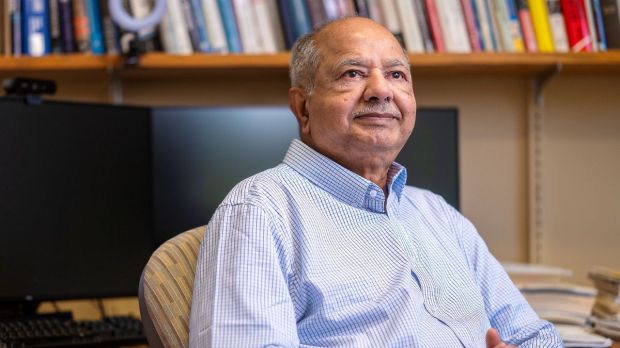
The son his father could spare
Reddy was born on June 13, 1937, in Katur. His father, Sreenivasulu Reddy, owned land and grew rice and indigo. His mother, Pitchamma, was a homemaker.
Reddy has never described his childhood as one of extreme poverty. In fact, he says his family was probably the richest in the neighbourhood. But “rich” meant something very different in that village. There was no electricity, no running water and no newspaper.
During the famine years of the Second World War, even his family’s food became limited. Reddy says he never went hungry, but many people around him did.
He was the third of four sons. His father believed one of the boys would have to remain in the village to look after the family land. His elder brothers were bright enough to go to college.
Reddy was allowed to leave for a rather unusual reason. He says he “was the one that was not needed.”
That decision changed his life. Schooling in Katur ended after the primary years. When he was about nine, Reddy was sent eight miles away to Sri Kalahasti, where he stayed with a family friend. He would return home only once every two or three months.
He was hungry for books. When he could not afford a newspaper, he would read the copy displayed outside a shop before going to class. He also read whatever he could find in the small village library, including Telugu classics.
Mathematics became his first real love, especially geometry. A maternal uncle introduced him to the pleasure of proving things.
From civil engineering to computers
Reddy initially had no plan to become a computer scientist. He studied civil engineering at Loyola College and then Guindy College of Engineering in Madras, graduating in 1958.
Outside his studies, he also learned to fly Tiger Moth biplanes through the Air Wing of the National Cadet Corps. He went solo after roughly 12 or 13 hours of training and later tried aerobatics.
A Commonwealth internship then took him to Australia. Reddy and two classmates wanted to save money on the journey, so instead of flying all the way, they travelled by ship to Penang, then by train to Singapore and finally by plane to Melbourne. The route saved them about a third of the airfare.
On his first night in the university dormitory, he saw Australian steak on the menu. He had never seen anything like it before and, as a Hindu, was horrified. He settled for bread, butter and jam.
Australia also brought another small change. Nobody seemed able to pronounce Dabbala Rajagopal, so he shortened his name to Raj Reddy.
At the University of New South Wales in Sydney, two civil engineers, Stan Hall and Bob Woodhead, were using a computer for structural calculations. Reddy had barely understood what a computer was a year earlier.
The machine was an English Electric DEUCE, based on Alan Turing’s ACE design. It had only around a thousand bytes of mercury delay-line memory.
Computers were still nothing like the machines people use today. Programs were too large to fit into the memory, so intermediate results were punched onto cards and then fed back into the machine.
Reddy had never taken a programming course. He learned simply by watching Hall and Woodhead work in the evenings.
IBM Australia hired him in 1960. Reddy says the company hired him because he knew what a computer was and had actually programmed one, even though he was trained as a civil engineer.
After about three and a half years, he knew he would never return to civil engineering.
His interest in AI changed his path
While in Australia, Reddy began reading about the early work in artificial intelligence. The ideas of computer scientist John McCarthy particularly caught his attention. The possibility that machines could perform tasks that were once considered uniquely human convinced him that AI was going to shape the future.
In 1963, Reddy moved to Stanford University and became one of McCarthy’s doctoral students. Stanford’s Computer Science department and AI Lab were still taking shape at the time.
The lab had a PDP-1 computer with an analogue-to-digital converter. Reddy’s own experience of speaking multiple languages also made him interested in whether computers could understand human speech.
While many American students worked regular hours, Reddy arrived around 4 in the afternoon and stayed until 8 the following morning. He worked on McCarthy’s PDP-1 through the night.
Computer time cost around $1,000 an hour at the time. Reddy estimates that he was therefore using between $10,000 and $15,000 worth of computer time every night.
He later described the feeling simply: he felt as if he had “died and gone to heaven.”
He began experimenting with speech recognition and went on to earn one of Stanford’s first PhDs in computer science in 1966. Reddy stayed at Stanford as an assistant professor. In 1968, he demonstrated a system that could take spoken commands and use them to control a robotic arm known as the Stanford Arm.
The machine could listen to commands and pick up blocks. The demonstration was later captured in the short documentary Hear! Here!
That same year, Reddy married Anuradha. They came from families that knew each other. He met her during the Christmas break while he was still working on his thesis, and she later returned with him to Palo Alto.
In 1968, Reddy and his colleagues presented a system called “A Computer with Hands, Eyes, and Ears” at an AFIPS conference.
The speech systems that changed AI research
In 1969, Reddy moved to Carnegie Mellon University, where he joined a faculty that already included AI pioneers Allen Newell, Herbert Simon and Alan Perlis.
At Carnegie Mellon, he helped build a research environment that would produce some of the most important speech recognition systems of the 1970s.
Much of this work was carried out under the DARPA Speech Understanding Research program.
One of the early breakthroughs was Hearsay-I, demonstrated in 1972. It was among the first systems that could recognise continuous or connected speech instead of making people speak one word at a time.
The system introduced the blackboard architecture. Different knowledge sources, including acoustic, lexical, syntactic and semantic information, could work together through a shared global data structure.
Hearsay-II later improved on the approach.
At the same time, Reddy’s students James and Janet Baker were developing Dragon. It became the first system to use Hidden Markov Models, a statistical method that went on to dominate speech recognition for decades.
The technology later became the basis for the commercial success of Dragon Systems.
Another important system was Harpy, built by Bruce Lowerre under Reddy’s guidance. Harpy brought together ideas from the earlier systems and introduced beam search.
Instead of checking every possible path, beam search allowed the computer to keep only the most promising possibilities. This made the system much faster and more practical.
Harpy met, and in some areas exceeded, the goals set by DARPA for a connected-speech system with a vocabulary of around 1,000 words. It achieved high accuracy while operating much closer to real time.
The ideas behind today’s voice assistants
The work done by Reddy and his students was about more than getting a computer to recognise spoken words.
It showed that large AI systems that depended on huge amounts of knowledge could work outside the laboratory. It also showed that such technology could eventually have commercial uses.
Blackboard architectures, statistical modelling and beam search became important building blocks in AI and speech technology.
The systems people use today are far more advanced, but the basic line of development can be traced back to this early work.
When people speak to Siri, Alexa, Google Assistant or modern dictation software, they are using technologies that grew out of research pioneered by Reddy and his students.
Building a robotics centre at Carnegie Mellon
In 1979, or 1980, Reddy became the founding director of Carnegie Mellon’s Robotics Institute. It was the first academic robotics department in the United States.
Under his leadership, the institute grew into a major centre for robotics research. His colleagues affectionately called it the “Raj Mahal.”
Reddy later served as dean of Carnegie Mellon’s School of Computer Science from 1991 to 1999. During that period, he helped expand the school and supported the creation and growth of institutes focused on language technologies, human-computer interaction, machine learning and software research.
He also helped start Carnegie Mellon’s early work on autonomous vehicles.
Another project close to him was the Universal Digital Library, also known as the Million Book Project. The effort digitised more than 1.5 million books and set up scanning centres in the United States, China, India and Egypt.
Technology for people who are often left behind
Reddy’s interest in giving people better opportunities was closely linked to his own childhood.
He never lost his focus on students from rural and disadvantaged backgrounds.
He helped create the Rajiv Gandhi University of Knowledge Technologies in Andhra Pradesh. The university was designed to identify and educate talented rural students who might otherwise be left out by traditional education systems.
Reddy believed that conventional merit systems could favour students from cities and those who had access to expensive coaching. He wanted technology and education to give talented rural students a fair chance.
His larger vision for technology was also centred on ordinary people.
He has argued for voice-based technology that could help billions of people with limited literacy. He has also supported digital democracy and the use of AI as a tool that can amplify human thinking and abilities.
A teacher whose students shaped the tech industry
Reddy’s influence also spread through the students he taught and mentored.
Among them were James Gosling, who later created Java, as well as Kai-Fu Lee, Xuedong Huang and Harry Shum. Many of his students went on to play important roles in technology companies, universities and AI research.
His own list of honours is extensive. In 1994, Reddy shared the ACM Turing Award with Edward Feigenbaum. The award recognised them “for pioneering the design and construction of large-scale artificial intelligence systems, demonstrating the practical importance and potential commercial impact of artificial intelligence technology.”
He also received France’s Legion of Honor in 1984 and India’s Padma Bhushan in 2001.
His other honours include the Honda Prize, the Okawa Prize and the Vannevar Bush Award. He was also inducted as a Fellow of the Computer History Museum.
Disclaimer: This is an independent profile. As no verifiable contact information could be established, direct comment could not be sought. Consequently, this article was reported using publicly available records, historical data, and secondary sources. This content was produced in accordance with FinancialExpress.com’s editorial guidelines.