


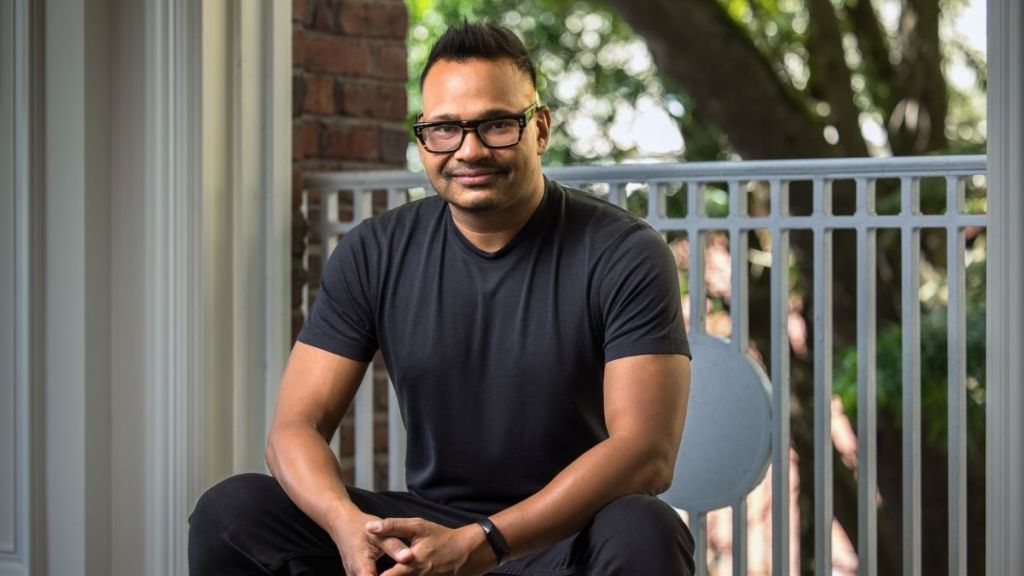

Jyoti Bansal grew up helping his father run a farm-equipment business in a small Rajasthan town. He studied computer science at IIT Delhi, moved to Silicon Valley at 21 on an H-1B visa, and spent about seven years working in the US before receiving his green card.
In 2008, after roughly 30 investors had already said no, Bansal finally secured his first cheque of about $5 million for what was then little more than an idea and the code he had been writing at nights and on weekends. There was no large team and no proven business – just Bansal, his idea and a sudden responsibility for investor capital.
“That felt completely surreal,” he tells Financial Express Digital.
That moment became the starting point for AppDynamics, the application performance company he founded and eventually sold to Cisco for $3.7 billion in 2017, just before a planned IPO.
Instead of stopping after that exit, Bansal started again. His second company, Harness, is now valued at $5.5 billion after its latest funding round.
Bansal’s journey from a small Rajasthan town to Silicon Valley
Long before Bansal was raising millions of dollars from Silicon Valley investors, his exposure to business came through his family.
Growing up in Rajasthan, he spent time helping his father with the farm-equipment business. It was far removed from the world of software startups, but it gave him an early view of how businesses actually worked – customers had problems, products had to solve them, and hard work did not stop once an idea was created.
That practical grounding stayed with him as he moved towards technology.

Bansal studied computer science at IIT Delhi and moved to the US at 21. He began his career as an engineer and architect, working at several Silicon Valley startups and learning how technology companies were built from the inside.
For nearly seven years, however, his own future in the US was tied to his employment. “When you’re on an H-1B, your ability to stay in the country is closely tied to your job,” Bansal says.
That distinction mattered when entrepreneurship entered the picture. Starting a company meant not just leaving a job but taking a risk that could affect his ability to remain in the country.
Bansal eventually received his green card. Forbes has previously reported that he waited seven years for it.
Only then did he have the freedom to make the move he had been considering – leave his job and build a company of his own.
The idea was still unproven. Before he could build it, he had to find someone willing to fund it.
Bansal took AppDynamics to the edge of an IPO – then sold it for $3.7 billion
AppDynamics began in 2008 around a problem Bansal had seen while working in the software industry: companies were increasingly dependent on applications, but understanding what was going wrong inside those applications could be difficult.
His idea was to build software that could help companies monitor application performance and identify problems. It was a simple proposition, but turning it into a business required far more than writing the initial code.
Bansal had to convince investors that the problem was significant enough to build a company around. He also had to find customers willing to trust a young startup with software that would help monitor critical applications.
The first part was difficult. Bansal recalls that roughly 30 investors rejected him before he finally raised about $5 million.
The money changed what was possible, but it also created a new responsibility.
“There was no large team, no proven business,” Bansal recalls of that early period. “That felt completely surreal,” he says.
From there, AppDynamics had to prove that the bet was justified.
The company built its application-performance monitoring business and eventually attracted major customers including Netflix, Priceline and Electronic Arts. What had started as Bansal writing code at night and on weekends grew into a company with the scale and customer base to attract serious acquisition interest.
By 2017, AppDynamics had reached a very different stage from the startup Bansal had begun nearly a decade earlier.
The company was preparing to go public when Cisco stepped in. In January 2017, Cisco agreed to acquire AppDynamics for approximately $3.7 billion, just before the company was scheduled to begin trading publicly. Cisco completed the acquisition in March that year.
The sale meant Bansal had built a company from an idea, survived early investor rejection, taken it to the edge of an IPO and ultimately sold it for billions.
Why sell when an IPO was so close? The answer was not simply about reaching a financial finish line. Cisco’s offer gave AppDynamics the opportunity to scale its technology and reach a much larger customer base as part of one of the world’s biggest technology companies.
For Bansal, however, the acquisition also created a more personal question – what would he do next?
A fresh start: Why Bansal built Harness
After AppDynamics, Bansal initially thought he might be done with startups. He took time off and travelled.
After years of building a company, it was a chance to step away from the intensity of entrepreneurship. But eventually, he realised he missed the work itself. “I missed building,” Bansal says.
The next idea grew out of the problems he had seen while building AppDynamics.
Software had become increasingly central to businesses, but writing code was only the beginning. Companies still had to test, secure, deploy and operate that software reliably.
Bansal saw an opportunity to build around that part of the software-development process.
In 2017, he co-founded Harness, a software delivery and automation company. The goal was not to recreate AppDynamics but to solve a different problem he believed was becoming increasingly important.
The second startup also came with a major advantage – Bansal had already lived through the difficult parts once.
He knew what raising capital involved. He had hired senior executives, built sales organisations, worked with a board and expanded internationally. “The biggest difference the second time is that you recognize patterns faster,” he says.
But that experience did not make the fundamental startup challenge disappear.
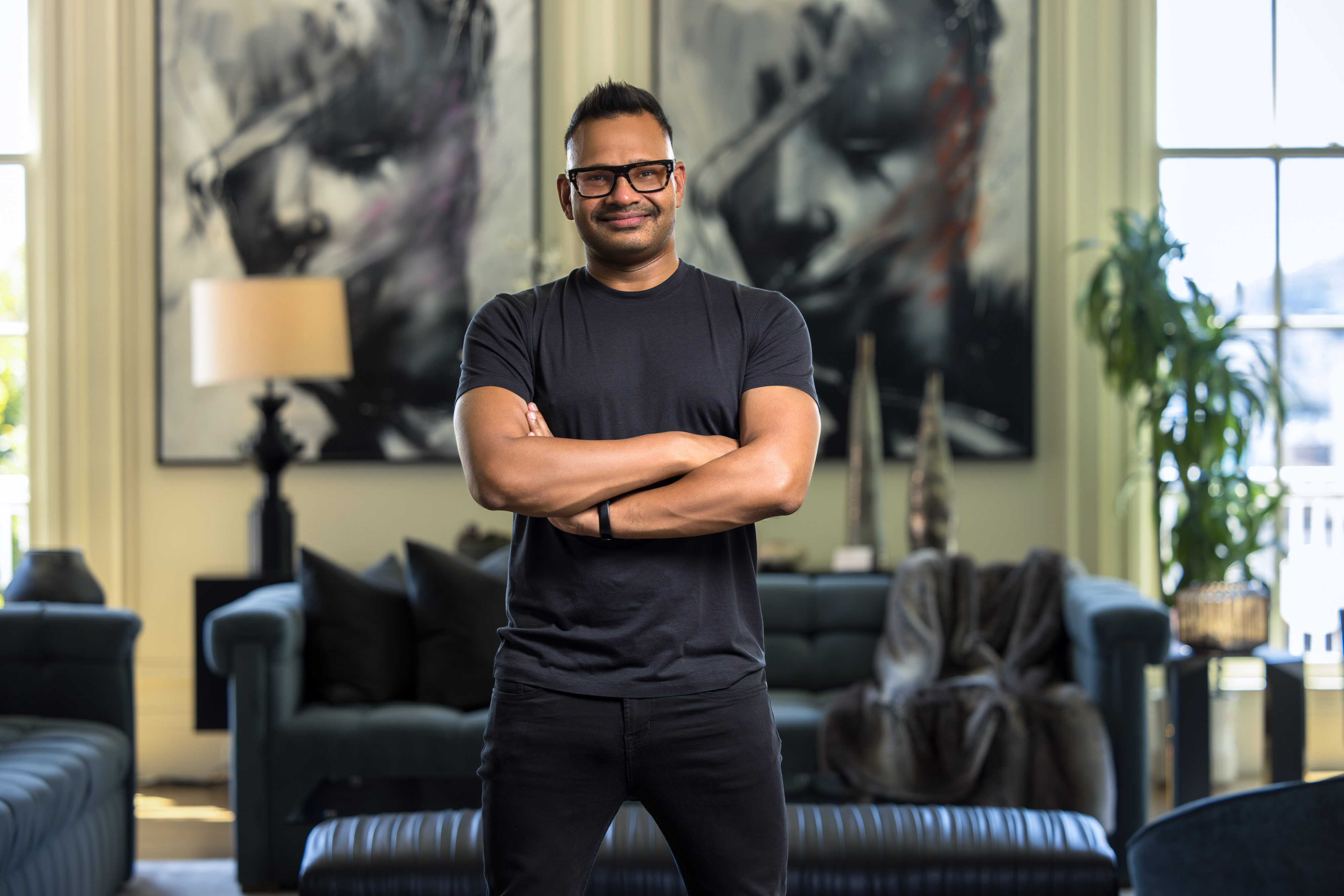
Product-market fit still had to be earned. Competition still had to be faced. Customers were not going to buy simply because Bansal had previously built a successful company.
“You have to earn that from zero every time,” he says.
That became particularly important as the market changed. Bansal says he had to “refound” parts of Harness rather than assume that what had worked before would continue to work.
Harness has since grown into a multi-billion-dollar company and was valued at $5.5 billion after its latest funding round.
AI is changing what comes after the code
Now, another technology shift is forcing Bansal to rethink the problem once again.
Generative AI is changing how quickly software can be created. But writing code is only one part of getting software into the real world.
It still needs to be tested, secured, deployed and operated.
Harness describes its AI strategy as “AI for everything after code”, with AI agents being developed across the software-delivery lifecycle.
For Bansal, the rise of AI could therefore expand rather than eliminate the problem Harness is trying to solve.
If developers can produce more code, companies will have more software that needs to move safely from development into production.
That is where Bansal sees the next opportunity.
What Bansal’s H-1B experience taught him
Bansal’s own immigration journey remains an important part of how he thinks about skilled immigrants and what they can eventually contribute to the US economy.
When he arrived in the US at 21, entrepreneurship was not the immediate goal. “I was trying to become a good engineer, build a career, and create a life here,” he says.
The H-1B system, however, meant that his ability to remain in the country was closely connected to his employment. That could influence decisions about changing jobs, taking risks and planning for the future.
His eventual green card changed that equation. It allowed him to leave his job and take the entrepreneurial risk that led to AppDynamics – a decision that ultimately produced a $3.7 billion company and, later, another multi-billion-dollar business.
For Bansal, the experience also changed how he thinks about the long-term value of skilled immigrants – the person arriving in the US as an engineer may eventually become a founder, employer and investor.
Bansal’s advice to the next engineer from India
Despite everything that followed, Bansal’s advice to young engineers is not to rush towards entrepreneurship. “Don’t rush to prove yourself,” he says.
He spent years working as an engineer before starting AppDynamics. Those years gave him the technical foundation and allowed him to observe how experienced people approached difficult problems.
His advice is to learn from good people, take on work that may not initially appear glamorous and become genuinely good at something.
Most importantly, he says, don’t become a founder simply because starting a company looks like the next achievement.
“Don’t be in a hurry to become a founder,” Bansal says. “When you find a problem you can’t stop thinking about, then go build.”
It is a philosophy that runs through both of his startup journeys.
The first time, Bansal had to wait years for the freedom to take the entrepreneurial risk, then convince investors who initially said no. The result was AppDynamics and a $3.7 billion acquisition.
The second time, experience gave him a head start – but not a shortcut. “You have to earn that from zero every time,” Bansal says.
For Bansal, that may be the most important lesson from building twice – experience can help you recognise the pattern, but every new company still has to solve a real problem, earn customers and adapt when the world changes.
As AI changes how software is created, Bansal is building around the next problem – everything that happens after the code is written.