


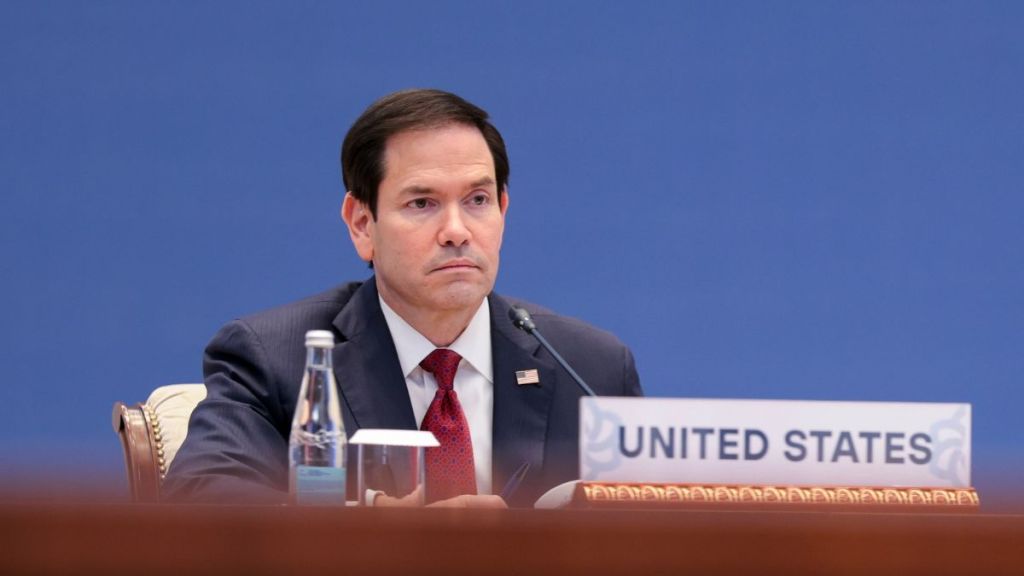

US Secretary of State Marco Rubio confirmed on Monday that the much-delayed India-US trade deal also emerged as a significant factor influencing US President Donald Trump’s decision to call off Russia-related sanctions and tariffs days before they were set to come into effect. Echoing multiple statements made by both sides, the top Trump administration official again affirmed that America was close to finalising the bilateral trade agreement with India.
He noted that the Indian angle figured into the discussions before the waiver was announced against the larger backdrop of ongoing global conflicts impacting energy and fuel supplies and their prices.
US full statement on India trade deal
“We’re trying to finalise a trade deal with India right now. We’re very close to doing that,” Rubio told reporters in Samarkand. “We’ve had to waive sanctions over the past few months because of the impact on global supplies and prices…We have to manage all of these things. We’re trying to finalise a trade deal with India right now. We’re very close to doing that. That’s one of the things we take into consideration when the President makes a decision about national security waivers and things of that nature.”
He continued, “Every country has a complex set of factors that it has to take into account. Geography is real. For some countries, it’s very difficult to acquire energy from alternative sources. That’s not an excuse, but all of that has to be balanced when making foreign policy.”
Acknowledging the adverse impact the sanctions would’ve had on India too, the US State Secretary added, “These sanctions were not just sanctions on Russia. They include tariffs on a number of countries…India, for example, and others. And so I think the president wants to take the 60-day period of time to sort of analyse what imposing both sanctions and tariffs will mean to the global economy and even to the U.S. economy.”
“You’ve got countries like India, for example, that have voluntarily diversified their energy portfolio, but are still getting a substantial amount of energy from Russia because it’s hard to pivot from one day to the next. But they’re also an important ally and partner of the United States. So we need that period of time to sort of study all this and figure out what the right combination is.”
Before taking off for his official trip, Rubio had shared similar thoughts in conversation with reporters over the weekend.
Admitting that it would be “hard” for India to renounce Russia as a source of fuel and energy, he said then, “The problem is that these sanctions were not just sanctions on Russia. They include tariffs on a number of countries, India, for example, and others.”
He added, “And so I think the president wants to take the 60-day period of time to sort of analyse what imposing both sanctions and tariffs will mean to the global economy and even to the US economy.”
Russia-related sanctions would’ve impacted India
Through the implementation of the Lindsey O. Graham Sanctioning Russia and Iran Act, the US would have imposed tariffs of up to 100% on goods coming into American from the five largest buyers of Russian oil or gas, including India and China. As a result, the sanctions wouldn’t have just exerted pressure on Russia amid its multi-year war in Ukraine, it would have also severely taken a toll on other countries facing numerous setbacks in acquiring energy from alternative sources.
Rubio’s latest comments made headlines days after Indian Commerce and Industry Minister Piyush Goyal disclosed at an event in Delhi that the first phase of the India-US trade pact had been finalised, with just legal drafting remaining.
However, at the same time, he imposed a major condition on green-lighting the deal in the near future. “It will be operationalise once India gets the competitive advantage over peer countries,” Goyal said of the trade deal, for which negotiations have continued nearly a year.
Rubio set to return to India
The US diplomat’s fresh remarks on the trade pact surfaced during his currently ongoing trip to Uzbekistan, which will immediately be followed by his second official visit to India. The upcoming international outing will be his second trip to the South Asian nation this year.
India’s Foreign Ministry has already confirmed that Rubio is scheduled to meet with External Affairs Minister Dr S Jaishankar in Mumbai on October 20.
According to the brief details of India itinerary shared by the US State Department so far, he will also travel to Jamnagar, home to one of the world’s largest refineries, and sit down for talks with business leaders to strengthe the strategic partnership between the two countries.