


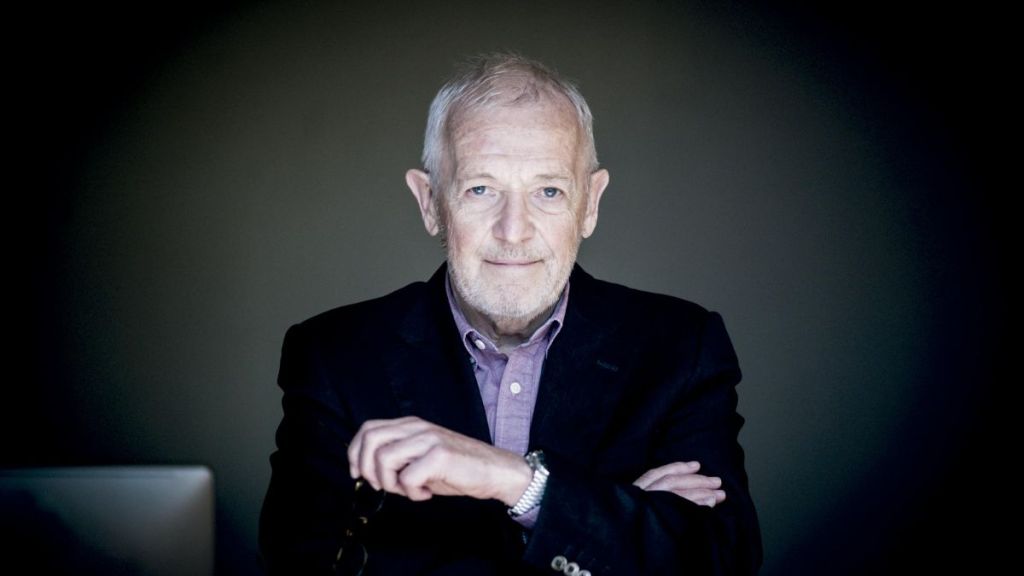

Belgian-American particle physicist Francis Halzen has won the 2026 Nobel Prize in Physics for his work on the IceCube Neutrino Observatory and the discovery of high-energy neutrinos from space. The Royal Swedish Academy of Sciences announced the award in Stockholm on Tuesday. Halzen was honoured “for decisive contributions to the IceCube Neutrino Observatory and the discovery of high-energy neutrinos of astrophysical origin”. The Nobel Prize comes with prize money of 12 million Swedish kronor, or about $1.2 million.
Who is Francis Halzen?
Francis Louis Halzen was born on March 23, 1944, in Tienen, Belgium. The 82-year-old physicist grew up in Belgium and later moved to the United States. He is a professor at the University of Wisconsin-Madison, where he is also associated with the university’s particle physics programme. He is the principal investigator of the IceCube Neutrino Observatory at the South Pole in Antarctica. Halzen describes himself as a theoretical physicist who works at the intersection of particle physics, astrophysics and cosmology. He has been working on the IceCube project since 1987, beginning with an earlier experiment called AMANDA.
What did Francis Halzen win the Nobel Prize for?
Halzen was recognised for his major role in developing the IceCube Neutrino Observatory and using it to detect high-energy neutrinos from outside our galaxy. Neutrinos are extremely small particles that have almost no electric charge and interact very weakly with matter. This makes them difficult to detect. They can travel across enormous distances in space without being easily stopped or affected. Scientists can therefore use neutrinos to study some of the most powerful events in the universe. “Francis Halzen has led an international team of researchers and engineers who have provided us with a fantastic instrument. His tenacity and scientific vision has paved the way for a new kind of astronomy,” Mark Pearce, chair of the Nobel Committee for Physics, said in a news release.
What is the IceCube Neutrino Observatory?
The IceCube Neutrino Observatory is a huge scientific facility built deep inside the Antarctic ice at the South Pole. It uses thousands of light sensors buried deep beneath the ice to detect the faint flashes of light produced when neutrinos interact with matter. The University of Wisconsin-Madison is the lead institution behind the project. IceCube became fully operational in 2010.
Halzen’s research into detecting neutrinos in Antarctica dates back to the 1980s. He initially worked on the AMANDA experiment, which used light sensors placed deep inside the Antarctic ice. The early experiment showed that neutrinos could be detected in the ice. It also showed that a much larger detector would be needed. Halzen then pushed for IceCube, which was designed to be about 100 times larger than AMANDA. The detector covers about one cubic kilometre of Antarctic ice, with sensors placed deep below the surface.
What did IceCube discover?
One of IceCube’s biggest breakthroughs came in 2013, when researchers reported the first clear detection of high-energy neutrinos from sources beyond the Milky Way. These neutrinos had much more energy than particles produced by the Large Hadron Collider, the world’s most powerful particle accelerator.
The discovery opened a new way of studying the universe. Instead of relying only on light and other forms of electromagnetic radiation, scientists could use neutrinos to investigate distant and powerful cosmic events. The discovery also led to plans for larger neutrino observatories in Antarctica and deep beneath the oceans.
Halzen’s early career
Halzen studied physics at the University of Louvain in Belgium. He received his master’s degree in physics in 1966 and his PhD in 1969. Between 1969 and 1971, he worked as a scientific associate at CERN, the European particle physics laboratory. He joined the University of Wisconsin-Madison in 1972 and has remained there since.
His research has covered particle physics, cosmic rays, astrophysics and cosmology. He has also studied particles produced by supernovae and the relationship between particle physics and cosmic rays. He is also the co-author of Quarks and Leptons, a widely used textbook on particle physics.
Halzen’s other awards
The Nobel Prize is the latest in a long list of honours for Halzen. He received the Breakthrough of the Year Award from Physics World in 2013 for the discovery of cosmic neutrinos beyond the Milky Way. He received the Balzan Prize and the Giuseppe and Vanna Cocconi Prize in 2015. He was also awarded the Bruno Pontecorvo Prize in 2018 and the Yodh Prize in 2019.
In 2021, he received the Homi Bhabha Medal and Prize. He was elected to the US National Academy of Sciences in 2024. In 2026, he also received the APS Medal for Exceptional Achievement in Research.
What did Halzen say after winning?
Halzen spoke to the Nobel committee by phone from Italy after the announcement. “It was a great surprise and I obviously didn’t expect it,” he said. The 2026 Nobel Prize in Physics recognises decades of work that helped establish neutrinos as a new tool for studying the universe.