


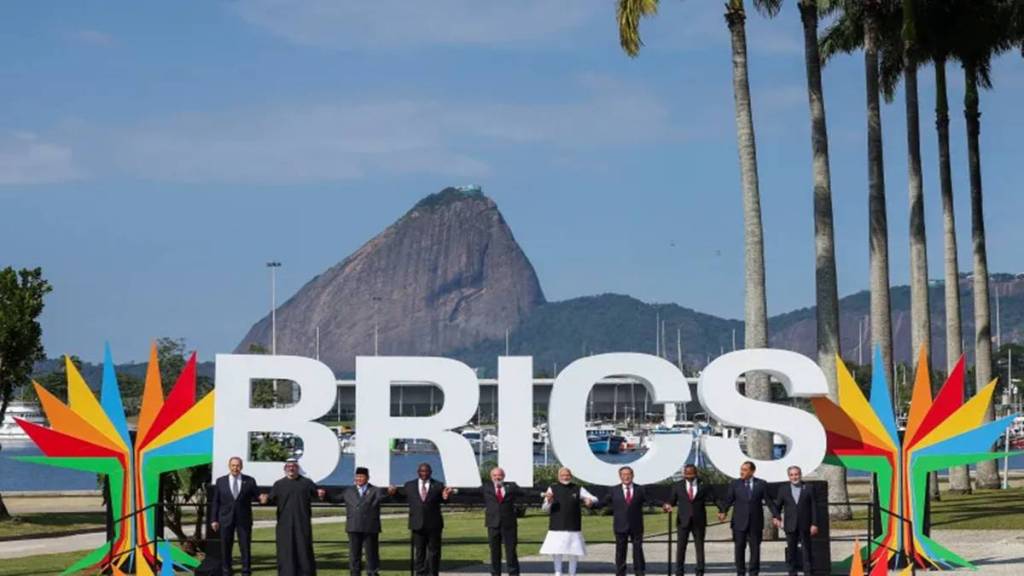

The use of national currencies for cross-border payments and a bigger role for the New Development Bank (NDB) in mobilising private capital are likely to feature prominently in the BRICS Summit on Saturday-Sunday under India’s 2026 chairship.
The discussions are expected to focus on strengthening financial cooperation among member countries, improving the international monetary and financial system, and finding practical ways to make BRICS economies more resilient to global economic and financial risks, sources said.
The issue of reducing dependence on major international currencies and expanding the use of national currencies in mutual settlements has already emerged as an important area of discussion among BRICS finance officials ahead of the Summit.
BRICS Finance Ministers and Central Bank Governors are meeting in Mumbai during September 9-10, ahead of the Leaders’ Summit, to fine-tune their proposals.
Greater use of members’ own currencies could help facilitate trade and investment within the grouping while strengthening financial cooperation and reducing exposure to external currency and financial market shocks.
Capital flight during external shocks is a major issue for emerging economies, especially for India, Brazil and South Africa, whose currencies depreciated substantially in the aftermath of West Asia conflict.
Another key area expected to be the role of the NDB in bringing more private money into development projects across BRICS countries. Finance Minister Nirmala Sitharaman has in the past stressed the importance of multilateral development banks in de-risking investments, improving the bankability of projects and building investor confidence, all of which could help attract private capital on a larger scale.
The BRICS countries will dwell on the mobilisation of private capital as well as the need for the NDB to continue growing and remain competitive. The broader objective is to make the bank a stronger vehicle for financing infrastructure and other development priorities across member countries while drawing on global best practices.
The leaders are also likely to discuss financial risk management and liberalisation, along with broader trends in the global and regional economy.