


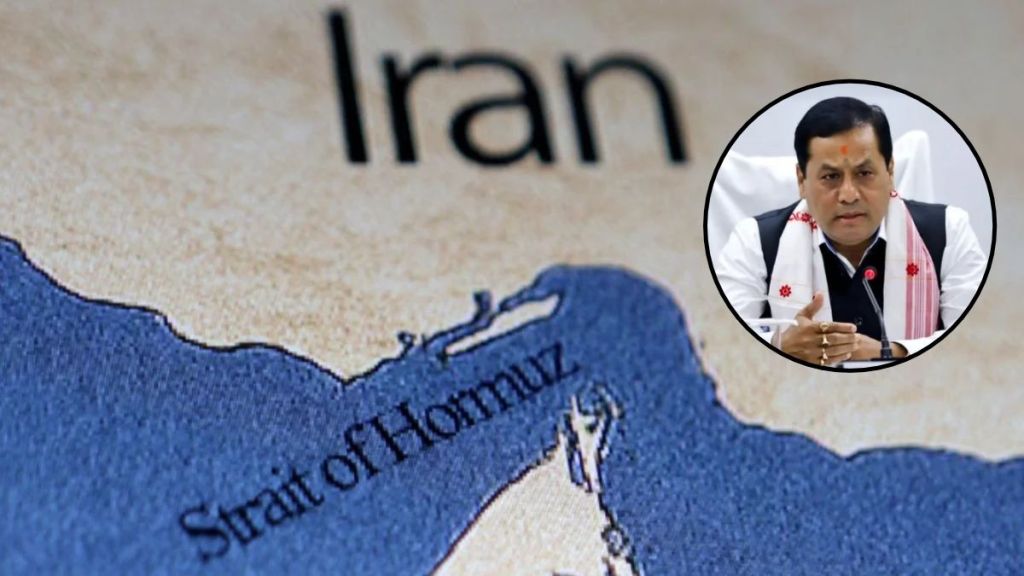

A Kuwait-flagged oil product tanker, M/T AL DASMA, with 21 Indian seafarers on board, was hit by an unknown projectile while crossing the Strait of Hormuz, according to Sarbananda Sonowal, the Minister of Ports, Shipping & Waterways.
He added that all 21 Indian crew members on the tanker, along with the other crew members, were reported safe.
“We are continuously monitoring the situation and remain in close contact with the ship management company to ensure the ongoing security and wellbeing of our seafarers,” Sonowal wrote on X, formerly Twitter.
What else do we know about the tanker attack involving Indians?
According to Times Kuwait, the reported strike led to a fire on the tanker. While it was subsequently extinguished, the vessel remained stationary after the incident. The incident is believed to have occurred 11 nautical miles west of Bukha, Oman, according to the United Kingdom Maritime Trade Operations (UKMTO) tracking information.
The union minister’s Wednesday post comes after an October 16 update, in which Sonowal said that crude oil tanker MT ST 3 carrying 15 Indian seafarers was hit by a projectile in the waterway. All Indians were reported safe, and no other casualties were revealed at the time.
On top of that, the Ministry of External Affairs (MEA) issued a formal statement on October 11 to condemn attacks on two different vessels in the Hormuz region. The strikes targeted MT PETRO DOLPHIN (a Nicaragua-flagged tanker) and MT VALTHERA (a Marshall Islands-flagged tanker).
Each tanker had 11 Indian nationals onboard. Two Indian seafarers on the Nicaragua-flagged vessel were reported missing after a drone strike. Meanwhile, all 11 Indians on the latter tanker were reported safe.
Demanding immediate de-escalation in the region, the MEA stated, “Attacks on commercial vessels, seafarers and civilian infrastructure must cease. Freedom of navigation and the safe, unimpeded flow of maritime commerce through international waterways, in accordance with international law, must be upheld.”
Surging attacks in the Strait of Hormuz affect shipments
Merely days ago, a container ship and a dry bulk carrier sank near the Hormuz region after being targeted by projectiles in separate incidents within 24 hours, according to maritime officials, Reuters reported.
“GFS PRIDE sustained damage and a fire on board, and has since sunk. All 21 crew members were safely evacuated. No injuries have been reported,” the Maritime and Port Authority of Singapore (MPA) said in a statement on Wednesday, adding that the vessel had been sailing through the strait on Tuesday.
UN shipping agency the International Maritime Organisation also showed on Wednesday that the other incident involved the Antigua and Barbuda-flagged Cape Dao, which sank near the Strait of Hormuz weeks after it was struck by a projectile on September 23.
Shedding more light on the rising number of attacks tied to the critical maritime shipping route, a recent BBC analysis of data from the UK’s Maritime Trade Operations (UKMTO) agency shows that such incidents in and around the Hormuz Strait have hit a record high.
Earlier this month, 12 vessels were targeted between October 5 and 11, the most weekly strikes reported to the UKMTO since the US-Israel war on Iran began on February 28. Ten ships reported attacks in the week before that.
Last month’s recovery in oil shipments transiting the critical waterway has again been adversely impacted due to the surging number of attacks on tankers. Data from trade intelligence firm Kpler shows that about 12.6 million barrels per day crossed the strait on October 13. This was lower than the 15 million reported at the end of September, while the pre-war baseline was around 17 million barrels per day.
Where do oil prices stand?
There was barely any change in oil prices on Wednesday. The international benchmark, Brent crude futures, added 3 cents and closed at $108.82 a barrel, while US West Texas Intermediate crude dropped 67 cents and settled at $97.15 a barrel, CNBC reported.
In an October 20 report, Goldman Sachs warned that a prolonged supply shortfall could push “Brent… to $140 in early 2027 and average around $125/bbl in 2027” if average output from the Gulf remains 5 million barrels per day below February 2026 levels.
“Our base case is that a further recovery in Mideast supply and a moderation in the risk premium reduce prices of Brent crude and European natural gas to $90/bbl and EUR70/MWh, respectively, by end-2026,” the report added.
According to real-time oil prices seen on the Trading Economics website, Brent surged to $110.694 per barrel at 9:26 am IST.