


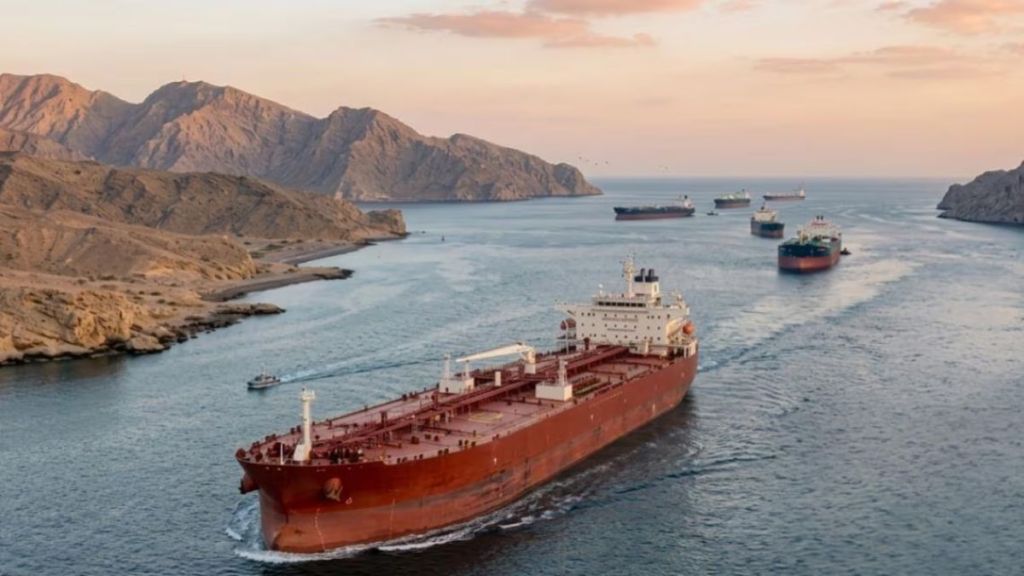

Iran announced plans for a new ‘restricted zone’ through the Strait of Hormuz as oil prices soared to fresh highs on Monday. The announcement came less than a day after the United States and Iran led a series of tit-for-tat strikes in the region — sinking oil tankers and launching ballistic missiles at Navy ships. Tehran has also outlined a ‘new shipping route’ agreed upon with Oman for the crucial waterway.
The secretary of Iran’s Supreme National Security Council told state TV on Sunday that the new restricted zone would begin from the same location as the US blockade and extend into areas of the Gulf. Mohsen Rezaei provided very few details about the plan, but warned that any ship entering the new zone would be added to a sanctions list.
Iran-Oman shipping corridor?
The two countries had first agreed upon a temporary maritime route in late August — with Iranian officials insisting they would only speak directly with Oman to discuss the future of the shared waterway. Deputy Foreign Minister Kazem Gharibabadi claimed the Strait of Hormuz would only open once the US upheld its commitments under the (now lapsed) interim peace deal signed in June.
“The maps of a new international corridor which lies in Iranian and Omani waters and in which Iran will have management have been agreed and should be signed in the coming days…We will only commit to the Strait of Hormuz being open when they (the Americans) stop the sabotage, threats and attacks on Iran,” Rezaei reiterated.
‘Restricted zone’ near Strait of Hormuz
Rezaei told state-run IRIB that Iran planned to announce a “restricted” maritime area outside the Strait of Hormuz in the coming days. This would potentially extend curbs into parts of the Persian Gulf — with ships entering the zone facing unspecified sanctions. Rezaei added that any vessel entering this new area will be placed on the “sanctions list”.
According to Iranian officials, the new restricted area will start from the US naval blockade line to include areas of the Persian Gulf. Rezaei insisted that Tehran would keep the Strait of Hormuz open if the United States stopped threatening or attacking Iran. Shipping data from Kpler indicate a steady dip in traffic — with an average of 10 commodity ships transited the Strait of Hormuz per day over the past 10 days. The number is the lowest reported since May and comes after US and Iranian strikes against oil tankers.The 10-day moving average was 10 on Sunday, down from more than 15 on Friday and nearly 13 on Saturday.
How will India be affected?
India imports nearly 90% of its crude oil requirements — with a significant quantity sourced from Gulf nations and transported through the Strait of Hormuz. The issue also goes beyond oil to include LNG, LPG and other petrochemicals that India buys from these countries. Any restrictions against travel or imposition of additional levies therefore become a significant and likely unavoidable burden for India.
It is however pertinent to note that New Delhi has been exempted from previous tolls postulated by Iran amid the war.
“You can ask the Indian government if we have charged anything up to now. In this difficult time, we have good relations. We believe Iran and India share common interests and a common fate,” Ambassador Mohammad Fathali had told reporters during a briefing in April.