



US officials had already confirmed that President Donald Trump and his Iranian counterpart, Masoud Pezeshkian, digitally signed a memorandum of understanding (MoU) over the weekend, which is now in effect. Iranian Foreign Ministry spokesperson Esmail Baghaei also stated in an interview with IRIB that the memo was signed in both English and Farsi, upon Tehran’s insistence to uphold transparency.
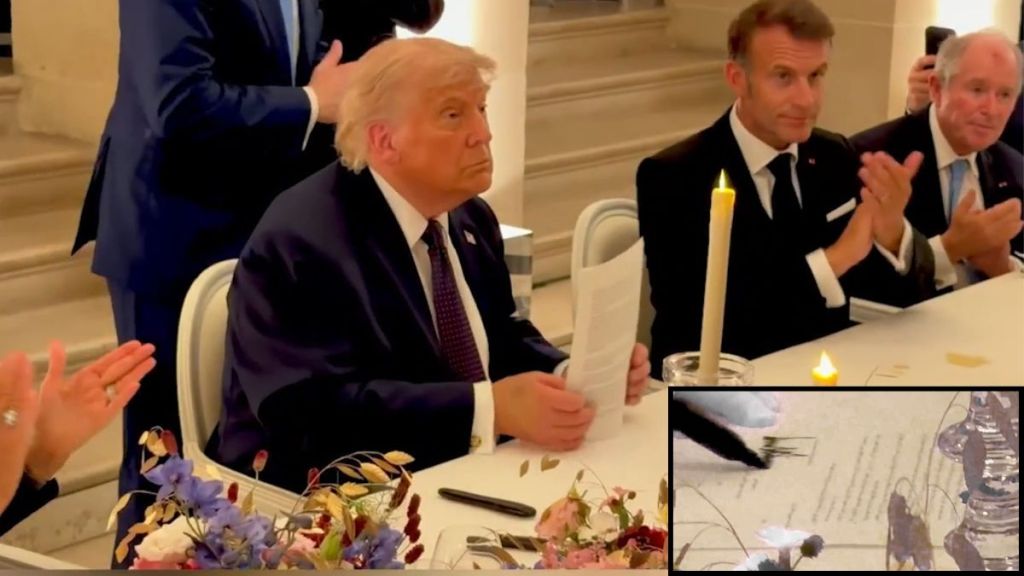
The White House also shared a video, affirming the POTUS signed a hard copy of the US-Iran agreement at the Palace of Versailles, while sitting beside numerous leaders, including French President Emmanuel Macron, following the G7 Summit in Evian, France.
The details of the interim agreement declaring an intent to bring about an “immediate and permanent termination of military operations” in the ongoing US-Israel war with Iran have since been laid out in a 14-point text, which was released by US officials on Wednesday (US time).
Given Pakistan’s role as a key mediator between both sides, the text has been titled the “Islamabad Memorandum of Understanding between the United States of America and the Islamic Republic of Iran.” Amid the raging confusion about what the initial deal between the US and Iran actually entails, the 14-point agreement sheds light on where the two countries stand on the reopening of the Strait of Hormuz, the commitment to the final deal, and much more.
🚨 President Donald J. Trump has SIGNED the Iran Memorandum of Understanding at Versailles in France. 🇺🇸 pic.twitter.com/JQ6qlbvFAF
— The White House (@WhiteHouse) June 17, 2026
A senior US administration official reading out the 14-point document on Wednesday noted that the agreement “allows us to open the Strait of Hormuz immediately, commit the Iranians to destroying the nuclear dust, and then gives us a dial where if the Iranians dial up their good behavior, we respond by dialing up the kind of economic and sanctions relief that can make them a more prosperous country.”
$300 billion ‘reconstruction’ fund for Iran – MoU text intensifies complications
Probably one of the most sticking points raised in the text is centred around the possibility of the US contributing to expand a potential $300 billion “reconstruction” fund for Iran. Despite previous contradictions this week, the MoU’s sixth pointer blatantly suggests that the US would be joining “regional partners” to set up a “definitive, mutually agreed plan with at least USD $300 billion for the reconstruction and economic development of the Islamic Republic of Iran.”
A final deal within 60 days will, however, ultimately confirm how this parameter will be implemented.
Nonetheless, the inclusion of such a promise in the interim deal has only further complicated the matter, as merely a day ago, Trump asserted that the US was not going to invest any money in Iran. On the contrary, US Vice President JD Vance appeared to confirm the report that Iran could end up gaining access to the multi-billion-dollar fund after all.
“We are not investing any money in Iran, by the way, and with that rumour got out there yesterday was ridiculous,” Trump told reporters at the G7 summit in France. “We have the right to go in some day and do, if I want to do something, or if somebody wants to do something, but we are not investing any money.”
His claims echoed the remarks made in a Truth Social post on Monday: “Iran has agreed to never have a Nuclear Weapon! Also, the story that the U.S. is paying Iran 300 million Dollars is Fake News, put out by the Dumocrats!!!”
Conversely, Vance told CBS News, “That’s the sort of thing they could have access to, funded by the Gulf Coast coalition, so long as they honour their end of the obligation.”
“When people say that billions of dollars of assets will be released, that’s not true. What is true is that Iran will have a much better and much more prosperous future if they meet the obligations they make in this agreement.”
Also alluding to reports that Iran will receive $24 billion in frozen funds during the 60-day final negotiation period, Vance said, “What we have said is that we’re willing to talk about unfreezing assets, but a much, much bigger deal is unsanctioning their economy — so long as they make the long-term commitments on the nuclear program.” Simultaneously, he asserted that the mention of the $24 billion figure “just doesn’t appear anywhere in any of the texts that we’ve talked about with the Iranians.”
Trump’s repeated denials also rebuked statements made by a senior US official, who told reporters that the “possibility of releasing frozen funds, sanctions relief, you know, a big $300 billion fund to rebuild their country” was on the table.
Official full text of US-Iran agreement
“The United States of America and the Islamic Republic of Iran have jointly agreed in good faith on [ __ date] on the following:
1 — The United States of America and the Islamic Republic of Iran and their allies in the current war, by signing this MOU, declared the immediate and permanent termination of military operations on all fronts, including in Lebanon, and undertake from now on not to initiate any war or any military operation against each other, and to refrain from the threat or use of force against each other and ensuring the territorial integrity and sovereignty of Lebanon. The final deal will confirm the permanent termination of the war on all fronts, including in Lebanon and other provisions of this paragraph.
2 — The United States of America and the Islamic Republic of Iran undertake to respect each other’s sovereignty and territorial integrity, and to refrain from interfering in each other’s internal affairs.
3 — The United States of America and the Islamic Republic of Iran commit to negotiating and achieving the final deal in maximum 60 days, expendable with mutual consent.
4 — Immediately upon the signing of this MOU, the United States of America will begin the removal of its naval blockade and any disturbances or impediments against the Islamic Republic of Iran, and will fully end the naval blockade within 30 days. During this period, the traffic of vessels will be in proportion to the numbers of pre-war traffic being restored by the Islamic Republic of Iran. The United States of America further undertakes to remove its forces from the proximity of the Islamic Republic of Iran within 30 days after the final deal.
5 — Upon the signing of this MOU, the Islamic Republic of Iran will make arrangements using its best efforts for the safe passage of commercial vessels with no charge for 60 days only from the Persian Gulf to the Sea of Oman and vice versa. The traffic of commercial vessels will immediately start, and considering the need for removing the technical and military obstacles and demining by the Islamic Republic of Iran, will be instated within 30 days. The Islamic Republic of Iran will conduct dialogue with the Sultanate of Oman to define the future administration and maritime services in the Strait of Hormuz, in discussion with other Persian Gulf littoral states in line with the applicable international law and the sovereign rights of coastal states of the Strait of Hormuz.
6 — The United States of America undertakes with regional partners to develop a definitive, mutually agreed plan with at least USD $300 billion for the reconstruction and economic development of the Islamic Republic of Iran. The mechanism for the implementation of this plan will be finalized as part of a final deal within 60 days. All required licenses, waivers, and permissions needed for the relevant financial transactions will be granted by the United States of America.
7 — The United States of America undertakes to terminate all types of sanctions against the Islamic Republic of Iran, including the United Nations Security Council resolutions, IAEA Board of Governors resolutions, and all unilateral U.S. sanctions—primary and secondary—in an agreed upon schedule as part of the final deal. The Islamic Republic of Iran and the United States of America acknowledge the critical importance of the sanctions termination issue above mentioned and expressed their intentions to immediately address these issues in the negotiations in order to achieve mutual agreement on them.
8 — The Islamic Republic of Iran reaffirms that it shall not procure or develop nuclear weapons. The United States of America and the Islamic Republic of Iran have agreed to resolve the disposition of stockpile enriched material pursuant to a mechanism that will be mutually agreed upon in accordance with the schedule mentioned in paragraph seven, with the minimum methodology to be down blending on site under the supervision of the IAEA. The two parties also agreed to discuss the issue of enrichment and other mutually agreed matters related to the Islamic Republic of Iran’s nuclear needs, based on a satisfactory framework being agreed upon in the final deal. The final deal will confirm the provisions of this paragraph. The United States of America and the Islamic Republic of Iran acknowledged the critical importance of the nuclear issues above mentioned and expressed their intention to immediately address these issues in the negotiations in order to achieve mutual agreement on them.
9 — Pending the final deal, the United States of America and the Islamic Republic of Iran agree to maintain the status quo. The Islamic Republic of Iran will maintain the current status quo of its nuclear program and the United States of America will not impose any new sanctions and will not deploy additional forces in the region.
10 — The United States of America undertakes that immediately upon the signing of this MOU and until the termination of sanctions, the U.S. Department of Treasury will issue waivers for the export of Iranian crude oil, petroleum products and derivatives, and all associated services, including banking transactions, insurances, transportation, etc.
11 — The United States of America undertakes to make fully available for use the frozen or restricted funds and assets of the Islamic Republic of Iran. Upon the implementation of the MOU, the United States of America and the Islamic Republic of Iran will mutually agree on the procedures related to the release of these funds during the negotiations. Such funds, whether retained in the original account or transferred, shall be made fully usable for payment to any ultimate beneficiary designated by the central bank of the Islamic Republic of Iran. The United States of America undertakes to issue all the necessary licenses and authorizations accordingly.
12 — The United States of America and Islamic Republic of Iran agree that an executive mechanism will be established to monitor the successful implementation of this MOU and the future compliance of the final deal.
13 — After signing this MOU, and subject to the beginning of the implementation of paragraphs 1, 4, 5, 10, and 11 of this MOU, and the continuing implementation of these measures, the United States of America and the Islamic Republic of Iran will start negotiations regarding the final deal exclusively on the other paragraphs.
14 — The final deal will be endorsed by a binding United Nations Security Council resolution.